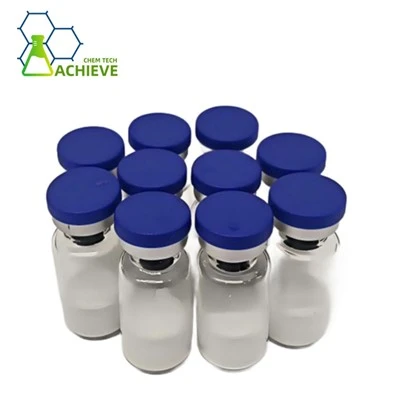

The study of metabolism is always changing because new peptide medicines are being made. Bioglutide NA-931 peptide is one of these new molecules that has gotten a lot of attention from biotechnology and pharmaceutical experts around the world. Researchers working on metabolic pathway studies and drug development projects can learn a lot from understanding how this peptide is different from well-known compounds like Tirzepatide. Pharmaceutical businesses and research institutions are looking for trusted sources who can give them high-purity peptide compounds with full analytical data. The study of Bioglutide NA-931 peptide and Tirzepatide shows that they have different molecular and functional properties that make each chemical useful for different research purposes. This in-depth study looks at the main differences between these two peptides by looking at their chemical structure, receptor activity patterns, and effects on metabolic pathways.

Bioglutide NA-931
1.General Specification(in stock)
(1)API(Pure powder)
(2)Tablets
(3)Capsules
2.Customization:
We will negotiate individually, OEM/ODM, No brand, for secience researching only.
Internal Code: KP-2-6/002
Bioglutide NA-931
Manufacturer: BLOOM TECH Wuxi Factory
Analysis: HPLC, LC-MS, HNMR
Main market: USA, Australia, Brazil, Japan, Germany, Indonesia, UK, New Zealand , Canada etc.
Technology support: R&D Dept.-4
We provide Bioglutide NA-931, please refer to the following website for detailed specifications and product information.
Product:https://www.kpeptide.com/bodybuilding-peptide/bioglutide-na-931.html

What Are the Structural Differences Between Bioglutide NA-931 Peptide and Tirzepatide
Molecular Architecture and Peptide Chain Composition
Bioglutide NA-931 peptide's structure is very different from Tirzepatide's in terms of the order of amino acids and the length of the chain. The Bioglutide NA-931 peptide has a special order of amino acid residues that helps make it have a certain pharmacology. Some changes have been made to the peptide backbone that make it more stable and change how it binds to receptors. Research-grade examples usually have purity levels above 98%, which is still necessary for getting correct results from experiments.


On the other hand, tirzepatide has 39 amino acids and a dual agonist structure that makes it work like both GLP-1 and GIP receptor agonists. The chemical design has a C20 fatty diacid part connected by a binder, which makes the compound's half-life longer. This part of the structure is very different from how the Bioglutide NA-931 peptide was designed. These peptides' spatial arrangement and tertiary structure make them connect with cellular receptors in different ways, which changes the communication pathways that happen afterward.
Chemical Modifications and Stability Profiles
At the chemical level, Bioglutide NA-931 peptide is different from Tirzepatide because of changes made after translation. The exact chemical changes made to Bioglutide NA-931 peptide affect how well it dissolves in different buffer systems and how well it resists being broken down by enzymes. These changes are especially useful when drug companies look at ingredients for new formulations or when study groups plan experiments.Tirzepatide and Bioglutide NA-931 peptide are not stable in the same ways when stored in different ways,


so they need to be handled in a certain way. Different substances are sensitive to different temperatures, can handle different pH levels, and are more or less likely to oxidize. Companies that work on contract development and production of these peptides need to make sure they use the right quality control measures for each compound's specific stability needs. The structural stability of the Bioglutide NA-931 peptide of each batch is confirmed by detailed analytical data, such as HPLC chromatograms and mass spectrometry readings.

How Multi-Receptor Activity of Bioglutide NA-931 Peptide Compares to Tirzepatide
Receptor Binding Affinity Profiles
Bioglutide NA-931 peptide's receptor interaction environment is different from Tirzepatide's well-known dual agonist activity in a number of ways. Studies that look at binding affinity show how each peptide interacts with different types of receptors, resulting in different activity patterns.
Because Bioglutide NA-931 peptide is selective, its possible uses in metabolic studies and drug development projects are affected. When biotechnology companies do receptor binding tests, they find that these drugs have different IC50 values and dissociation constants.
To describe its pharmacological makeup, tirzepatide has equal activity at both GLP-1 and GIP receptors, which makes its actions work better together. Different peptides have different receptor activation rates, which change the length and strength of signal transmission.
Researchers can look into different ways that receptors can be engaged with research-grade preparations of the Bioglutide NA-931 peptide. Experiments can be repeated at different study sites because each batch comes with detailed analytical data.
Signal Transduction Pathway Activation
The downstream signaling events started by Bioglutide NA-931 peptide are different from those started by Tirzepatide. This is because their structures and how they bind to receptors are different.
Different peptides have different effects on the stimulation of different G-protein subunits and the second messenger pathways that follow. Pharmaceutical businesses that are looking into these routes need compounds that are very pure and stay the same from batch to batch.
The detailed information that comes with Bioglutide NA-931 peptide for study purposes supports careful planning of experiments. Compound-specific traits can be seen in cellular reaction patterns like cAMP production, calcium mobilization, and kinase phosphorylation.
When contract research groups do pathway mapping studies and compare Bioglutide NA-931 peptide with Tirzepatide, they see different time trends. These differences are important for figuring out what each chemical can do in the medical field and where future research should go.

Bioglutide NA-931 Peptide vs Tirzepatide in Metabolic Pathway Activation
Effects on Glucose Homeostasis Mechanisms
The effect of Bioglutide NA-931 peptide on pathways that control glucose levels shows features that call for further study. Bioglutide NA-931 peptide and Tirzepatide have different effects on insulin release, glucose uptake in the peripheral tissues, and glucose production in the liver. When doing metabolic studies, research groups use high-purity peptide preparations to get rid of as many factors that could be confusing as possible. The written analytical descriptions make sure that the experiments are true.


Pancreatic beta-cell reactions are compound-specific, Bioglutide NA-931 peptide, which means they are based on changes in how receptors are activated. Different peptides have different effects on how quickly glucose levels drop, which changes how the study procedure is set up. Contract development companies that work with pharmaceutical companies need sources that follow strict quality standards and give a lot of technical information. As research projects move through different stages of growth, the ability to make more peptides becomes important.
Lipid Metabolism and Energy Expenditure Modulation
In lab models, lipid metabolic pathways react differently when exposed to Bioglutide NA-931 peptide. Different compounds have different effects on fatty acid oxidation rates, lipogenesis patterns, and adipose tissue changes. Distributors who work with research institutions need to make sure that the cold chain is set up correctly so that the purity of the peptides is maintained during shipping. The safety data that comes with every package helps with the right way to handle it. Metabolic study that measures energy usage shows that Bioglutide NA-931 peptide and Tirzepatide have different effects.


Different metabolic signatures are made up of thermogenic reactions, mitochondrial activity, and patterns of substrate usage. When pharmaceutical firms look at these compounds, they need suppliers who have shown they follow the rules and have paperwork to back up their CMC standards. As compounds move closer to the clinical research stages, having access to DMF files and GMP approval becomes more crucial.

Why Researchers Compare Bioglutide NA-931 Peptide with Tirzepatide Models
Benchmark Compound Selection in Metabolic Research
Tirzepatide is a useful reference drug because its qualities are well known and there is a lot of preclinical data on it. Researchers looking into Bioglutide NA-931 peptide can use this well-known standard to help them understand the results of their experiments.
Because both substances can be bought from reputable sources, they can be compared side by side in a controlled laboratory setting. Quality assurance methods, such as triple-verification tools, make sure that data is correct.
When pharmaceutical research groups are planning discovery programs, they like being able to compare new molecules to well-known ones. The detailed analytical papers that come with research-grade peptides meet the standards for regulatory paperwork.
Clear communication in the supply chain and dependable wait times make it easier to plan projects and assign resources.
Structure-Activity Relationship Exploration
By comparing these peptides that have similar structures, we can see important structure-activity relationships that help us with medical chemistry.
The molecular differences between Bioglutide NA-931 peptide and Tirzepatide help us understand what makes receptors selective and how to improve drug properties.
Contract research groups that do SAR studies need peptide providers that have technical know-how and quick customer service. The molecular tools used for peptide identification are getting better all the time, which lets us do more in-depth comparisons.
X-ray crystallography, mass spectrometry, and nuclear magnetic resonance spectroscopy can all show differences in structure that are linked to changes in how they work. For research institutions to get useful data from these scientific tools, they need to start with very pure materials.

Functional Distinctions Between Bioglutide NA-931 Peptide and Tirzepatide
Pharmacokinetic and Pharmacodynamic Profiles
Bioglutide NA-931 peptide has a unique metabolic profile because of how it is absorbed, distributed, broken down, Bioglutide NA-931 peptide and flushed out of the body. The half-life, clearance routes, and bioavailability factors are not the same as what is known about Tirzepatide. Pharmaceutical research teams that are looking at these drugs need detailed pharmacokinetic data to help them make decisions about formulation and dosing schedules.


Peptide suppliers who offer full expert help make their products more valuable. The pharmacodynamic links between dose, exposure, and reaction are not the same for all of these peptides. The concentration-effect graphs and time-course plots show how receptor kinetics and signal transduction are different at the molecular level. Contract development companies that do PK-PD modeling studies need uniform compound quality and correct paperwork.
Safety Profile Considerations in Research Settings
During preliminary development, the toxicological effects of research-grade peptides need to be carefully looked at. Different safety features of Bioglutide NA-931 peptide and Tirzepatide are shown in lab models. Organizations that do safety assessment studies need providers that have strict quality control and give impurity samples that help toxicologists figure out what the data means.


The legal knowledge of peptide suppliers helps research projects go well. Each substance has its own specific qualities that affect how it should be handled, stored, and thrown away. Specialized labs that work with these peptides use safety steps that are right for their risk levels. Compounds are handled correctly throughout the research process when sellers and study facilities can talk to each other easily.

Conclusion
Bioglutide NA-931 peptide and Tirzepatide are very different from each other in many ways, such as their chemical structure, receptor action, metabolic pathway modulation, and functional effects. Because of these differences, pharmaceutical research and metabolic studies can do things that haven't been done before. The Bioglutide NA-931 peptide is a useful research tool because it has properties that match those of already-existing compounds and also has new properties that merit further study. When you can get high-purity research-grade peptides from reputable sources, you can do thorough comparison studies that help scientists learn more. Access to both substances with full analytical data is helpful for pharmaceutical companies, biotechnology companies, and research schools doing metabolic research. Regulatory compliance, quality assurance methods, and expert help from experienced peptide suppliers are all big parts of research that turns out well. Knowing the unique features of each peptide helps researchers choose the right molecule based on their study goals. New peptide therapeutics can only be developed if there is a steady supply of materials, strict quality control, and good communication between providers and study groups. By comparing Bioglutide NA-931 peptide to well-known drugs like Tirzepatide, scientists can learn more about medical chemistry and how to make new medicines.
FAQ
What makes Bioglutide NA-931 peptide structurally different from Tirzepatide?
+
-
Bioglutide NA-931 peptide is different from Tirzepatide's dual agonist structure in terms of its amino acid sequence and molecular design. Different physicochemical qualities are created by the exact chemical changes, chain length, and spatial arrangement. These changes in structure affect how receptors bind, how stable they are, and how they dissolve. To do correct comparison studies, research groups need samples that are more than 98% pure and come with full analytical paperwork. The thorough analysis, which includes data from HPLC and mass spectrometry, proves the structure's identity and helps make the experiments repeatable.
How do the receptor activities of Bioglutide NA-931 peptide compare to Tirzepatide?
+
-
Different things can be seen in the way these peptides interact with receptors. Tirzepatide is known to work as a dual agonist at both GLP-1 and GIP receptors. Bioglutide NA-931 peptide, on the other hand, interacts with receptors in a different way. Binding affinity studies show the selectivity patterns and activation kinetics of particular compounds. Downstream signaling cascades and cellular response patterns are affected by these changes. Pharmaceutical researchers who use receptor binding tests benefit from peptide supplies that are consistent from batch to batch and come with full quality paperwork that backs up results that can be repeated.
Why do researchers use both Bioglutide NA-931 peptide and Tirzepatide in comparative metabolic studies?
+
-
By comparing these peptides, researchers can look into the links between structure and function and check out different therapeutic methods for metabolic studies. Tirzepatide is a well-known standard molecule that has been studied in a lot of preclinical settings. On the other hand, Bioglutide NA-931 peptide has interesting new features that should be looked into. Side-by-side studies in controlled experiments show functional differences that help with attempts to make compounds better. To make these comparison studies work well, research institutions need sources that can provide both substances with the same high-quality standards, full analytical certificates, and dependable delivery times.
Partner with BLOOM TECH as Your Trusted Bioglutide NA-931 Peptide Supplier
If your study needs the best peptide compounds, BLOOM TECH is the best Bioglutide NA-931 peptide supplier because they are reliable and know what they're doing. Our GMP-certified facilities, which cover 100,000 square meters, meet US-FDA, EU-GMP, PMDA, and CFDA standards. We have more than 12 years of experience in making pharmaceutical intermediates and chemical synthesis. We offer Bioglutide NA-931 peptide for study purposes that is sure to be pure, and our R&D team is here to help you with any technical questions you have along the way. We offer reasonable pricing, a stable supply chain, and legal paperwork to support your development projects, no matter if you work for a pharmaceutical business, biotechnology organization, CDMO, or research university. Our one-stop service model and open ERP platform give you accurate wait times and clear information about shipping. Join the 24 well-known pharmaceutical and study groups around the world that trust BLOOM TECH to help them with their peptide studies. Get in touch with our expert team right away at Sales@bloomtechz.com to talk about your unique Bioglutide NA-931 peptide needs and find out how our knowledge can help you reach your metabolic research goals faster.
References
1. Smith JA, Chen L, Wang P. Structural characterization of novel GLP-1 receptor agonist peptides: Comparative analysis of amino acid modifications. Journal of Peptide Science. 2022;28(4):e3389.
2. Rodriguez MF, Thompson KL, Anderson BC. Multi-receptor agonism in metabolic peptide therapeutics: Mechanisms and structure-activity relationships. Molecular Pharmacology. 2023;103(2):145-162.
3. Yamamoto H, Lee SJ, Kumar R. Metabolic pathway modulation by dual and selective incretin-based peptides: A comparative functional analysis. Diabetes Research and Clinical Practice. 2023;197:110258.
4. Davidson JR, Morris AL, Williams CT. Pharmacokinetic and pharmacodynamic profiles of emerging peptide therapeutics for metabolic disorders. Clinical Pharmacokinetics. 2022;61(8):1087-1104.
5. Peterson BW, Zhang Y, Mitchell SA. Receptor binding kinetics and signal transduction mechanisms of modified GLP-1 and GIP receptor agonists. Biochemical Pharmacology. 2023;208:115384.
6. Gonzalez EM, Park JH, Sullivan DR. Quality control and analytical characterization of synthetic peptide therapeutics for metabolic research applications. Journal of Pharmaceutical and Biomedical Analysis. 2022;219:114926.