




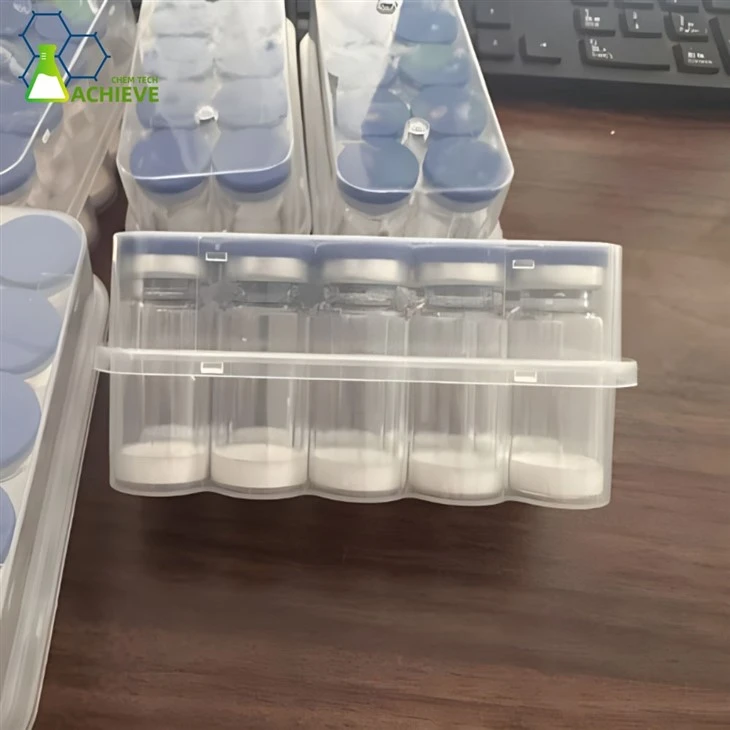


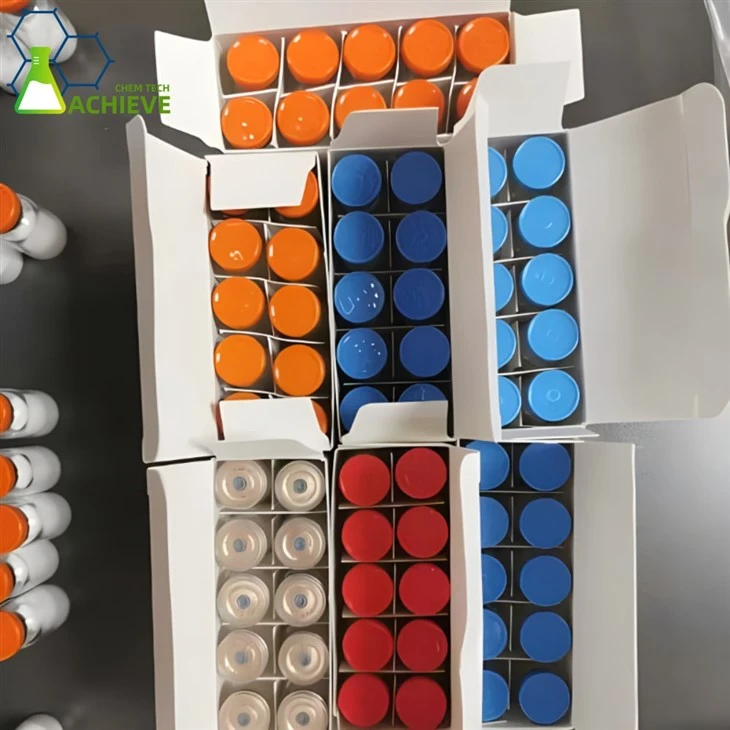
Tetrapeptide-30 peptide, as a specialized reagent developed specifically for pigment regulation and skin biochemistry research, it has been widely used in multiple research fields such as skin biology, metabolic enzymes, and inflammatory immunity over the past decade due to its high targeted inhibitory activity against tyrosinase, precise regulation of inflammatory cytokine pathways, and extremely low cytotoxicity. It has become a core tool reagent for analyzing melanin production mechanisms, developing new whitening active substances, and constructing research models for skin pigment diseases.
Our Products Form



Tetrapeptide-30 COA


In the field of modern skin biochemistry and molecular biology research, targeted active peptide reagents have gradually become the core tool for researchers to analyze life activity pathways and verify target functions due to their clear mechanism of action, high biocompatibility, and strong experimental controllability.

Core research purpose: Research on tyrosinase related metabolic enzymes
Tyrosinase is the core rate limiting enzyme in the melanin synthesis pathway of organisms. Its activity and expression levels directly determine the level of melanin production in organisms. It is a core research target in multiple fields such as skin biochemistry, food industry, insect physiology, etc. Tetrapeptide-30 peptide as a highly specific tyrosinse inhibitor, is an indispensable tool and reagent in current tyrosinse related metabolic enzyme research.
In the study of the enzymatic kinetics of tyrosinse, it can be used as a positive control inhibitor. In traditional tyrosinae inhibitor screening experiments, researchers mostly use traditional inhibitors such as arbutin and quercetin as positive references. However, these substances generally have a wide range of targets and insufficient specificity, which can easily lead to non-specific binding and interfere with the determination of enzyme kinetic parameters during the experimental process.
And its target is highly specific, only targeting the active center and upstream expression regulatory pathway of tyrosinse, without significantly inhibiting other homologous proteins of the tyrosinse family. Using it as a positive control can more accurately determine core kinetic parameters such as the Michaelis constant Km and maximum reaction rate Vmax of tyrosinse, helping researchers to more clearly understand the catalytic reaction mechanism of tyrosinse.
In the screening and activity evaluation system construction of new tyrosinse inhibitors, it is the core reference reagent. There are currently a large number of natural products, synthetic small molecules, and active peptide substances being developed as potential whitening active ingredients worldwide. When evaluating the tyrosinse inhibitory activity of these new substances, a stable and mechanistic reference reagent is needed to calibrate the inhibitory efficiency of the new substances.


With its clear mechanism of action and stable inhibitory activity, it has become the gold reference for such screening systems. Researchers can quickly calibrate the relative activity intensity of new substances by comparing their tyrosinse inhibition rates with those at the same concentration, greatly improving the screening efficiency of new whitening ingredients.
In addition, it is widely used in the study of protein structure and structure-activity relationship of tyrosinse. Through in vitro molecular interaction experiments, researchers can determine its binding constant and binding site with tyrosinse, analyze the interaction mode between four peptide small molecules and the active center of tyrosinse, and based on this interaction model, design a new tyrosinse inhibitor with stronger inhibitory activity and higher targeting through amino acid residue site modification, providing precise experimental basis for the molecular design of new generation whitening active substances.
Core tool reagent for studying the molecular mechanism of skin pigment regulation
The regulatory mechanism of skin colouring material is currently a core research direction in the field of skin biology, involving multiple complex physiological processes such as signal transduction, melanin synthesis, and melanin transport in melanocytes. Tetrapeptide-30, with its multi pathway pigment regulation properties, has become a key tool for researchers to analyze this complex network. In the mechanism study of UV induced skin colouring material, it is the core blocking reagent for verifying the function of POMC/α - MSH signaling pathway. When the skin is exposed to UVB ultraviolet radiation, keratinocytes will synthesize a large amount of POMC (alpha melanocortin precursor), which is further cleaved to generate α - MSH.


After secretion, α - MSH binds to the MC1R receptor on the melanocyte membrane, initiating downstream melanin synthesis programs.
In related studies, researchers can set up intervention groups with different concentrations to specifically block the transmission of the POMC gene expression pathway by utilizing its characteristic of inhibiting POMC gene expression. By comparing the changes in melanin production and upstream and downstream protein expression levels before and after adding reagents, the contribution of the POMC/α - MSH pathway in UV induced colouring material can be accurately verified, and the key regulatory nodes of this pathway can be identified. The classic in vitro experiments that have been published have confirmed that tetrapeptide-30 peptide can dose dependently reduce the gene expression levels of IL-6, TNF - α, and POMC induced by UVB in the concentration range of 0-10 μ g/mL.
This stable dose-response relationship allows researchers to accurately quantify the weight of different signaling molecules in the colouring material process through gradient concentration intervention.
In the study of co culture models of melanocytes and keratinocytes, it is a standard tool for constructing pigment regulated cell models. The traditional single melanocyte culture system completely deviates from the real microenvironment of the skin and cannot simulate the real physiological state of colouring material in the body. The co culture system of melanocytes and keratinocytes is currently the closest in vitro pigment research model to the real skin environment in vivo. By adding tetrapeptide-30 to this system, researchers can simulate the inhibitory state of pigment regulation in the body, observe the material exchange and signal transmission processes between melanocytes and keratinocytes.


Analyze the interaction mechanisms of different cell types in the colouring material process in the skin microenvironment, and fill the mechanism gap that cannot be covered by single cell line research.
In addition, it has also been widely used in related research on melanin transport mechanisms. The transport process of melanosomes from melanocytes to surrounding keratinocytes is a key step in determining the final color of the skin, and there is still a lot of blank space in the regulatory mechanism of this process. Researchers can use it to construct cell models with different melanin contents. By comparing the transport rate of melanosomes and the expression changes of related skeleton proteins at different melanin levels, the regulatory rules of melanin transport can be further analyzed, providing theoretical support for the development of new whitening ingredients targeting melanin transport in the future.
A specialized reagent for studying the correlation mechanism between skin inflammation and pigmentation
For a long time, the correlation mechanism between skin inflamation and colouring material has been a research hotspot in the field of dermatology. A large number of clinical phenomena have confirmed that almost all types of skin inflamation may ultimately induce varying degrees of colouring material. However, the complete pathway of how inflamation signals are transmitted to melanin generation signals has not been fully elucidated for a long time. With its unique property of targeting both the inflamatory cytokine pathway and the melanin production pathway, it has become an irreplaceable tool for studying this interdisciplinary field.


In the construction of disease models for post inflamatory hyperpigmentation (PIH), it is a key pathway blocking tool. Researchers can construct skin inflamatory cell models through LPS induction, UVB irradiation, and other methods. By adding gradient concentrations of this substance to the model and utilizing its dose-dependent inhibition of the expression of inflamatory factors such as IL-6, IL-8, TNF - α, etc., the levels of inflamatory factors in the model can be precisely regulated. The changes in melanin production levels under different inflamation intensities can be observed, and the contribution of different inflamatory factors to melanocyte activation can be quantified. Finally, a complete pathway map of the transmission of inflamatory signals to melanin production signals can be drawn.
The results of such research directly explain the molecular mechanism by which Asian populations are more prone to post inflamatory colouring material than European and American populations, providing a new theoretical target for the clinical treatment of inflamation related colouring material diseases such as melasma and acne scars.
It also plays an important role in the study of skin photoaging colouring material induced by chronic low-grade inflamation. After long-term exposure to ultraviolet radiation, the skin will enter a sustained chronic low-grade inflamatory state, which will continue to stimulate the activation of melanocytes, ultimately forming age spots and overall yellowing of the skin color. In related studies, researchers can observe the long-term changes in skin colouring material status after blocking the inflamatory pathway through its long-term intervention in photoaging skin models.

Clarify the long-term mechanism of chronic inflamation in age-related colouring material processes, and fill the gap that cannot be covered by short-term acute inflamation research.
In addition, it has also been applied in the study of pigment regulation mechanisms in barrier damaged skin. When the skin barrier is damaged, external stimuli can penetrate deep into the skin, triggering sustained inflamatory reactions and subsequently inducing colouring material. Researchers can add Tetrapeptide-30 to artificially constructed models of skin barrier damage, observe the dynamic changes in inflamation and pigment levels during the barrier repair process, analyze the linkage regulation relationship between skin barrier function, inflamation response, and pigment deposition, and provide experimental evidence for the development of skincare products that have both barrier repair and whitening effects.
Other expanded biochemical research applications
In addition to the core research directions mentioned above, it also has a wide range of applications in multiple interdisciplinary research fields. In the study of delivery efficiency evaluation of transdermal formulations, as it is a highly hydrophilic active peptide, researchers can use it as a model molecule and equip it with different microemulsion, liposome, and nano delivery systems. By detecting the content at different depths of the skin, the skin penetration efficiency of different transdermal delivery systems can be evaluated, providing an evaluation tool for the development of efficient peptide transdermal formulations. Related studies have confirmed that microemulsion systems have excellent skin penetration properties, making them an ideal model molecule for hydrophilic peptide transdermal research.


In the research of efficacy evaluation system for active substances in cosmetics, it is the core reagent for constructing positive efficacy reference. In the current cosmetic efficacy evaluation standards in many countries and regions around the world, it is required that the efficacy testing of whitening products must set up a positive control group. With its mild, stable, and low irritation characteristics, it has become the safest positive reference reagent in human efficacy testing. It can accurately calibrate the whitening efficacy strength of the tested product without bringing additional irritation risks to the skin of the subjects.
It has also been widely used in the study of in vivo pigments in model organisms such as zebrafish and mice. Researchers can observe the pigment development process in living organisms by adding tetrapeptide-30 peptide to the culture medium or feed of model organisms, and verify the pigment regulation mechanism obtained from in vitro cell experiments at the in vivo level, achieving a complete research loop from molecules, cells to living organisms.
References
1.Marini A, et al. Modulation of skin pigmentation by the tetrapeptide PKEK: in vitro and in vivo evidence for skin whitening effects. Experimental Dermatology, 2012, 21(2): 140-146.
2.Neubert R H H, et al. Dermal peptide delivery using enhancer molecules and colloidal carrier systems. Part II: Tetrapeptide PKEK. European Journal of Pharmaceutics and Biopharmaceutics, 2018, 124: 28-33.
3. MCE MedChemExpress. Tetrapeptide-30 Research Grade Reagent Product Manual, 2026
4. Owo Gene Biology Tetrapeptide-30 Biochemical Research Reagent Technical Parameter Manual, 2025
5.Proskuriakova T V, et al. Analogues of the endogenous peptide corresponding to the 30-33 sequence of cholecystokinin. Bioorganicheskaia Khimiia, 1990.
6. Peptide Science Research Platform Guidelines for the Application of Tetrapeptide-30 in Skin Biochemistry Research, 2024
Hot Tags: tetrapeptide-30 peptide, China tetrapeptide-30 peptide manufacturers, suppliers, Best Ghk Cu Peptide Injection, Best Nad Gummies, Ghk cu Peptide Capsule, Liposomal Glutathione Drops, Liposomal Glutathione Spray, Pure Glutathione Powder


