




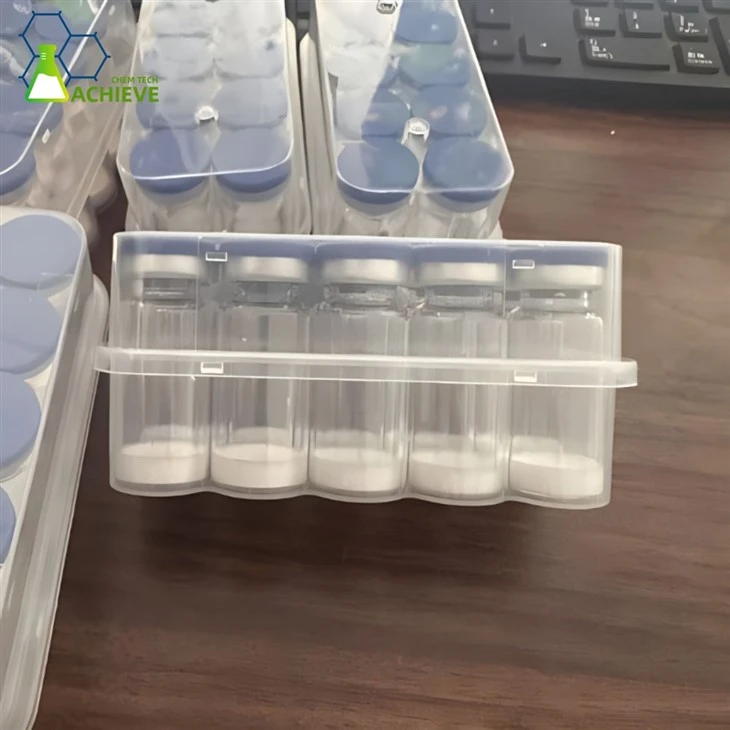

Bioglutide NA-931 is an innovative oral small molecule quadruple receptor agonist that targets the four major metabolic hormone receptors IGF-1R, GLP-1, GIPR, and GCGR. By synergistically activating the glucagon like peptide-1, gastric somatostatin, glucagon, and insulin-like growth factor signaling pathways, it achieves multidimensional metabolic regulation. Its core advantage lies in breaking through the traditional injection restrictions, improving patient compliance through oral administration, and covering obesity and type 2 diabetes.
The drug adopts a small molecule drug design, with optimized molecular structure and high oral bioavailability. The white powder formulation is stable through low-temperature vacuum packaging, and the purity can reach over 98%, which meets the standards of pharmaceutical intermediate enterprises. Its mechanism of action achieves energy balance regulation through multi-target synergy: GLP-1R activates to suppress appetite, GIPR enhances insulin secretion, GCGR promotes fat breakdown, IGF-1R improves muscle metabolism, forming a unique advantage of "weight loss without muscle loss".
Our Product Form


Recently, due to increased orders for Bioglutide, NA-931, we have stocked up on a large quantity of inventory across multiple specifications. So we update the retail unit price for small qty, pls check:
May I know how many mg size in how many PCS do you want to order?
Bioglutide, NA-931 Capsules:
| Price list on sale for in stock product | |
| 10mg | 100mg |
|
100 PCS, $180 USD 300 PCS, $270 USD |
100 PCS, $210 USD 300 PCS, $290 USD |


Bioglutide NA-931 COA
 |
||
| Certificate of Analysis | ||
| Compound name | Bioglutide NA-931 | |
| Grade | Pharmaceutical grade | |
| CAS No. | N/A | |
| Quantity |
55.0g
|
|
| Packaging standard | PE bag+Al foil bag | |
| Manufacturer | Shaanxi BLOOM TECH Co., Ltd | |
| Lot No. | 202511150025 | |
| MFG |
Nov.15 th 2025
|
|
| EXP |
Nov.15 th 2027 |
|
| Structure | N/A | |
| Item | Enterprise standard | Analysis result |
| Appearance |
White or off-white powder
|
White powder
|
| Water content | ≤5.0% | 0.41% |
| Loss on drying | ≤1.0% | 0.26% |
| Purity (HPLC) | ≥99.0% | 99.90% |
| Single impurity | <0.8% | 0.39% |
| Total microbial count | ≤750cfu/g | 80 |
| E. Coli | ≤2MPN/g | N.D. |
| Salmonella | N.D. | N.D. |
| Ethanol (by GC) | ≤5000ppm | 98ppm |
| Storage | Store in a sealed, dark, and dry place below -10° | |
|
|
||



Bioglutide NA-931 is an oral small molecule quadruple receptor agonist that achieves multidimensional metabolic regulation by simultaneously activating glucagon like peptide-1 receptor (GLP-1 R), gastric somatostatin receptor (GIPR), glucagon receptor (GCGR), and insulin-like growth factor-1 receptor (IGF-1R).
Molecular mechanism: biological basis for synergistic activation of four targets
Through advanced small molecule drug design strategies, the unique function of simultaneously targeting four key metabolic hormone receptors has been achieved. This innovative design is not accidental, but based on the results of in-depth research on complex metabolic regulation networks. In living organisms, metabolic processes are a highly coordinated and precise system involving the interactions of numerous hormones and receptors. The four targeted receptors - GLP-1R, GIPR, GCGR, and IGF-1R - play a crucial role in metabolic regulation. Its mechanism of action is based on a series of complex and orderly core principles, which will be analyzed in depth below.
GLP-1R can be regarded as a classic weight loss target and has high attention in the field of metabolic regulation. When GLP-1R is activated, it triggers a series of delicate neuroendocrine responses. At the level of the central nervous system, it can promote the release of neuropeptide Y (NPY) and corticotropin releasing hormone (CRH) from the hypothalamic satiety center. NPY and CRH, as important neurotransmitters, play a crucial role in appetite regulation. Their release will transmit satiety signals to the brain, thereby inhibiting the secretion of ghrelin. Ghrelin is a hunger signaling molecule produced by gastric emptying, and its reduced secretion directly leads to a decrease in an individual's sense of hunger, thereby reducing their food intake.


At the same time, GLP-1R activation also has significant effects in the gastrointestinal tract. It can act on smooth muscle cells in the gastrointestinal tract, delaying the rate of gastric emptying. This means that the residence time of food in the gastrointestinal tract is prolonged, allowing individuals to feel full for a longer period of time. This dual mechanism of action, namely appetite suppression in the central nervous system and increased satiety in the gastrointestinal tract, jointly achieves effective control of food intake. Clinical data provides strong evidence for this mechanism, with patients reducing their daily calorie intake by approximately 30% during its 13 week trial. This significant effect is mainly attributed to the activation of GLP-1R, fully demonstrating its crucial role in weight loss process.
GIPR exhibits high expression in intestinal K cells, which plays an important role in metabolic regulation after eating. After an individual eats, intestinal K cells release glucose dependent insulin-dependent polypeptide (GIP). GIP, as an important gut derived hormone, initiates a series of complex metabolic regulatory processes by activating GIPR.
At the pancreatic level, activated GIPR can promote insulin secretion by pancreatic beta cells. Insulin is a key hormone in regulating blood sugar, which can promote the uptake and utilization of glucose by cells, thereby reducing blood sugar levels. Meanwhile, GIPR activation also inhibits the release of glucagon. Glucagon has the opposite effect to insulin, as it can increase blood sugar levels. By inhibiting the release of glucagon, GIPR activation forms a feedback regulatory mechanism of the gut pancreatic axis, which helps maintain blood glucose stability.

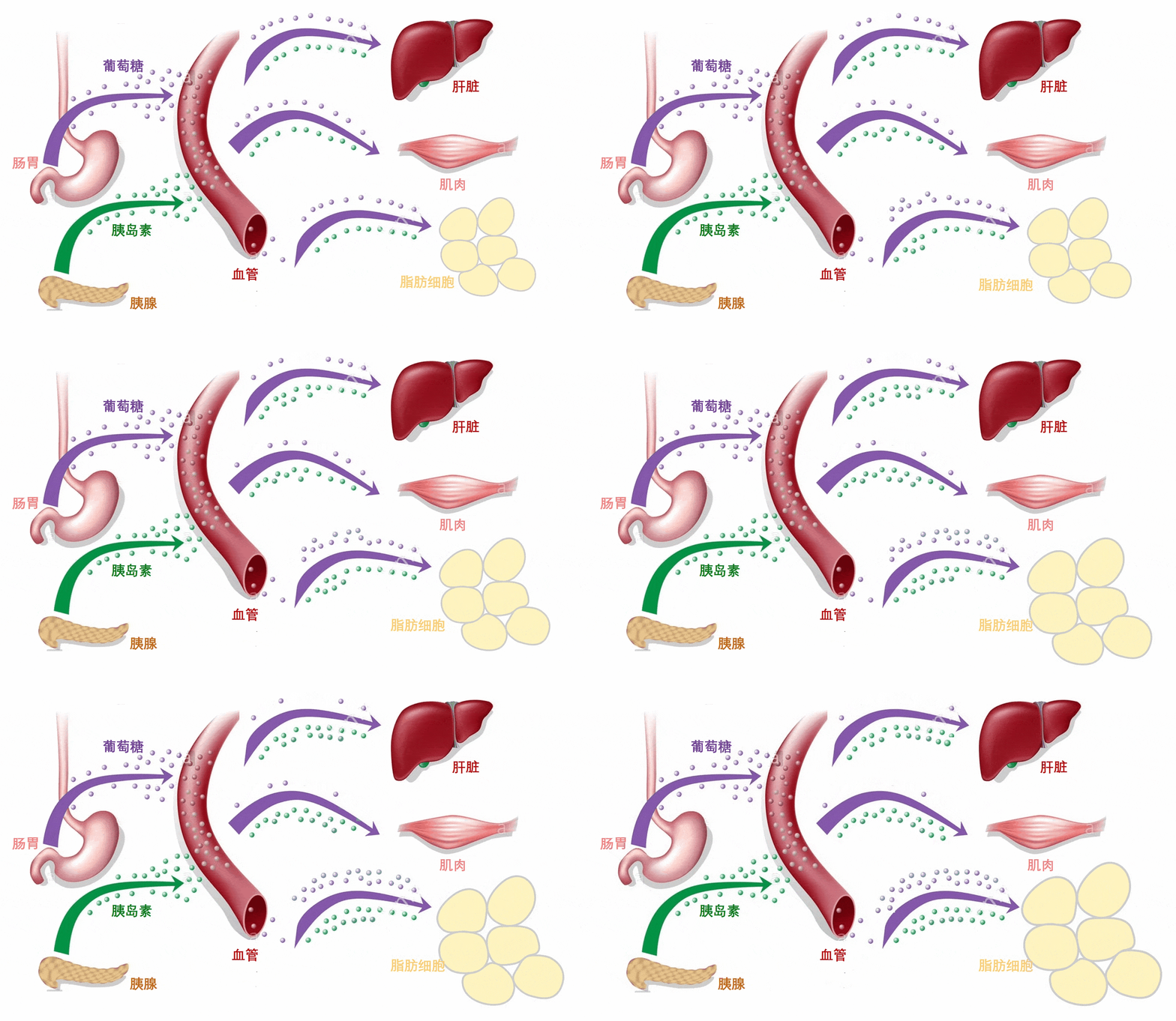
In addition to its regulatory effect on the pancreas, GIPR activation also plays an important role in adipose tissue. It can promote the uptake and utilization of glucose by adipose tissue, allowing more glucose to enter adipocytes and be converted into triglycerides for storage. At the same time, this process also reduces the accumulation of fat in other tissues such as the liver, improving overall fat metabolism. In the Phase II trial of the product, the patient's fasting blood glucose decreased by 1.2 mmol/L and glycated hemoglobin (HbA1c) decreased by 0.8%. This significant effect is closely related to the insulin sensitizing effect of GIPR, further confirming the importance of GIPR activation in metabolic regulation.
GCGR is the core receptor for glucagon and plays a crucial role in regulating energy metabolism. When it activates GCGR, it triggers a series of physiological changes related to fat breakdown and energy expenditure.
In adipose tissue, activated GCGR can act on hormone sensitive lipase (HSL). HSL is a key enzyme in the process of fat breakdown, which can catalyze the breakdown of fat into free fatty acids (FFA) and glycerol. FFA can be released into the bloodstream as an energy substrate for other tissues to utilize, thereby providing energy to the body. This process accelerates the breakdown of fat and reduces fat storage.


Meanwhile, GCGR activation also has a significant impact on liver metabolism. It can activate the hepatic gluconeogenesis and ketone body production pathways. Glycogenesis refers to the process of converting non sugar substances (such as lactate, glycerol, etc.) into glucose, which helps maintain blood sugar balance, especially during hunger or prolonged exercise. Ketone body formation is the process by which the liver converts fatty acids into ketone bodies, which can serve as an energy source for important organs such as the brain. By activating these pathways, GCGR activation not only maintains blood sugar stability, but also provides an additional source of energy for the body.
In the mechanism of action of bioglutide NA-931, activation of GCGR not only accelerates fat breakdown, but also increases energy expenditure by increasing basal metabolic rate (BMR). The basal metabolic rate refers to the minimum energy expenditure required by the body to maintain life activities in a resting state. Animal experiments have shown that GCGR agonists can increase energy expenditure in mice by 15% -20%. This effect has also been validated in clinical data of NA-931, where approximately 30% of the 13.8% weight loss in patients is attributed to an increase in energy expenditure. This fully demonstrates the important role of GCGR activation in promoting energy consumption and weight loss.

IGF-1R activation: protecting muscle mass and improving metabolic homeostasis

IGF-1R is a receptor for insulin-like growth factor-1 (IGF-1) and plays an essential role in muscle growth and metabolic regulation. When it activates IGF-1R, it initiates a series of physiological processes that are beneficial for muscle protection and metabolic improvement.
In muscle tissue, activated IGF-1R can act on muscle satellite cells. Muscle satellite cells are stem cells in muscles that have the ability to self renew and differentiate into mature muscle cells. IGF-1R activation can promote the proliferation and differentiation of muscle satellite cells, thereby promoting the synthesis of muscle proteins. Meanwhile, it can also inhibit muscle breakdown mediated by the ubiquitin proteasome system (UPS) and autophagy lysosome system (ALS). UPS and ALS are important pathways for intracellular protein degradation, playing a crucial role in muscle breakdown. By inhibiting these two systems, IGF-1R activation reduces the degradation of muscle proteins, thereby preventing muscle loss during weight loss.
In addition, IGF-1R activation can enhance insulin sensitivity. Insulin sensitivity refers to the ability of cells in the body to respond to insulin. Increased insulin sensitivity means that cells can more effectively uptake and utilize glucose, thereby improving blood glucose metabolism. At the same time, this process will also have a positive impact on metabolic syndrome related indicators, such as lowering blood lipids, blood pressure, etc. In the Phase II trial of the substance, 72% of patients lost ≥ 12% weight and did not experience a decrease in muscle mass. This result is directly attributed to the muscle protective effect of IGF-1R, fully demonstrating the importance of IGF-1R activation in maintaining muscle mass and improving metabolic homeostasis.

Metabolic Regulation Network: Multi target Collaborative Energy Balance Model
A precise and efficient closed-loop metabolic regulatory network was constructed through the synergistic action of four targets, which includes inhibiting intake, promoting decomposition, enhancing consumption, and protecting muscles. This network organically combines the effects of various targets, achieving comprehensive regulation of energy balance. The core mechanism of this network will be elaborated in detail below.
Energy intake inhibition

GLP-1R and GIPR play a synergistic role in regulating energy intake. They suppress appetite through a dual pathway of central nervous system (hypothalamus) and peripheral signals (gastrointestinal tract), forming a multi-level appetite regulation mechanism.
At the central nervous system level, GLP-1R activation reduces the secretion of ghrelin. Ghrelin is a hunger signaling molecule produced by gastric emptying, which can act on the hunger center of the hypothalamus and stimulate an individual's sense of hunger. GLP-1R activation reduces the transmission of hunger signals at the source by inhibiting the secretion of ghrelin. At the same time, GIPR activation enhances the transmission of satiety signals. The satiety signal is transmitted to the satiety center of the hypothalamus through neural pathways, causing individuals to feel satiety. The synergistic effect of GLP-1R and GIPR makes appetite regulation in the central nervous system more precise and effective.
At the peripheral signal level, the gastrointestinal tract also participates in the process of appetite regulation. GLP-1R activation can delay gastric emptying and prolong the residence time of food in the gastrointestinal tract. This process stimulates the receptors in the gastrointestinal tract, transmitting signals of satiety to the brain. Meanwhile, GIPR activation may also enhance satiety by affecting hormone secretion and neural reflexes in the gastrointestinal tract. The combined effect of the two reduces the patient's daily calorie intake by 25% -35%, effectively controlling energy intake.

Fat breakdown promotion

GCGR plays a leading role in promoting fat breakdown, while GLP-1R and GIPR also play important auxiliary roles. GCGR activates hormone sensitive lipase (HSL) in adipose tissue, which is a critical step in fat breakdown. HSL can catalyze the breakdown of fat into free fatty acids (FFA) and glycerol, allowing fat to release energy.
At the same time, GLP-1R and GIPR have inhibitory effects on fat synthesis by improving insulin sensitivity. Insulin is an important hormone that promotes fat synthesis. When insulin sensitivity increases, cells increase their uptake and utilization of glucose, leading to a decrease in blood sugar levels and a reduction in insulin secretion. In addition, GLP-1R and GIPR activation may directly inhibit the activity of fat synthase (FAS). FAS is a key enzyme in the process of fat synthesis, and a decrease in its activity will reduce fat synthesis. This "promoting decomposition inhibiting synthesis" effect causes the metabolism of fat in the patient's body to move towards decomposition, resulting in a significant decrease in body fat percentage.
The enhancement of energy consumption is an important link for bioglutide NA-931 to achieve weight loss, in which GCGR and IGF-1R play a key role. GCGR increases energy expenditure by enhancing basal metabolic rate (BMR) and thermogenesis. Basal metabolic rate refers to the minimum energy expenditure required by the body to maintain life activities in a resting state, which is influenced by various factors including age, gender, weight, muscle mass, etc. GCGR activation can increase basal metabolic rate by regulating the secretion of metabolism related hormones such as thyroid hormones, allowing the body to consume more energy in a resting state.


Thermogenesis refers to the process by which the body generates heat through metabolic processes, especially in cold environments or during exercise, where thermogenesis is enhanced. GCGR activation can promote thermogenic activity in brown adipose tissue, which is a special type of adipose tissue that can convert chemical energy into thermal energy, thereby increasing energy consumption.
IGF-1R further increases resting energy expenditure (REE) by enhancing muscle mass. Muscles are one of the largest metabolic organs in the human body, and an increase in muscle mass means an increase in the body's basal metabolic rate, which consumes more energy even in a resting state. Clinical data shows that it can increase patients' daily energy expenditure by about 200-300 kcal, equivalent to the energy expenditure of jogging for 30 minutes. This significant increase in energy expenditure helps patients achieve their weight loss goals.
The protection of muscle mass is crucial in the process of weight loss. IGF-1R plays a central role in this regard. It activates muscle satellite cells, promotes protein synthesis, and provides a material basis for muscle growth and repair. The proliferation and differentiation of muscle satellite cells can increase the number of muscle cells, while protein synthesis can increase the volume and mass of muscle cells.
Meanwhile, IGF-1R inhibits muscle breakdown mediated by the ubiquitin proteasome system (UPS) and autophagy lysosome system (ALS). UPS and ALS are important pathways for intracellular protein degradation, playing a crucial role in muscle breakdown. During weight loss, due to reduced energy intake, the body may activate the muscle breakdown pathway to provide energy. IGF-1R activation reduces muscle protein degradation by inhibiting these two systems, thereby preventing muscle loss.


In the phase II trial of NA-931, the patient's muscle mass remained stable and their body fat percentage decreased by 12%. This result is superior to traditional weight loss drugs such as semaglutide, which has a muscle loss rate of about 5% -10%, fully demonstrating the advantage of bioglutide NA-931 in protecting muscle mass. This advantage not only helps improve the quality of life of patients, but also reduces the risk of weight rebound after weight loss, providing a guarantee for maintaining long-term weight loss effects.
Hot Tags: bioglutide na-931, China bioglutide na-931 manufacturers, suppliers, Tirzepatide Oral Drops, hgh fragment 176 191 peptide, Semaglutide Gummies, AOD 9604 Powder, AOD 9604 Injection, ghrp 6 tablets


