




The synergistic application of Retatrutide Peptide with the latest healthy dietary guidelines achieves multidimensional benefits-including weight loss, glycemic control, cardiovascular protection, and liver health-through complementary mechanisms, behavioral reinforcement, and long-term management. This represents a crucial strategy for comprehensive metabolic disease management. Personalized treatment plans must be developed under professional guidance based on individual circumstances, with continuous monitoring and adjustments to maximize therapeutic efficacy and safety.
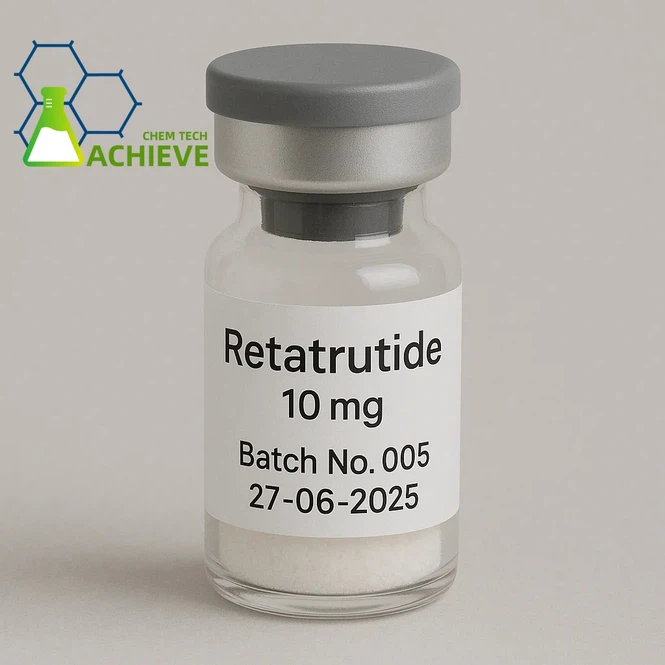
Our Products Form



Retatrutide COA

Retatrutide TEST REPORT
 |
 |
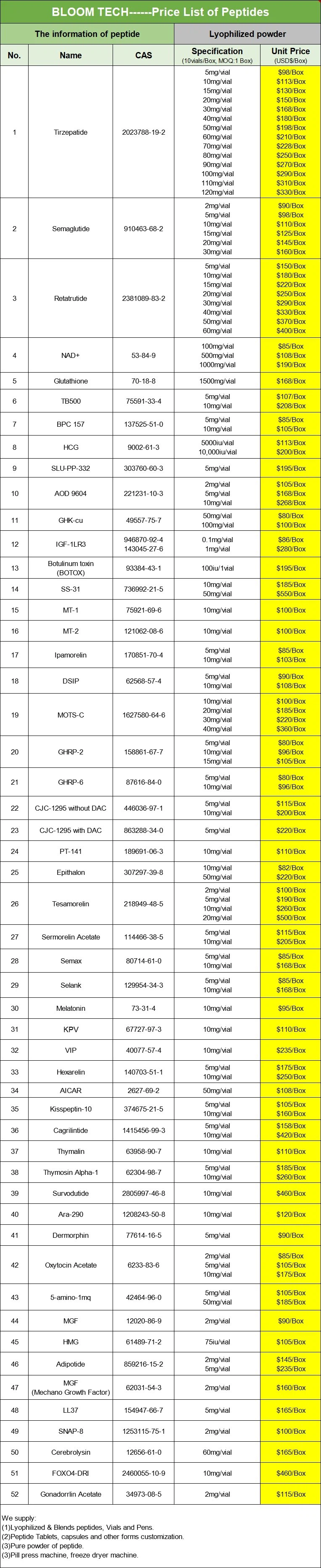
You can fully rely on BLOOM TECH as your trusted Retatrutide supplier. With 12 years of expertise in fine chemical and pharmaceutical intermediate synthesis, our GMP-certified manufacturing facilities strictly comply with regulatory standards set by the US FDA, EU, Japanese PMDA and CFDA to guarantee consistent, pharmaceutical-grade raw materials.The attached official test reports fully validate our superior product quality: our retatrutide consistently delivers purity far exceeding the 98% pharmaceutical threshold, with test samples reaching up to 99.857% purity, and accurate, stable active ingredient content as confirmed by blind peptide screening and vial content assessment. Beyond premium high-purity peptides, we deliver one-stop full solutions including complete analytical certification documents, customs clearance support and professional technical consultation, ensuring full regulatory compliance, stable supply chains and reliable materials for your research, formulation development and commercial projects.
Lifestyle Enhancement: Key Pathways for Synergistic Effects

Diet-Exercise Synergy:
The drug promotes caloric deficit by delaying gastric emptying and reducing appetite, but optimal results require combination with a low-GI diet and regular aerobic/resistance exercise. Clinical recommendations include 150 minutes weekly of moderate-intensity exercise to maintain muscle mass and metabolic rate.

Behavioral Intervention Enhancement:
Integrating cognitive behavioral therapy (CBT) or digital health tools (e.g., dietary diary apps) improves treatment adherence and prevents the "weight loss-regain" cycle.

Special Population Management:
Obese patients with osteoarthritis can significantly improve functional scores by reducing joint load through weight loss combined with physical therapy. Those with coexisting sleep apnea require continuous positive airway pressure (CPAP) therapy.
metabolic regulation mechanisms that synergize profoundly with the 2026 updated healthy diet guidelines

Appetite Suppression and Calorie Control:
Retatrutide Peptide suppresses central appetite by activating GLP-1R/GIPR, reducing hunger sensations. This aligns closely with the guideline principle of "controlling total calories and selecting low-energy-density foods." For instance, pairing whole grains (oats, brown rice), dark leafy greens (spinach, broccoli), and high-quality protein (fish, soy products) creates a "low GI + high fiber + high protein" satiety combination, reducing cravings for high-sugar, high-fat processed foods (cookies, fried snacks).
Optimized Fat Metabolism:
Activation of glucagon receptors promotes lipolysis, synergizing with the guideline recommendation to "reduce saturated fats and increase unsaturated fatty acids." Recommended sources include olive oil, nuts, and deep-sea fish (e.g., salmon), while reducing animal fats, coconut oil, and processed meats (e.g., sausages, bacon) to lower cardiovascular risk.


Blood Glucose Regulation:
GLP-1R/GIPR synergistically enhance insulin secretion and improve insulin sensitivity, aligning with guidelines advocating "controlling total carbohydrate intake and choosing whole grains." Whole grains (e.g., quinoa, buckwheat) delay blood glucose spikes, providing dual protection alongside pharmacological glucose-lowering effects.
Synergistic Effects of Long-Term Health Management
Reversal of Metabolic Syndrome:
By controlling total calorie intake, increasing consumption of whole grains/vegetables/high-quality protein, and leveraging retatrutide's metabolic regulation effects, components of metabolic syndrome such as hypertension, hyperglycemia, and dyslipidemia are reversed.
Cardiovascular Risk Reduction:
Decreased saturated fat intake, increased unsaturated fatty acids, and controlled salt consumption (<5g daily) synergize with retatrutide's blood pressure and lipid-regulating effects to lower cardiovascular disease risk.
Quality of Life Enhancement:
Weight loss, stable blood glucose, and pain relief improve physical function scores (e.g., WOMAC scale). Combined with regular exercise and adequate sleep, these factors boost daytime vitality and overall quality of life.
Association Between Fried Foods/Processed Snacks and Type 2 Diabetes
Direct Risk Mechanisms
Metabolic Dysregulation Drivers:
Fried foods (e.g., fried chicken, French fries) and processed snacks (e.g., potato chips, cookies) contain high calories, trans fatty acids, refined sugars, and additives. Long-term consumption leads to obesity, insulin resistance, and blood glucose fluctuations.
French research
a 10% increase in processed food intake raises the risk of type 2 diabetes by 15%; daily consumption of 1g of trans fatty acids increases coronary heart disease risk by 2% and accelerates atherosclerosis progression by 1.5 times.
Inflammation and Oxidative Stress:
Acrylamide and advanced glycation end-products (AGEs) generated during high-temperature cooking damage vascular endothelium, exacerbating diabetic microvascular complications (e.g., nephropathy, retinopathy).
Gut Microbiota Dysbiosis:
High-fat, high-sugar diets disrupt gut microbial balance, promoting pro-inflammatory metabolite production and further impairing insulin sensitivity.
Clinical Evidence Supports
▉
Diabetic patients who frequently consume fried foods experience 30%-50% greater postprandial blood glucose fluctuations and 20%-30% higher low-density lipoprotein cholesterol (LDL-C) levels, accelerating atherosclerosis progression.
▉
Long-term consumption of processed snacks makes glycated hemoglobin (HbA1c) control more difficult, increases the risk of diabetic nephropathy by 35%, and significantly raises the incidence of cardiovascular events compared to low-risk dietary groups.
In-Depth Analysis of Combined Intervention Strategies:
A Three-Dimensional Framework of Dietary Synergy, Exercise Enhancement, and Behavioral Intervention with Retatrutide Peptide:Dietary Synergy: Building a Metabolism-Friendly Dietary System with Low Calories and High Satiety. The precise application of a low GI diet requires refinement at the level of food selection and pairing.
Dietary Synergy:
01
Whole grains like oats, quinoa, and brown rice should constitute over 50% of staple foods. Their beta-glucan content slows gastric emptying to 4-6 hours. Pairing these with high-fiber cruciferous vegetables (e.g., broccoli, spinach, containing 2-3g dietary fiber per 100g) creates a "time-delayed satiety effect."
02
High-quality protein sources should follow a "dual animal-plant" principle: deep-sea fish (e.g., salmon, mackerel) provide EPA/DHA (1.5-2.5g per 100g), while soy products (e.g., tofu, natto) supplement isoflavones and plant protein. Together, they synergistically reduce muscle breakdown rates.
03
Control daily intake of unsaturated fatty acids (20-25% of total calories). Olive oil's monounsaturated fats (70-80%) and nut polyphenols (e.g., walnut resveratrol) form an antioxidant network, reducing "oil craving" relapse during fried food substitution.
Exercise Synergy:
Precision Exercise Programs from Metabolic Adaptation to Muscle Protection

01
The recommended 150 minutes of moderate-intensity exercise per week should be broken down into either "5 sessions of 30 minutes" or "3 sessions of 50 minutes." This approach synergizes with Retatrutide's metabolic regulation properties. Exercise selection should follow the "dual-mode aerobic-resistance" principle: Aerobic activities like brisk walking (6-7 km/h) or swimming (primarily freestyle) enhance cardiorespiratory function and boost fat oxidase activity.
02
Resistance exercises such as squats, push-ups, and resistance band training maintain muscle mass (each additional kilogram of muscle increases basal metabolic rate by 50-70 kcal/day). Exercise intensity should be verified via the "talk test"-exercise at a pace where conversation is possible but singing is difficult, with heart rate reaching 60-70% of maximum heart rate (maximum heart rate = 220 - age).


03
Exercise timing should align with the drug's peak effect. With a half-life of approximately 5-7 days, Retatrutide Peptide is best administered at a consistent weekly time (e.g., Saturday mornings) when drug concentration is stable to maximize metabolic effects. Perform dynamic warm-ups and static stretches before and after exercise to reduce injury risk. For example: 5 minutes of dynamic stretching (high knees, walking lunges) before brisk walking; 10 minutes of static stretching (quadriceps stretch, calf stretch) after exercise.
04
Special populations require personalized exercise adjustments. Obese patients with osteoarthritis may benefit from aquatic exercises (e.g., water walking, aquatic tai chi) to reduce joint stress through buoyancy. Elderly patients may use seated resistance training (e.g., seated leg raises, seated rowing) to maintain muscle mass while minimizing fall risks. Monitor heart rate, blood pressure, and blood glucose levels during exercise to prevent hypoglycemic episodes.

Behavioral Intervention:
Sustainable Behavior Change from Cognitive Restructuring to Habit Formation

01
Food diaries should employ the "5W1H" recording method: document meal timing (When), food types (What), portion sizes (How much), eating environment (Where), and emotional state during meals (How feel). For example: "October 15, 2023, 12:30 PM, Lunch: 100g brown rice + 150g chicken breast + 200g broccoli, Office setting, Emotionally stable." Seven consecutive days of recording can identify "emotional eating" patterns (e.g., consuming sugary snacks during anxiety) and enable targeted coping strategies (e.g., replacing eating with deep breathing).
02
Cognitive Behavioral Therapy employs the "ABCDE" model: Identify the Activating event, Belief system, Emotional consequence, Dispute the belief through Dialectical thinking, and establish New behavior. For example: - Activating event: "Colleague shares fried snacks" - Belief system: "Refusing will lead to exclusion" - Emotional consequence: 'Anxiety' - Disputation: "Declining fried foods protects health" - New behavior: "Politely decline and share healthy snacks (e.g., fruit platter)"


03
To break the "weight loss-regain" cycle, establish a "three-line defense" system: Short-term defense is a "substitute behavior bank" (e.g., choosing air-fried mushroom strips over potato chips when craving chips). Mid-term defense is a "social support network" (e.g., joining a weight loss group for mutual accountability). Long-term defense is "self-efficacy cultivation" (e.g., building confidence by successfully losing 5 kilograms). Special attention should be given to strategies for handling festive and holiday scenarios. For example, during the Spring Festival, adopt the "Three-Bite Rule" (take only three bites of each food item). During the National Day holiday, use the "Exercise Compensation Method" (e.g., for every 100 extra calories consumed, add 15 minutes of exercise).
Development and Implementation of Individualized Programs
01
Individualized programs must account for age, gender, underlying conditions, lifestyle habits, and cultural background. For instance, young obese patients may adopt a "High-Intensity Interval Training (HIIT) + High-Protein Diet" regimen, middle-aged diabetic patients may follow a "Moderate-Intensity Aerobic Exercise + Low-GI Diet" approach, while elderly patients may utilize a "Low-Intensity Resistance Training + High-Fiber Diet" plan.

02
Cultural background must inform dietary choices. For instance, Asian populations preferring rice may adopt a "whole grain rice substitution method" (e.g., oat rice, quinoa rice); Western populations favoring bread may use a "whole grain bread substitution method" (e.g., selecting bread with ≥50% whole grain flour content). Lifestyle habits necessitate adjusting meal timing. For "night owls," the "delayed breakfast method" (e.g., eating breakfast at 9:00 AM) is recommended, while "early birds" may benefit from the "early dinner method" (e.g., eating dinner at 6:00 PM).

The combined intervention strategy employs a three-dimensional framework of dietary synergy, exercise enhancement, and behavioral intervention to reverse metabolic syndrome and achieve long-term health management. Dietary synergy constructs a metabolic-friendly dietary system featuring low calories and high satiety. Exercise enhancement boosts metabolic rate and muscle preservation. Behavioral intervention reshapes cognitive patterns and fosters habit formation. Through personalized plan development and implementation, combined with dynamic monitoring and adjustments, multidimensional benefits-including weight loss, blood sugar reduction, cardiovascular protection, and liver health-can be achieved, enhancing long-term quality of life.
Hot Tags: retatrutide peptide, China retatrutide peptide manufacturers, suppliers, Tirzepatide Oral Drops, hgh fragment 176 191 peptide, Semaglutide Gummies, AOD 9604 Powder, AOD 9604 Injection, ghrp 6 tablets


