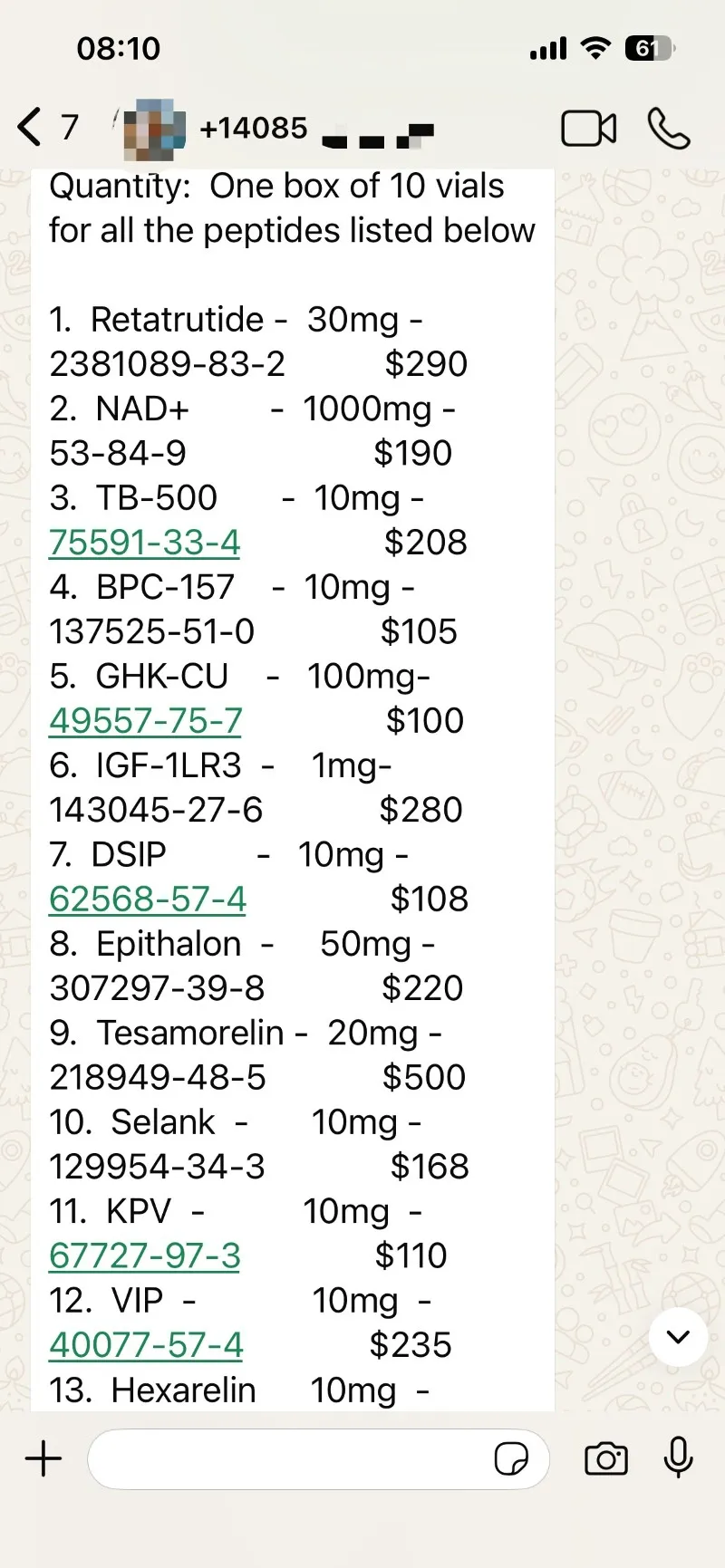
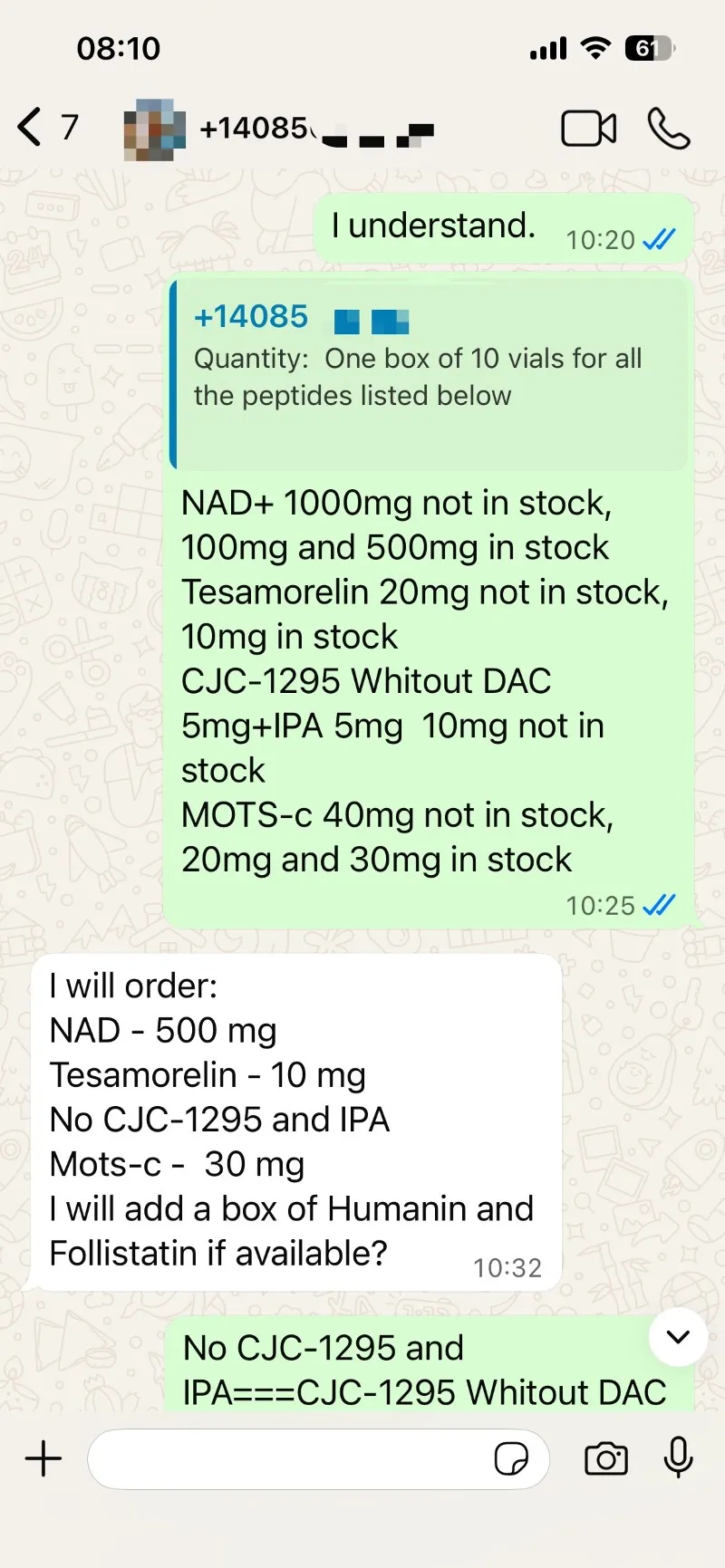
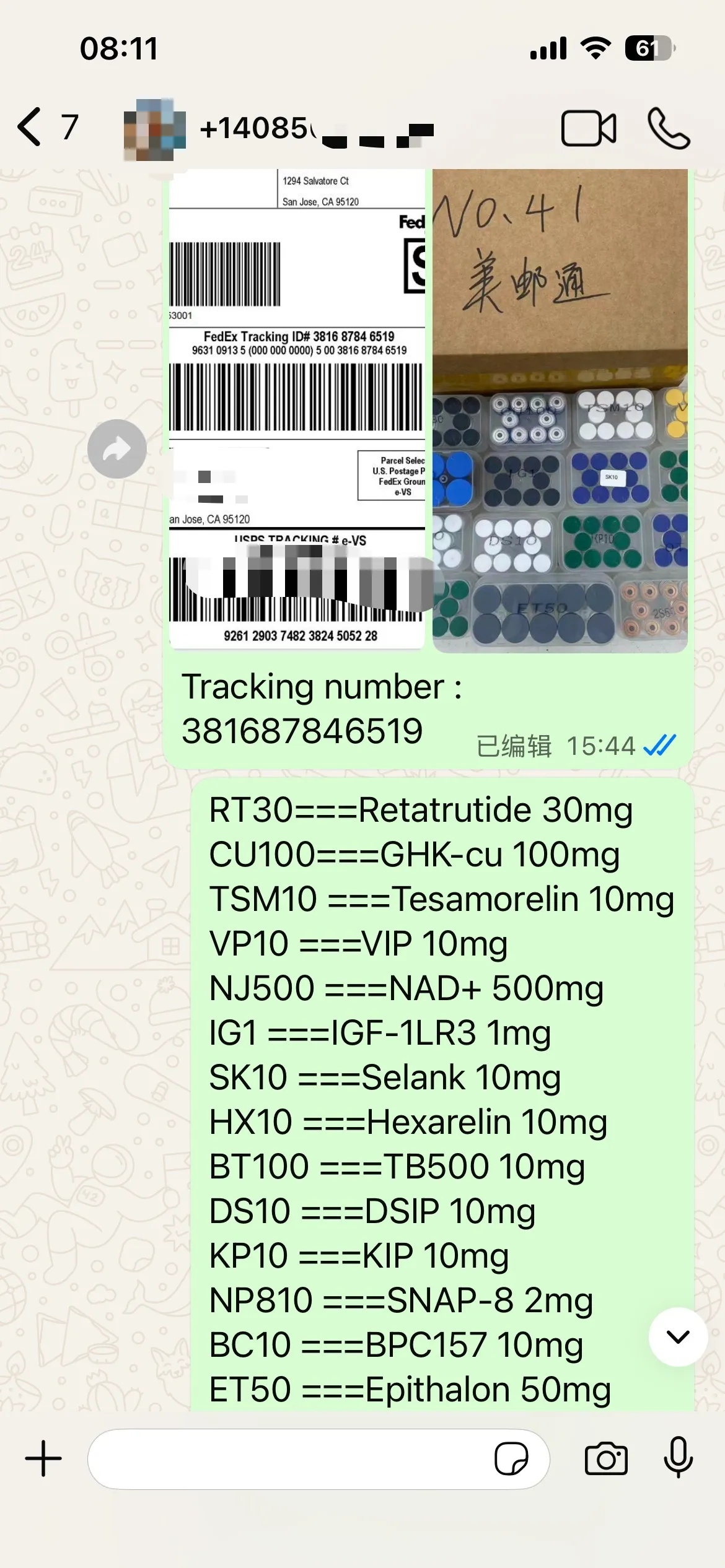
Recently, we welcomed a new client from the United States. Their first collaboration resulted in an order for a total of 16 vials of peptide products, covering various varieties such as Retatrutide, Tesamorelin, IGF-1LR3 and NAD+. After receiving the order, we promptly conducted an inventory check and found that some of the existing product specifications could not fully meet the shipping requirements for this order. To ensure that the customer could receive high-quality products in a timely manner, we actively communicated with the customer in a friendly and transparent manner, explained the inventory situation, and proposed a reasonable specification replacement plan. The customer appreciated our professional attitude and proactive coordination, and readily agreed to replace some of the products with other available specifications. Finally, this order was successfully shipped. The customer expressed satisfaction with the cooperation process and clearly expressed their willingness to continue the cooperation, looking forward to further deepening the partnership between us in subsequent business. We will also continuously optimize the product inventory and service system to provide more stable and efficient support for every customer.
business process



IGF-1 LR3 is an engineered version of the natural insulin-like growth factor-1. Through two key structural modifications - replacing the third glutamic acid with arginine and extending the N-terminal by 13 amino acids - it breaks free from the binding of proteins, extending its half-life from approximately 10 minutes to 20 to 30 hours and increasing its biological activity by about 2 to 3 times. It is precisely this "long-lasting and highly active" characteristic that enables it to continuously and stably activate the growth signals within muscle cells, driving the actual growth of muscle tissue from multiple aspects.
Activate two key signaling pathways: the molecular engines for muscle growth
When IGF-1 LR3 binds to the IGF-1R receptor on the muscle cell membrane, it triggers two classic signal cascades, which is the fundamental molecular mechanism by which it promotes muscle growth.
The first pathway is the PI3K-Akt-mTOR pathway. After the receptor is activated, it recruits PI3K through insulin receptor substrate proteins, thereby activating Akt. Activated Akt performs several key functions: it inhibits GSK-3β, removing the restriction on glycogen synthesis; it activates mTORC1, which is the core switch controlling protein synthesis within the cell and directly drives the large-scale translation of muscle proteins by ribosomes. At the same time, Akt can phosphorylate and inhibit the FOXO transcription factor, thereby down-regulating the expression of genes related to muscle atrophy, reducing protein breakdown at its source. This means that IGF-1 LR3 not only "builds" but also "guards" - accelerating synthesis while preventing loss.
The second pathway is the Ras-MAPK pathway. It activates Ras through the Shc/Grb2/SOS complex and initiates the Raf-MEK-ERK cascade reaction. This pathway mainly regulates the cell cycle process and gene transcription, promoting the transition of cells from the quiescent state to the division state. In muscle tissue, it directly drives the proliferation and differentiation of muscle cells, and is the key pathway for achieving "muscle hypertrophy" - that is, the actual increase in the number of muscle fibers.Two pathways work together. One promotes "thickening", and the other promotes "lengthening". Together, they form the complete molecular logic of IGF-1 LR3 for muscle growth.

Satellite cell activation: The true source of muscle hypertrophy
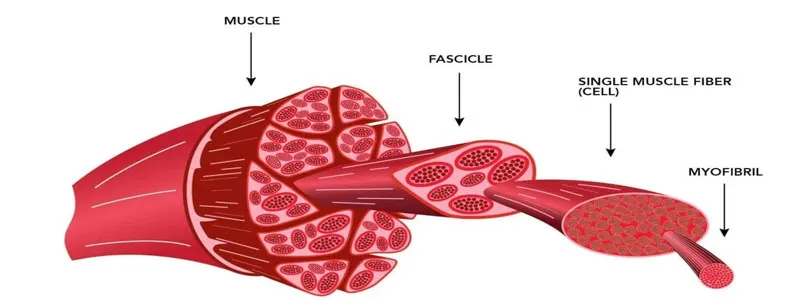
The most highly regarded ability of IGF-1 LR3 is to activate muscle satellite cells. Satellite cells are stem cells attached to the surface of muscle fibers. They are usually in a dormant state and are only awakened when stimulated by a sufficiently strong growth signal. Once activated, satellite cells will proliferate, differentiate, and fuse with existing muscle fibers or form new ones.
This is the fundamental difference between "muscle hypertrophy" and "muscle hyperplasia". Steroids and other substances mainly make the existing muscle fibers thicker, while IGF-1 LR3 can increase the number of muscle fibers themselves. Research data shows that IGF-1 LR3 can significantly increase the muscle DNA content, muscle protein content, muscle weight, and muscle cross-sectional area. In animal experiments, the muscles injected with IGF-1 LR3 showed an increase in strength of up to 27% compared to the control side, and the muscle mass increased by an average of about 15%. More importantly, this proliferative effect is further amplified when combined with strength training - the micro-damage caused by training itself is a strong signal to activate satellite cells, and IGF-1 LR3 precisely provides continuous proliferation instructions for these awakened cells.
Nitrogen retention and protein synthesis: Converting raw materials into muscles
IGF-1 LR3 strongly promotes the transport of amino acids to muscle cells, and at the same time increases the cells' uptake and utilization of glucose.
In lean tissues, it also prevents the transmembrane transport of glucose in the form of insulin, forcing the muscle cells to burn fat for energy instead, thereby saving more glucose and amino acids for protein synthesis.
This leads to an extremely important outcome: the retention of nitrogen has significantly increased. Nitrogen is the core element of proteins. A positive nitrogen balance means that the amount of nitrogen ingested is greater than the amount excreted.
The excess nitrogen is used to build new muscle tissues. IGF-1 LR3 also increases RNA synthesis, providing sufficient genetic templates for the large-scale production of proteins.
It can be said that it simultaneously turns on the "raw material supply" and "production machinery" to the maximum power.
Strong anti-apoptotic effect: Keeping newly grown muscles intact

Muscle growth is not just about "building more", but also about "staying intact". IGF-1 LR3 phosphorylates pro-apoptotic proteins such as Bad and Caspase-9 through the Akt pathway, providing a powerful survival signal for muscle cells. This means that in the case of significant muscle cell damage caused by high-intensity training, IGF-1 LR3 can significantly reduce cell death, accelerate the repair process, and prevent the wasted growth signals brought by training. This anti-apoptotic effect is particularly crucial during the recovery phase - it enables the muscles to remain in a highly synthetic state within 48 to 72 hours after training, rather than entering a catabolic state.
Integration with training: Why is it necessary to combine strength training
IGF-1 LR3 is itself a signaling molecule, providing "growth instructions", but these instructions require an "execution scenario". The mechanical tension and metabolic stress caused by strength training are the physical triggers that activate satellite cells and open the mTOR pathway.
Without training stimulation, the proliferative effect of IGF-1 LR3 would be greatly reduced; but with training, its signal is amplified by several times.
Furthermore, the lactate produced locally by the muscles after training will alter the conformation of some receptors.
The long-lasting nature of IGF-1 LR3 enables it to continuously bind to these receptors for several hours after training, extending the growth signal throughout the recovery window.
This is why in the studies, the group that combined IGF-1 LR3 with weight training showed significantly greater increases in muscle protein content and cross-sectional area compared to those using either agent alone.
Conclusion
The essence of IGF-1 LR3 promoting muscle growth lies in its ability to simultaneously activate two pathways, PI3K-Akt-mTOR and Ras-MAPK, through long-term activation. This results in accelerated protein synthesis, inhibition of protein degradation, proliferation and differentiation of satellite cells, and resistance to cell apoptosis. It not only makes the muscle fibers thicker but also increases the number of muscle fibers. This "both thickening and proliferation" dual mechanism makes it the most potent form of IGF-1 known so far, and it is the core reason why it is widely used in cell culture and scientific research fields.