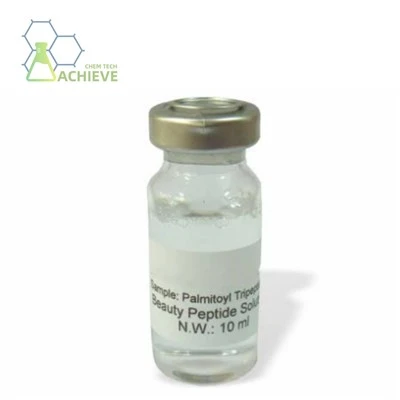


Tripeptide-1 (Aldenine) is a naturally occurring small-molecule bioactive tripeptide in the human body, assembled from three amino acids-glycine, histidine and lysine-in a specific sequence. Widely distributed in multiple human body fluids and tissues including blood plasma, saliva and cerebrospinal fluid, it acts as one of the core active fragments governing collagen metabolism in the organism. Tripeptide-1 for skin can be generated via enzymatic hydrolysis of Type I collagen. It accurately senses the metabolic status of the extracellular matrix and triggers endogenous repair responses, exhibiting excellent biocompatibility and safety profiles. Its most defining property lies in its high binding affinity for copper ions to form the bioactive GHK-Cu complex. As a critical coenzyme, copper ions activate a broad spectrum of repair-related enzymes, drastically amplifying the peptide's biological activity.
Our Products Form


Tripeptide-1 COA
 |
||
| Certificate of Analysis | ||
| Compound name | Tripeptide-1 | |
| Grade | Pharmaceutical grade | |
| CAS No. | 72957-37-0 | |
| Quantity | 35g | |
| Packaging standard | PE bag+Al foil bag | |
| Manufacturer | Shaanxi BLOOM TECH Co., Ltd | |
| Lot No. | 202601090056 | |
| MFG | Jan 9th 2026 | |
| EXP | Jan 8th 2029 | |
| Structure |
|
|
| Item | Enterprise standard | Analysis result |
| Appearance | White or almost white powder | Conformed |
| Water content | ≤5.0% | 0.22% |
| Loss on drying | ≤1.0% | 0.19% |
| Heavy Metals | Pb≤0.5ppm | N.D. |
| As≤0.5ppm | N.D. | |
| Hg≤0.5ppm | N.D. | |
| Cd≤0.5ppm | N.D. | |
| Purity (HPLC) | ≥99.0% | 99.98% |
| Single impurity | <0.8% | 0.46% |
| Total microbial count | ≤750cfu/g | 500 |
| E. Coli | ≤2MPN/g | N.D. |
| Salmonella | N.D. | N.D. |
| Ethanol (by GC) | ≤5000ppm | 600ppm |
| Storage | Store in a sealed, dark, and dry place below -20°C | |
|
|
||
|
|
||



| Chemical Formula | C16H28N6O6 |
| Exact Mass | 400.21 |
| Molecular Weight | 400.44 |
| m/z | 400.21 (100.0%), 401.21 (17.3%), 401.20 (2.2%), 402.21 (1.4%), 402.21 (1.2%) |
| Elemental Analysis | C, 47.99; H, 7.05; N, 20.99; O, 23.97 |
Mechanisms at the Genomic Regulation Level
Characteristics of Global Gene Expression Regulation
Genomic research verifies that tripeptide-1 for skin targets and modulates the expression of over 4,000 human functional genes, accounting for approximately 31.2% of the total human genome. It systematically governs core physiological pathways covering tissue repair, inflammatory response, oxidative metabolism and matrix remodeling. Rather than acting on a single target, it facilitates tissue regeneration and cellular homeostasis remodeling through genome-wide regulation. Its gene regulatory pattern features prominent bidirectional targeting: it rectifies dysregulated gene expression in accordance with the cellular microenvironment. In injured microenvironments, it upregulates repair genes and suppresses damage-associated genes; in intact tissues, it sustains genetic homeostasis to prevent excessive cell proliferation and inflammatory reactions.


Compared with conventional repair factors that only activate individual pathways, aldenine's genomic regulation delivers systematic and holistic advantages. It corrects metabolic disorders triggered by wound damage at the genetic source, laying a stable foundation of balanced gene expression for wound healing.
Upregulation of Repair-Functional Genes
Tripeptide-1 markedly elevates the expression of four core categories of repair genes responsible for tissue regeneration, matrix synthesis, angiogenesis and antioxidant defense. In terms of extracellular matrix synthesis, it activates transcription of COL1A1, COL3A1, ELN and other genes to boost the production of Type I and Type III collagens as well as elastin. Meanwhile, it upregulates integrin family genes to strengthen cell-matrix adhesion and stabilize newly formed tissue structures.
For angiogenesis, it selectively activates VEGF and bFGF gene expression to stimulate proliferation and differentiation of vascular endothelial cells, accelerate reconstruction of wound microcirculation, deliver nutrients and oxygen to damaged tissues, and alleviate ischemic-hypoxic conditions in wounds. At the antioxidant regulation level, it upregulates antioxidant enzyme genes such as SOD and GSH-Px to enhance cellular antioxidant capacity, eliminate excess reactive oxygen species generated during wound repair, and mitigate oxidative damage to nascent cells. Additionally, it activates genes associated with keratinocyte migration, expediting proliferation and migration of epidermal cells to rapidly re-epithelialize wound surfaces.
Downregulation of Injury and Inflammatory Genes
Wound trauma induces abnormal overexpression of pro-inflammatory genes, leading to persistent inflammatory infiltration, delayed wound closure and hypertrophic scarring.


Through genomic modulation, aldenine significantly inhibits transcription of pro-inflammatory genes including tumor necrosis factors and interleukins, blocks inflammatory cascade signaling pathways, and reduces infiltration and aggregation of inflammatory cells within wound tissue. It also downregulates matrix metalloproteinase family genes to restrain excessive matrix degradation, preventing abnormal breakdown of newly synthesized collagen and elastin and maintaining metabolic balance of the extracellular matrix. Furthermore, it suppresses genes linked to pathological wound fibrosis, curbing over-proliferation of fibroblasts and lowering the risk of hypertrophic scarring at the genetic level to achieve scar-free repair. This dual genomic regulatory mode of anti-inflammation and matrix stabilization effectively addresses three core challenges in wound healing: unregulated inflammation, matrix metabolic imbalance and excessive scar formation.
Molecular Mechanisms of Wound Repair
Antioxidant Stress Mechanism for Wound Protection
Following wound formation, tissue rupture triggers massive accumulation of reactive oxygen species free radicals, which disrupt cell membrane structures, damage cellular DNA and inhibit cell proliferation-major contributors to delayed wound healing. Tripeptide-1 for skin and its copper complex exert antioxidant effects via multiple molecular pathways. On one hand, they directly scavenge surplus reactive oxygen species in the wound microenvironment, interrupt oxidative stress chain reactions and reduce oxidative injury. On the other hand, they upregulate synthesis of antioxidant enzymes through genomic regulation to build a long-term antioxidant defense system. Meanwhile, the tripeptide preserves mitochondrial structural and functional integrity, reduces wound cell apoptosis, and maintains the quantity and viability of surviving wound cells.


Relevant experimental data demonstrates that aldenine reduces UV and trauma-induced DNA damage by 42%, effectively protecting residual wound cells to establish a cellular basis for subsequent tissue regeneration and avoiding complications such as ulceration and prolonged healing caused by sustained oxidative stress.
Anti-Inflammatory Homeostasis Mechanism for Wound Microenvironment Modulation
The inflammatory phase represents a pivotal transitional stage in wound repair. Moderate inflammation clears foreign debris from wounds, yet persistent excessive inflammation impairs the repair process. Tripeptide-1 precisely modulates the inflammatory microenvironment of wounds by inhibiting activation of the NF-κB inflammatory signaling pathway, halting continuous release of pro-inflammatory mediators, lowering the intensity of wound inflammatory responses and shortening the inflammatory cycle.
In the early wound stage, it rapidly alleviates tissue redness, exudation and edema, and diminishes inflammatory cell infiltration. During the mid-repair phase, it sustains microenvironmental homeostasis to prevent recurrent tissue damage from repeated inflammatory stimulation. Moreover, aldenine upregulates expression of skin tight junction proteins claudin-1 and occludin to reconstruct the skin barrier, reduce transepidermal water loss from wounds, minimize secondary damage from external irritants, further stabilize the wound repair microenvironment, and create favorable conditions for cell proliferation and tissue regeneration.
Mechanism of Cell Proliferation, Migration and Tissue Remodeling
The core of wound repair lies in cell proliferation, migration and extracellular matrix remodeling. Tripeptide-1 targets and regulates biological behaviors of multiple key cell types involved in wound healing.


For keratinocytes, it dramatically accelerates cell migration speed by up to 2.3 times the normal rate, speeding epidermal coverage and rapidly closing wound defects.For fibroblasts, it moderately promotes cell proliferation and vitality, induces ordered synthesis of matrix components including collagen and elastin to fill tissue defects, while avoiding hypertrophic scarring stemming from aberrant fibroblast overgrowth. In matrix remodeling, tripeptide-1 for skin precisely balances matrix synthesis and degradation: it breaks down fragmented, disorganized aged matrix from damaged wounds while guiding ordered alignment of newly formed matrix to reconstruct well-structured dermal tissue, resolving irregular tissue topography and matrix disorder common in conventional repair protocols. Animal studies confirm that aldenine applied at a concentration of 1 mg/cm² accelerates full-thickness skin wound closure by 30%, markedly shortening the overall wound repair cycle.
Mechanism of Angiogenesis and Microcirculation Reconstruction
Wound healing relies on sufficient blood supply; ischemia and hypoxia constitute the primary barrier to recovery of chronic wounds. Tripeptide-1 activates core angiogenic signaling pathways such as VEGF and bFGF to stimulate proliferation, migration and lumen formation of vascular endothelial cells, accelerating generation of new microvessels within wounds. Newly formed microvessels rapidly rebuild wound microcirculation and boost local blood flow-experiments confirm a 55% elevation in wound microcirculatory blood flow-to deliver abundant oxygen, nutrients and repair factors while timely removing metabolic waste and inflammatory mediators. For ischemic chronic wounds including diabetic ulcers and old refractory wounds, this mechanism effectively ameliorates local ischemia, breaks the vicious cycle of stalled chronic wound repair, awakens dormant repair cells, facilitates gradual closure of chronic lesions, and drastically improves healing efficiency for hard-to-treat wounds.

Research Progress

In recent years, research on aldenine's wound repair mechanisms and applications has achieved continuous breakthroughs, evolving from fundamental molecular mechanism exploration toward clinical translation and expanded application scenarios. At the basic research level, academic communities have clarified its core mechanisms of multi-target genomic regulation and synergistic multi-pathway repair. Studies validate its potent regenerative efficacy against acute traumatic wounds, post-surgical lesions, chronic ulcers and photodamaged wounds, alongside zero cytotoxicity and irritation, conferring exceptional biological safety.
Compound formulation research has emerged as a hot field: the TriHex composite peptide system combining aldenine and Decapeptide-12 enables bidirectional modulation of matrix degradation remodeling and neotissue synthesis, further optimizing wound healing outcomes. In clinical research, multiple animal model trials and human studies prove that aldenine shortens the erythema and scabbing phases of wounds, lowers scarring risk, and delivers remarkable curative effects on refractory lesions such as diabetic foot ulcers. Large-scale industrial production of relevant synthetic processes has been realized, with numerous patented technologies commercialized. Aldenine is gradually incorporated into medical repair dressings, wound healing formulations and post-procedure skincare products. It holds broad development prospects in regenerative medicine and clinical traumatic wound therapy in the future.

References
- Knowyourpeptide. GHK (Tripeptide-1) Biological Function and Wound Healing Research[EB/OL]. 2026.
- ChemicalBook. Efficacy and Applications of Tripeptide-1[EB/OL]. 2025.
- Core Peptides. Tripeptide-1 (GHK Basic) Actions on Skin Cells and Underlying Connective Tissues[EB/OL]. 2025.
- Biotech Peptides. Tripeptide-1: Antioxidant, Anti-Inflammatory, and Regenerative Research[EB/OL]. 2025.
- PMC. TriHex 2.0-Advancing Skin Health Science and the TriHex Technology[J]. 2024.
FAQ
What are the benefits of tripeptide 1?
+
-
Tripeptide-1 should be used by those concerned with pigmentation, fine lines and wrinkles. Tripeptide-1 has been shown to boost collagen and elastin production and has also been proven to increase the skin's natural healing process.
Is tripeptide 1 safe?
+
-
Regarding other risks, Tripeptide-1 is considered safe for use in cosmetics and is not associated with significant adverse effects.
Hot Tags: tripeptide-1 for skin, China tripeptide-1 for skin manufacturers, suppliers, best nad+ nasal spray, Botulinum Toxin Peptide, Ghk cu Peptide Capsule, Glutathione Liposomal Capsules, Nad Lyophilized, Nad Skin Cream