



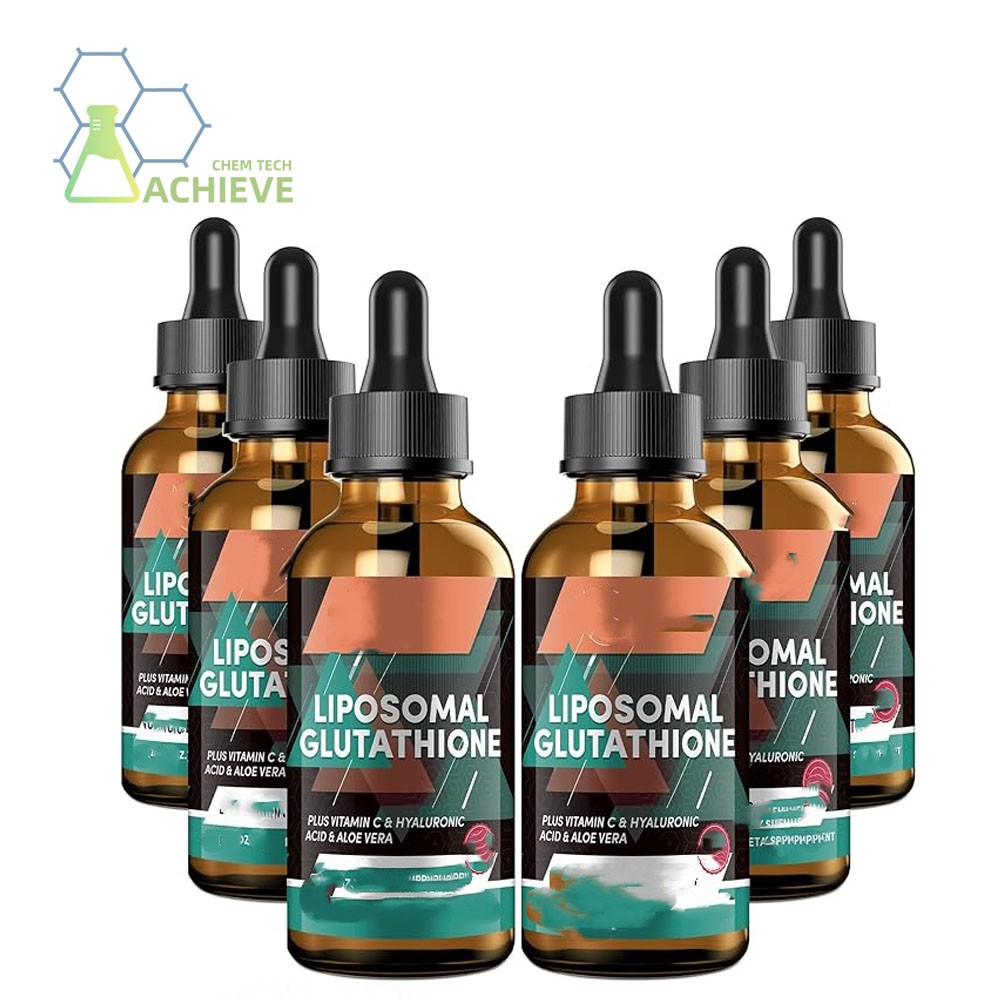
Glutathione Liposomal Tablets are a type of glutathione supplement prepared using liposome encapsulation technology. Its core component, glutathione (GSH), is a natural tripeptide composed of glutamic acid, cysteine, and glycine. It is widely present in human cells and is one of the most powerful antioxidants in the body. Liposome technology significantly enhances the bioavailability and absorption efficiency of glutathione by encapsulating it in phospholipid bilayer microspheres, forming micro particles with a diameter of approximately 100-500 nanometers. Liposomes are formed by self-assembly of phospholipid molecules, and their structure is similar to the cell membrane, making them easy to fuse with the cell membrane and promote the release of contents. This characteristic allows liposome glutathione tablets to bypass the digestive system for degradation. Traditional oral glutathione preparations are easily destroyed by gastric acid and intestinal enzymes, while liposome encapsulation can protect glutathione from passing through the digestive tract and directly entering the bloodstream. Targeted delivery refers to the ability of liposomes to carry glutathione across the blood-brain barrier, directly to brain cells, or efficiently uptake by organs such as the liver and kidneys, enhancing local antioxidant capacity. The sustained release effect can slow down the release rate of glutathione through liposome structure, prolong its action time in the body, and reduce the necessity of frequent supplementation.
We not only provide pure powder and capsules, but also other dosage forms. If necessary, please contact our sales team.
Our products





Glutathione COA


Extracellular glutathione: The "signal currency" and "environmental regulator" in intestinal microecology
The gut microbiota is a complex and sophisticated ecosystem composed of a large number of microbial communities that are interdependent and mutually restrictive with their hosts, jointly maintaining the stability and overall health of the gut. In this ecosystem, various substances and signaling molecules play important roles, and Glutathione Liposomal Tablets, as one of the key biomolecules, are gradually attracting widespread attention from the scientific community. It not only has important antioxidant and metabolic regulatory functions inside cells, but also plays a unique role as a "signal currency" and "environmental regulator" outside of cells, especially in the intestinal environment, exerting a profound impact on the balance and function of the intestinal microbiota.
The mechanism of action of extracellular glutathione as a "signal currency"
The balance of gut microbiota is crucial for intestinal health, and extracellular glutathione plays a key regulatory role in it. On the one hand, it can regulate the composition of the gut microbiota by influencing the growth environment of the gut microbiota. For example, the antioxidant properties of glutathione can reduce oxidative stress levels in the intestine, creating a more favorable environment for the growth of beneficial bacteria. Some studies have shown that under conditions of low oxidative stress, beneficial bacteria such as bifidobacteria and lactobacilli grow and reproduce more vigorously. After these beneficial bacteria occupy a dominant position in the gut, they can inhibit the growth of harmful bacteria and maintain the balance of gut microbiota.


On the other hand, extracellular glutathione may act as a signaling molecule that directly interacts with gut microbiota. Some intestinal bacteria may have receptors or binding sites on their surfaces that can recognize glutathione. When extracellular glutathione binds to these receptors, it triggers a series of signaling pathways within the bacteria, affecting gene expression and metabolic activity. For example, it may regulate the formation of bacterial biofilms, expression of virulence factors, etc., thereby affecting the colonization and survival ability of bacteria in the gut, and thus having a profound impact on the structure and function of gut microbiota.
Participate in the transmission of immune regulatory signals

The intestine is one of the largest immune organs in the human body, and the normal function of the intestinal immune system is crucial for resisting pathogen invasion and maintaining overall health. Extracellular glutathione plays an important role in signal transduction in intestinal immune regulation. It can regulate the activity and function of immune cells. Immune cells, such as macrophages, T lymphocytes, and B lymphocytes, play a crucial role in identifying and eliminating pathogens. Extracellular glutathione can activate intracellular signaling pathways by binding to receptors on the surface of immune cells, regulating the proliferation, differentiation, and functional status of immune cells. For example, it can enhance the phagocytic activity of macrophages, making them more effective in engulfing and clearing pathogens and apoptotic cells in the intestine;
It can also regulate the differentiation direction of T lymphocytes, promote the development of immune response in the appropriate direction, effectively eliminate pathogens, and avoid damage to one's own tissues caused by excessive immune response.
In addition, extracellular glutathione can also regulate the inflammatory response of immune cells. During intestinal inflammation, excessive release of inflammatory factors can lead to tissue damage and worsening of the condition. Extracellular glutathione can alleviate intestinal inflammation and maintain intestinal immune homeostasis by inhibiting the activation of inflammatory signaling pathways, reducing the production and release of inflammatory factors.

Mediate intercellular signaling communication

In intestinal tissue, intercellular signal communication is crucial for maintaining normal tissue function and coordinating physiological activities. Extracellular Glutathione Liposomal Tablets can act as an intercellular signaling molecule and participate in information transmission between intestinal cells. For example, intestinal epithelial cells maintain intercellular connections and barrier function through tight junction proteins. Extracellular glutathione may affect the barrier function of intestinal epithelial cells by regulating the expression and distribution of tight junction proteins. When the intestine is stimulated or damaged by external factors, changes in extracellular glutathione levels may serve as a signal that triggers epithelial cells to adjust the expression of tight junction proteins, enhance or weaken intercellular connections, thereby regulating the permeability of the intestinal barrier, preventing harmful substances from entering the body, and ensuring the normal absorption of nutrients.
In addition, extracellular glutathione may also participate in signal communication between intestinal nerve cells and other cell types such as immune cells and epithelial cells. The enteric nervous system (ENS) is known as the "second brain" and has close interactions with the gut microbiota and immune system. Extracellular glutathione may act as an intermediary molecule, transmitting signals between intestinal nerve cells and other cells, coordinating the neuroimmune regulatory function of the intestine, and maintaining normal movement and sensory function of the intestine.

The relationship between extracellular glutathione and intestinal diseases

The role in inflammatory bowel disease
Inflammatory bowel disease (IBD) is a group of chronic non-specific intestinal inflammatory diseases with unclear etiology, mainly including ulcerative colitis (UC) and Crohn's disease (CD). Research has shown that glutathione levels in the intestinal tissue of IBD patients often decrease, which may be closely related to the occurrence and development of the disease. During the onset of IBD, the level of oxidative stress in the intestine significantly increases, and a large amount of ROS is produced that exceeds the body's antioxidant defense capacity, leading to damage to intestinal cells and exacerbation of inflammatory reactions. The decrease in extracellular glutathione levels further weakens the antioxidant defense ability of the intestine, making it unable to effectively eliminate excessive ROS, thus forming a vicious cycle that exacerbates intestinal inflammation and damage.
Supplementing extracellular glutathione or increasing intestinal glutathione levels through other pathways may become a potential strategy for treating IBD. Some animal experiments and preliminary clinical studies have shown that administering glutathione or its precursor substances to IBD model animals or patients can alleviate intestinal inflammation, improve intestinal mucosal damage, and alleviate disease symptoms. This further highlights the importance of extracellular glutathione in the treatment of IBD.


The impact on diseases related to gut microbiota imbalance
The imbalance of gut microbiota is closely related to the occurrence and development of various intestinal diseases, such as irritable bowel syndrome (IBS), antibiotic associated diarrhea (AAD), etc. In these diseases, the structure and function of the gut microbiota undergo changes, with a decrease in the number of beneficial bacteria and excessive growth of harmful bacteria, leading to an imbalance in the gut microbiota. Extracellular glutathione may have beneficial effects on these diseases by regulating the balance of gut microbiota.
For example, in IBS patients, dysbiosis of the gut microbiota may lead to abnormal intestinal motility and sensory function, causing symptoms such as abdominal pain, bloating, diarrhea, or constipation. Extracellular glutathione may help restore normal intestinal motility and sensory function, and alleviate IBS symptoms by regulating the composition of gut microbiota, increasing the number and activity of beneficial bacteria, and inhibiting the growth of harmful bacteria. In AAD patients, the use of antibiotics can disrupt the balance of gut microbiota, leading to overgrowth of harmful bacteria such as Clostridium difficile and causing diarrhea. Supplementing with extracellular Glutathione Liposomal Tablets may prevent and treat AAD by regulating gut microbiota, promoting the recovery of beneficial bacteria, and inhibiting the growth of harmful bacteria such as Clostridium difficile.

Hot Tags: glutathione liposomal tablets, China glutathione liposomal tablets manufacturers, suppliers, Botulinum Toxin Injection 100iu, Nad Capsule, Nad Peptide Injection, Nad Tablet, BPC 157 Peptide Cream, BPC 157 Peptide Capsules