



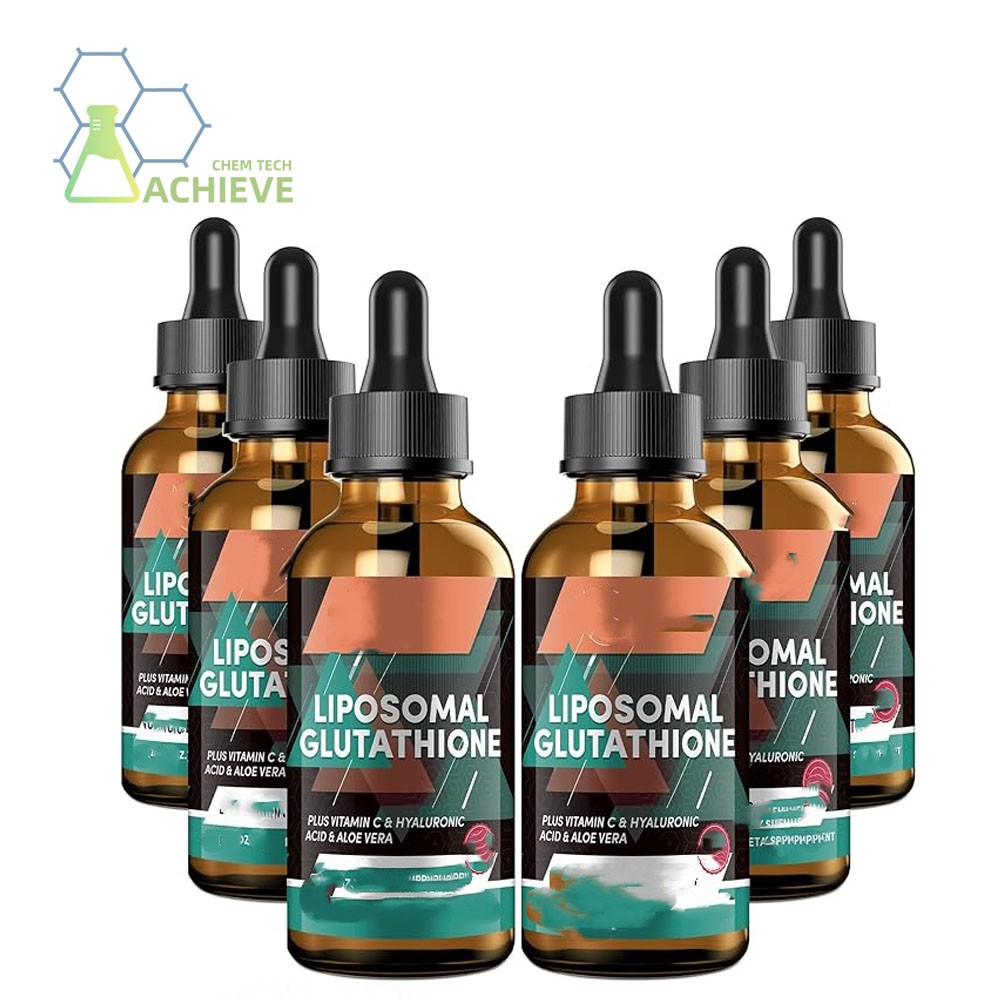
Liposomal Glutathione Spray (liposome glutathione spray) is an innovative antioxidant supplement, which combines the strong antioxidant capacity of glutathione with the excellent delivery advantages of liposome technology. Traditional glutathione supplements are easily destroyed by stomach acid and digestive enzymes in the gastrointestinal tract, resulting in lower absorption rates. Liposomal encapsulation technology can protect glutathione from damage in the gastrointestinal environment, allowing it to reach the small intestinal mucosa intact and be rapidly absorbed, thereby greatly improving the bioavailability of glutathione. Glutathione is relatively stable in its solid state, but its aqueous solution is easily oxidized in air.
Our company mainly provides pure powders, tablets, and capsules. If you have any other forms of needs, please contact our sales team.
Our products




Glutathione COA


Liposomal Glutathione Spray on Skin Aging and Epigenetic Clock
Aging is a complex process involving multiple systems and levels, manifested not only in external features such as decreased skin elasticity and wrinkle formation, but also in molecular levels such as changes in DNA methylation patterns and abnormal histone modifications. The epigenetic clock, as a core tool for quantifying aging, can accurately predict physiological age and disease risk by analyzing the methylation levels of specific gene loci. At the same time, as the largest organ in the human body, the aging process of the skin is not only regulated by internal genes, but also closely related to environmental factors, oxidative stress, and other factors. Liposomal Glutathione Spray (Liposome Glutathione spray), as a new antioxidant delivery system, improves the bioavailability of glutathione through liposome packaging technology, providing a new solution for simultaneously interfering with skin aging and epigenetic clock.
Molecular mechanism of skin aging: dual impact of oxidative stress and collagen degradation
Oxidative stress: the "chain reaction" of free radicals
One of the core causes of skin aging is oxidative stress, which refers to the imbalance between the production of reactive oxygen species (ROS) in the body and the antioxidant defense system. ROS, including superoxide anions and hydroxyl radicals, can attack cell membrane lipids, proteins, and DNA, leading to impaired cellular function. Research has shown that the content of glutathione (GSH) in the skin decreases at a rate of 1% -2% per year after the age of 25. If combined with external pressures such as staying up late and exposure to ultraviolet radiation, this rate can be accelerated by 3-5 times. GSH, as the most important endogenous antioxidant in the body, its deficiency directly weakens the skin's ability to clear ROS, forming a vicious cycle of "free radical accumulation cell damage more free radical production".


Collagen degradation: the 'invisible knife' of MMPs
Collagen is a key structural protein that maintains skin elasticity, and its degradation is mainly mediated by matrix metalloproteinases (MMPs). ROS can activate the MAPK/NF - κ B signaling pathway, upregulate the expression of enzymes such as MMP-1 and MMP-3, and accelerate collagen breakdown. Meanwhile, oxidative stress can also inhibit fibroblast activity and reduce the synthesis of new collagen. Animal experiments have shown that after UV irradiation, the expression level of MMP-1 in mouse skin increases threefold, while collagen content decreases by 40%, directly leading to wrinkle formation and skin laxity.
Melanin deposition: "uncontrolled activation" of tyrosinase
Oxidative stress can also promote melanin synthesis by activating tyrosinase (TYR). TYR is a key enzyme involved in melanin production, and its activity is regulated by ROS. When GSH levels are insufficient, TYR cannot be effectively inhibited, leading to excessive secretion of melanin by melanocytes, resulting in pigmentation and dullness. Clinical observation found that long-term use of liposome glutathione spray can reduce skin melanin index by 15% -20%, and the effect is better than that of traditional whitening ingredients (such as nicotinamide, hydroquinone), because it directly acts on the upstream of melanin production path.

The construction principle of epigenetic clock: the "molecular scale" of DNA methylation and aging
DNA methylation: the 'switch' of gene expression
DNA methylation refers to the chemical modification of cytosine by adding a methyl group (CH3) to the 5th carbon atom, mainly occurring on CpG islands (regions rich in CG dinucleotides). Methylation can regulate gene expression in two ways: by directly inhibiting transcription factors from binding to DNA, and by recruiting methyl binding proteins (MBDs) to form inhibitory complexes. During the aging process, the global DNA methylation level shows a decreasing trend, but the methylation of specific gene loci (such as pro-inflammatory genes and tumor suppressor genes) is abnormally elevated, leading to gene expression imbalance.
Iteration of Epigenetic Clock: From Horvath Clock to GrimAge
The first representative epigenetic clock (such as Horvath clock) can accurately predict actual age (with an error of ± 3.9 years) by analyzing the methylation levels of 353 CpG sites, but cannot distinguish between healthy aging and pathological aging. The second representative epigenetic clock (such as PhenoAge, GrimAge) introduces clinical indicators (such as plasma protein levels, smoking history) and mortality risk data, significantly improving prediction accuracy. For example, the GrimAge clock can predict an individual's risk of death in the next 10 years by analyzing 1030 CpG sites, and the risk of death in the top 5% of the population with the fastest aging rate is more than twice the average level.
Epigenetic markers of skin aging: methylation fluctuations of COL1A1 and MMP1
The epigenetic changes associated with skin aging are concentrated in collagen genes (such as COL1A1) and MMP genes (such as MMP1). Research has found that the methylation level of the COL1A1 promoter region in the skin of elderly people is 30% lower than that of young people, leading to a decrease in its expression level; The methylation level of the MMP1 promoter region decreased by 20%, leading to an increase in its expression level. This "one drop one rise" methylation pattern directly accelerates collagen degradation and skin relaxation. Liposomal glutathione can partially reverse methylation abnormalities at these sites by reducing ROS production, thereby delaying the process of skin aging.
The pathway of action of liposome glutathione: from cell protection to epigenetic regulation
Liposome Technology: Breaking the "Molecular Shield" of Absorption Barrier
Traditional oral glutathione preparations are easily degraded by gastric acid and have a bioavailability of less than 10%; Liposomal glutathione, wrapped in a phospholipid bilayer, can protect GSH from enzymatic hydrolysis and be directly delivered into cells through membrane fusion mechanism. Animal experiments have shown that liposome encapsulation increases the bioavailability of GSH by 13 times, with an effect similar to intravenous injection. In the clinical study, after 8 weeks of continuous use of Liposomal Glutathione Spray, the skin GSH level of subjects increased 2.3 times, significantly higher than that of free GSH group (1.1 times).


Antioxidant Network: The "Core Hub" Role of GSH
GSH is not only an antioxidant that directly removes ROS, but also maintains the activity of other antioxidants by reducing vitamin C, vitamin E, etc., forming an "antioxidant network". For example, GSH can reduce oxidized vitamin C (DHA) to reduced vitamin C (AscH ⁻), which can further neutralize hydroxyl radicals. In addition, GSH also participates in the detoxification process, catalyzing the conversion of lipophilic toxins into water-soluble metabolites through glutathione S-transferase (GST), reducing the damage of environmental pollutants to the skin.
Epigenetic Regulation: Upstream Intervention of Nrf2 Pathway
GSH indirectly regulates DNA methylation and histone modification by activating the nuclear factor E2 related factor 2 (Nrf2) pathway. Nrf2 is a core transcription factor in cellular antioxidant response, and its activation can induce the expression of various antioxidant enzymes (such as SOD, CAT) and detoxifying enzymes (such as GST, NQO1). Research has found that Nrf2 activation can also inhibit the activity of DNA methyltransferases (DNMTs), reduce the abnormal increase in methylation of pro-inflammatory genes (such as IL-6, TNF - α), and thus lower the level of chronic inflammation. Chronic inflammation is a key factor in accelerating epigenetic aging, and it is positively correlated with the predicted risk of death by the GrimAge clock.

Clinical Evidence: Validation from Laboratory to Real World
Improvement of Skin Aging: Quantitative Results of 8-Week Intervention
In a double-blind randomized controlled trial (RCT), 120 women aged 35-55 were randomly assigned to the liposome glutathione spray group (twice a day, twice a time, containing 150mg of GSH) and the placebo group for 8 weeks. The results show that:
Wrinkle depth
the depth of wrinkles around eyes in the spray group decreased by 22%, significantly better than that in the placebo group (8%, p<0.01);
Skin elasticity
the skin rebound rate of the spray group increased by 18%, close to the level of the young control group;
Melanin index
in the spray group, the melanin index decreased by 17%, and the stain area decreased by 12%;
Safety
No serious adverse reactions were reported, only 3 cases showed mild local irritation (such as erythema and itching), which resolved spontaneously within 24 hours.
Reversal of Epigenetic Clock: Molecular Evidence from 6-Month Follow up
Another long-term study tracked the epigenetic changes of 60 subjects aged 50-70 years after using liposome glutathione spray for 6 months. By analyzing the GrimAge clock in blood samples, it was found that:
Physiological age
the average physiological age of the spray group decreased by 2.1 years (from 62.3 to 60.2 years), while that of the placebo group increased by 0.8 years (from 61.7 to 62.5 years);
Death risk
the predicted value of death risk in the spray group will decrease by 15% in the next 10 years, close to the level of healthy young people;
Inflammatory markers
In the spray group, the level of IL-6 decreased by 30%, and the level of CRP decreased by 25%, indicating that chronic inflammation was significantly relieved.
Intervention effect of special population: subgroup analysis of diabetes patients and smokers
The skin aging and epigenetic aging speed of diabetes patients and smokers is significantly faster than that of healthy people due to long-term hyperglycemia and toxin exposure. A RCT for patients with type 2 diabetes showed that after 12 weeks of continuous use of Liposomal Glutathione Spray:
Blood glucose control
Fasting blood glucose decreased by 1.2mmol/L, glycated hemoglobin (HbA1c) decreased by 0.8%;
Skin barrier function
Reduce transcutaneous water loss (TEWL) by 15% and increase skin moisture content by 20%;
Epigenetic age
The GrimAge clock predicts a physiological age reduction of 1.8 years, which is better than the conventional antioxidant group (0.9 years).
For smokers, liposome glutathione spray can partially offset the skin damage caused by tobacco toxins (such as acrolein). Research shows that after continuous use for 6 months, the expression level of MMP-1 in the skin of smokers decreased by 25%, and the collagen content increased by 18%, approaching the level of non-smokers.
Hot Tags: liposomal glutathione spray, China liposomal glutathione spray manufacturers, suppliers, Botulinum Toxin Injection 100iu, Nad Capsule, Nad Peptide Injection, Nad Tablet, BPC 157 Peptide Cream, BPC 157 Peptide Capsules


