




Glutathione Liposomal Capsules are a novel dietary supplement that encapsulates glutathione (GSH) in liposomes. The core principle is to use the double-layer phospholipid structure of liposomes to simulate cell membranes, and to protect glutathione from damage by gastric acid and digestive enzymes through nanoscale encapsulation technology, significantly improving its bioavailability. Traditional glutathione supplements are easily degraded by gastric acid after oral administration, resulting in an absorption rate of less than 10%, while liposome technology can increase the absorption rate to 60% -80%, achieving efficient delivery. Liposomes are composed of phospholipid bilayers, which are highly similar in structure to the cell membrane. This similarity allows them to fuse with the cell membrane and directly release glutathione into the cell. This process bypasses the complex pathway of traditional oral supplements that need to be absorbed through the intestine, lymphatic circulation, and then enter the bloodstream, significantly shortening the action time and reducing metabolic losses. The phospholipids in liposome capsules are usually derived from soybean or sunflower phospholipids, and their bilayer structure not only protects GSH from digestive system damage, but also promotes cellular uptake through membrane fusion mechanism. Some high-end products may add specific phospholipids (such as phosphatidylcholine) to enhance targeting, such as prioritizing delivery to liver or brain tissue.
We not only provide pure powder and capsules, but also other dosage forms. If necessary, please contact our sales team.
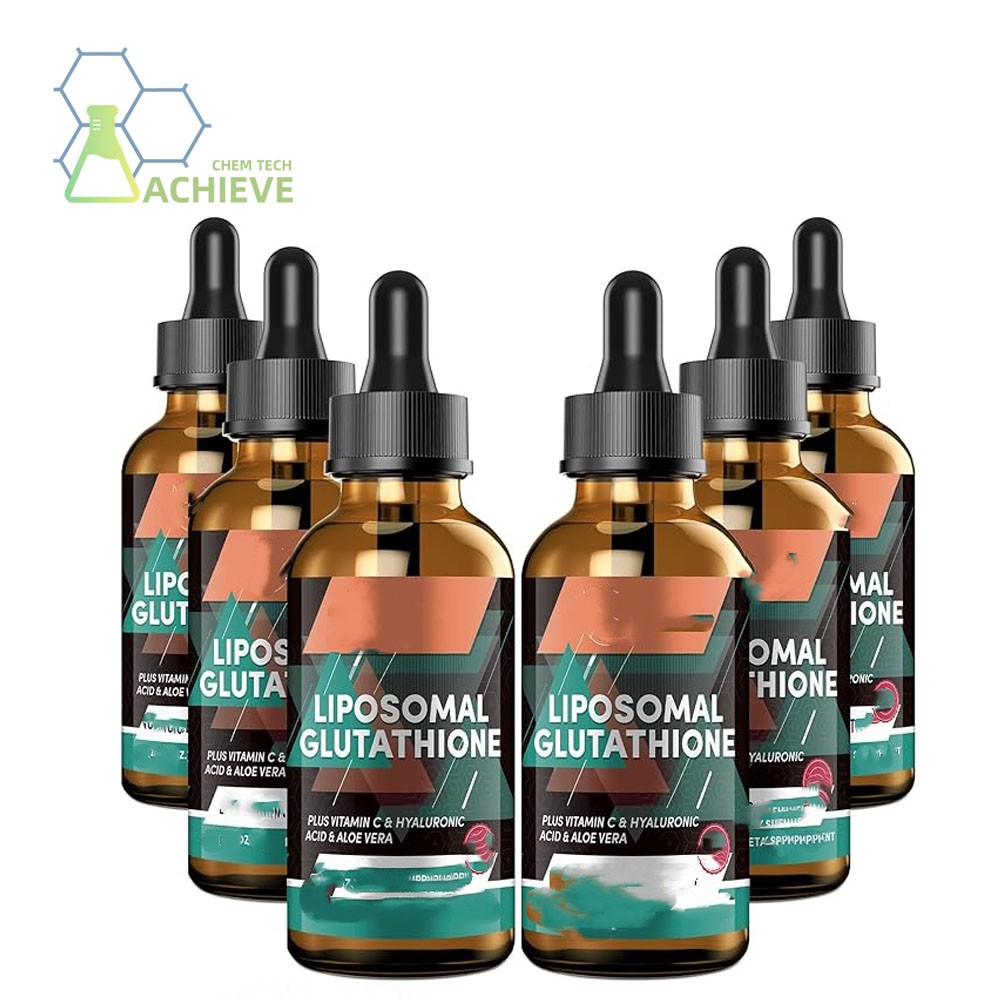
Our products





Glutathione COA


The core principle of Glutathione Liposomal Capsules is to use the double-layer phospholipid structure of liposomes to encapsulate glutathione (GSH), forming a nanoscale carrier. Liposomes have a similar structure to cell membranes and can protect GSH from damage by gastric acid and digestive enzymes, significantly enhancing its bioavailability. Traditional oral GSH supplements are easily degraded into amino acids in gastric acid environment, with an absorption rate of less than 10%, while liposome technology can increase the absorption rate to 60% -80%, achieving efficient delivery.
Material and formula design for production

Core component
Reduced Glutathione Liposomal Capsules (L-Glutathione):As an active ingredient, high-purity (≥ 98%) reduced GSH should be selected to avoid interference from oxidized GSH (GSSG). The dosage is usually 250-500mg per capsule, which needs to be adjusted according to the target population (such as anti-aging, liver support, or immune regulation).
Phospholipid complex:Commonly used soybean or sunflower phospholipids require a phosphatidylcholine (PC) content of ≥ 60% to ensure the stability of the liposome structure. Some high-end formulas may add specific phospholipids (such as phosphatidylethanolamine, PE) to enhance targeting.

Auxiliary component
Stabilizers:Glycerol (10% -15%) is used to maintain the flexibility of the bilayer structure of liposomes and prevent particle aggregation.
antioxidant:Vitamin E (0.1% -0.5%) or alpha lipoic acid (0.05% -0.1%) can inhibit GSH oxidation and extend product shelf life.
Penetration enhancers:Polysorbate-20 (Tween-20, 1% -2%) can enhance the fusion ability between liposomes and cell membranes, and improve absorption efficiency.
preservative:Potassium sorbate (0.05% -0.1%) or sodium benzoate (0.05% -0.1%) can be selected, but chemical compatibility with GSH must be ensured.

Capsule shell material
Gelatin capsules:Suitable for conventional formulas with low cost, but attention should be paid to the risk of allergies (such as those sensitive to beef or pork gelatin).
Plant Capsules (HPMC):Using hydroxypropyl methylcellulose as raw material, it is suitable for vegetarians and people with religious dietary restrictions, and has higher stability.
Production process and key steps
Phospholipid pretreatment
Dissolve and mix: Mix phospholipids (1.5% -2.0% w/w) with glycerol (15% w/w) and stir to dissolve at 40-50 ℃ to form a uniform phospholipid solution. If stabilizers or antioxidants need to be added, they can be added at this stage.
Ultrasonic treatment: Use an ultrasonic probe (20kHz, power 50-100W) to treat phospholipid solution for 10-15 minutes to reduce particle size and improve uniformity. This step can significantly improve the encapsulation efficiency of liposomes.

GSH encapsulation and liposome formation
Water phase preparation: Dissolve GSH (8.5% w/w) in deionized water (74.4% w/w), add penetration enhancers (such as Tween-20, 2.5% w/w) and preservatives (such as potassium sorbate, 0.1% w/w), and stir until completely dissolved.
Liposome formation: Slowly drop phospholipid solution into GSH aqueous phase while stirring at 300-500rpm to form colostrum. Subsequently, use a high-pressure homogenizer (10000-15000 psi) for 3-5 cycles to refine the particle size to 100-200nm.
Centrifuge and Purification: Separate unencapsulated GSH by ultracentrifugation (100000 × g, 1 hour), and collect the liposome suspension in the supernatant. This step can increase the encapsulation efficiency to over 80%.

Capsule filling and drying
Suspension adjustment: Add seasonings (such as citrus seed extract, 0.5% w/w) or sweeteners (such as sucralose, 0.01% w/w) as needed, and adjust the pH to 6.5-7.0.
Soft capsule filling: Use a rotary molding machine to fill the liposome suspension into soft capsules, with each capsule containing 250-500mg of GSH. Immediately seal after filling to prevent oxidation.
Hard capsule filling (optional): If hard capsules are selected, the liposome suspension needs to be freeze-dried into powder, and then mixed with excipients (such as microcrystalline cellulose) before filling. This method can extend the shelf life, but additional disintegrants (such as cross-linked carboxymethyl cellulose sodium, 3% -5%) need to be added.

Sterilization and packaging
Radiation sterilization:Sterilize the finished capsules using gamma rays (25kGy) to ensure that the microbial indicators meet the standards (such as total colony count<100 CFU/g, mold and yeast<10 CFU/g).
Light resistant packaging:Packaged in brown glass bottles or aluminum foil composite bags to prevent GSH oxidation caused by light exposure. Desiccant (such as silica gel) should be placed inside the packaging to control humidity below 10%.

Quality Control and Testing Methods
High performance liquid chromatography (HPLC):
Release of encapsulated GSH through demulsification treatment (such as adding methanol), and quantitative analysis after separation from unencapsulated GSH. The formula for calculating the encapsulation rate is:

Dynamic Light Scattering (DLS): Measure the average particle size (D50) and polydispersity index (PDI) of liposomes to ensure that the particle size is within the range of 100-200nm, PDI<0.3.
Accelerated test: Store for 3 months at 40 ℃ and 75% humidity, regularly test GSH content, encapsulation efficiency, and microbial indicators, and evaluate product shelf life.
Long term test: Store for 24 months at 25 ℃ and 60% humidity, simulate actual storage conditions, and verify product stability.
Optimization direction of production process
Targeted delivery technology
Ligand modification:Modifying specific ligands (such as antibodies or peptides) on the surface of liposomes to achieve targeted delivery of GSH to liver, brain tissue, or tumor cells. For example, adding galactoside can enhance liver uptake, and adding transferrin ligand can improve blood-brain barrier penetration ability.
Slow release technology
Multilayer liposomes:By preparing multi-layer liposomes (MLV) or time controlled liposomes, the release time of GSH in vivo can be prolonged. For example, the outer phospholipids rapidly degrade and release some GSH, while the inner phospholipids slowly degrade and achieve sustained release.
Combined drug loading
Collaborative component co loading:Co loading GSH with vitamin C, alpha lipoic acid, or N-acetylcysteine (NAC) in the same liposome to achieve antioxidant synergy. For example, vitamin C can regenerate oxidized GSH, and alpha lipoic acid can expand the range of action of GSH.
Production cost and scale production
Cost Analysis
Raw material cost: The price of GSH (≥ 98% purity) is about 500-800/kg, and the price of phospholipids (soybean lecithin) is about 20-50/kg. The raw material cost per capsule (containing 500mg of GSH) is about 0.1-0.2.
Equipment cost: High pressure homogenizer (50000-100000), ultrasonic processor (10000-20000), and rotary molding machine (30000-50000) are the main equipment inputs.
Production cost: The single grain cost for small-scale production (100000 grains/batch) is about 0.5-0.8, while for large-scale production (1 million grains/batch), it can be reduced to 0.2-0.3.
Challenges of large-scale production
Process amplification: The pressure and cycle times of the high-pressure homogenizer need to be adjusted according to the batch size to avoid widening the particle size distribution.
Quality control: It is necessary to establish an online detection system (such as DLS real-time monitoring) to ensure consistency between the particle size and encapsulation rate of each batch of products.
Future Development Trends
Personalized customization
Genetic testing guidance:By detecting individual GSH synthesis ability (such as GCLC gene polymorphism), customizing GSH dosage and formula, precise supplementation can be achieved.
Intelligent delivery system
Stimulus responsive liposomes:Develop pH or temperature sensitive liposomes that release GSH in specific environments (such as tumor microenvironment) to enhance therapeutic efficacy.
Green technology
Supercritical fluid technology:Using supercritical CO ₂ instead of organic solvents to prepare liposomes reduces environmental pollution and improves product safety.
Hot Tags: glutathione liposomal capsules, China glutathione liposomal capsules manufacturers, suppliers, Botulinum Toxin Peptide, Botulinum Toxin Pills, BPC 157 Oral Tablets, Nad Sublingual Drops, Pure Glutathione Powder, TB 500 Peptide Injection


