
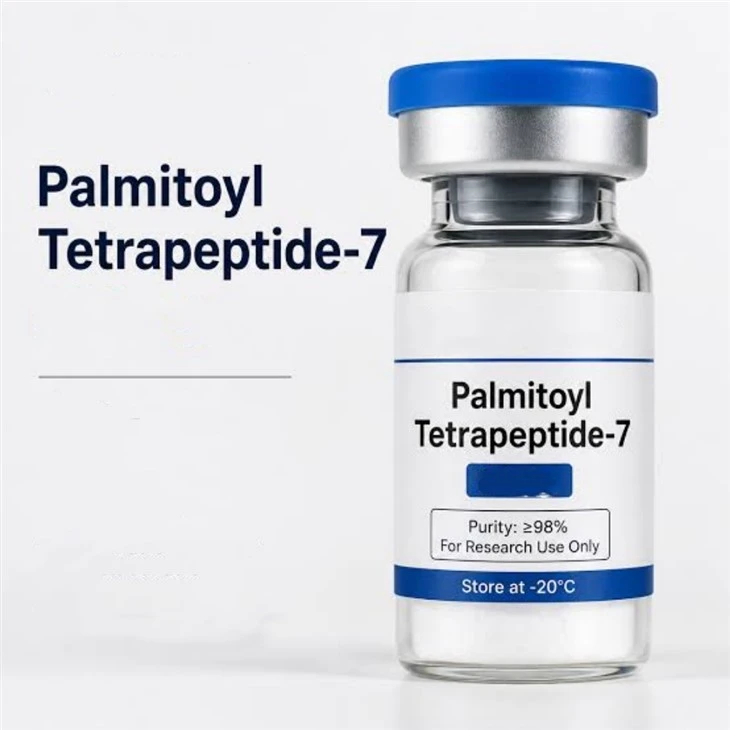


Palmitoyl tetrapeptide-7 injection is a minimally invasive injectable aesthetic preparation formulated with palmitoyl tetrapeptide-7 as the core active ingredient and medical isotonic buffer solution. It is a lipophilic signal peptide anti-ageing agent with the CAS number 221227-05-0. The active ingredient originates from the amino acid fragment at positions 341–344 of the heavy chain of human immunoglobulin G. Its core positioning lies in fundamentally improving inflammatory skin ageing and glycation-induced dullness. Instead of directly stimulating collagen neosynthesis, it relies on anti-inflammation and anti-glycation as core pathways to break the vicious cycle of chronic cutaneous ageing, while repairing the structure of the dermal extracellular matrix. It addresses a wide range of skin concerns including photoageing, dullness from sleep deprivation, post-inflammatory hyperpigmentation and ageing sensitive cutis.
Our Products Form


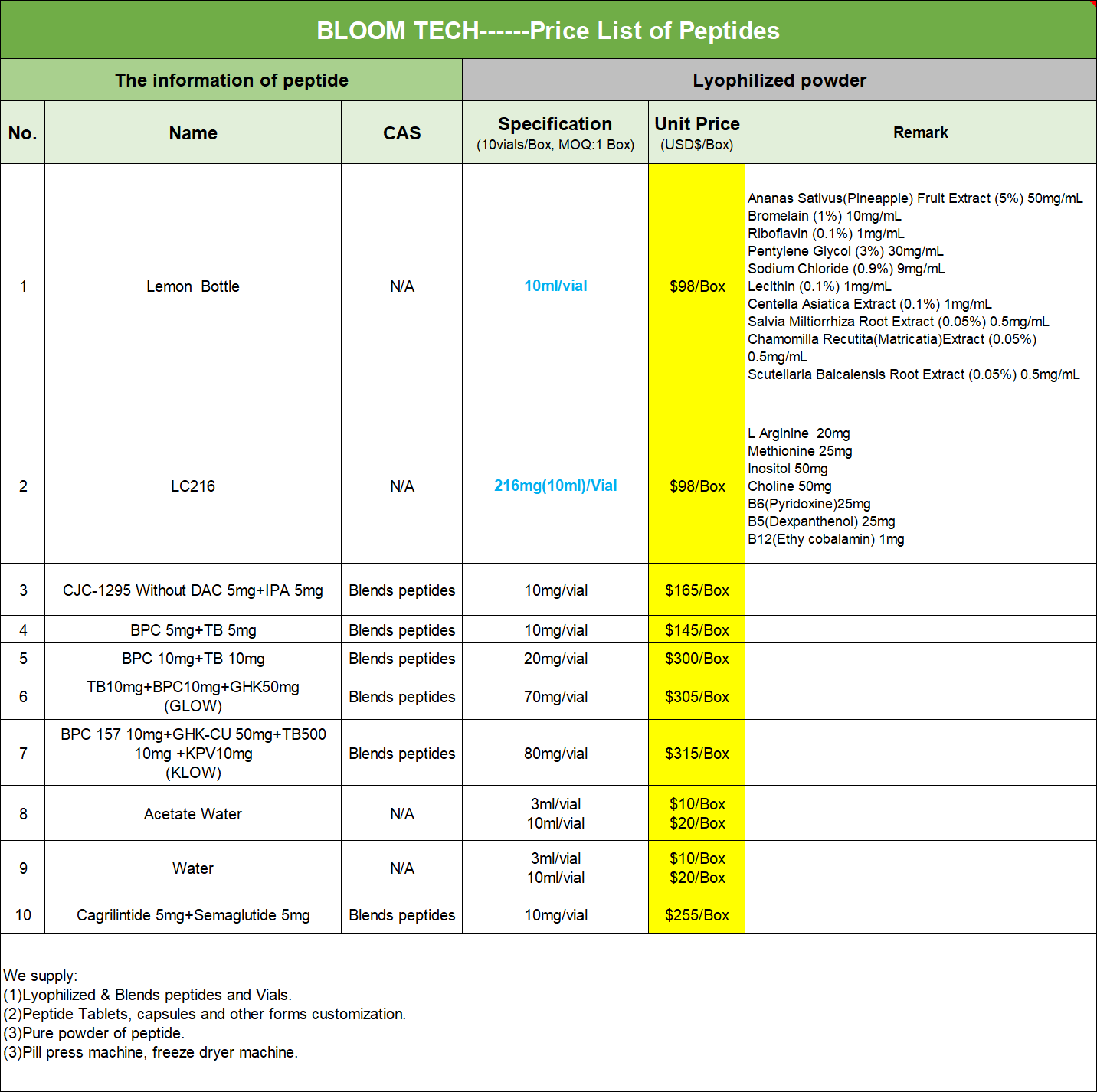
Palmitoyl tetrapeptide-7 COA
 |
||
| Certificate of Analysis | ||
| Compound name | palmitoyl tetrapeptide-7 | |
| Grade | Pharmaceutical grade | |
| CAS No. | 221227-05-0 | |
| Quantity | 65g | |
| Packaging standard | PE bag+Al foil bag | |
| Manufacturer | Shaanxi BLOOM TECH Co., Ltd | |
| Lot No. | 202601090056 | |
| MFG | Jan 9th 2026 | |
| EXP | Jan 8th 2029 | |
| Structure |
|
|
| Item | Enterprise standard | Analysis result |
| Appearance | White or almost white powder | Conformed |
| Water content | ≤5.0% | 0.24% |
| Loss on drying | ≤1.0% | 0.13% |
| Heavy Metals | Pb≤0.5ppm | N.D. |
| As≤0.5ppm | N.D. | |
| Hg≤0.5ppm | N.D. | |
| Cd≤0.5ppm | N.D. | |
| Purity (HPLC) | ≥99.0% | 99.90% |
| Single impurity | <0.8% | 0.44% |
| Total microbial count | ≤750cfu/g | 400 |
| E. Coli | ≤2MPN/g | N.D. |
| Salmonella | N.D. | N.D. |
| Ethanol (by GC) | ≤5000ppm | 560ppm |
| Storage | Store in a sealed, dark, and dry place below 2-8°C | |
|
|
||
|
|
||


| Chemical Formula | C34H62N8O7 |
| Exact Mass | 694.47 |
| Molecular Weight | 694.92 |
| m/z | 694.47 (100.0%), 695.48 (36.8%), 696.48 (6.6%), 695.47 (3.0%), 696.48 (1.4%), 696.47 (1.1%) |
| Elemental Analysis | C, 58.77; H, 8.99; N, 16.13; O, 16.12 |
Molecular Mechanism of Inflammatory Ageing Inhibition
Core Pathogenesis of Inflammatory Skin Ageing
Cutis ageing falls into three categories: chronological intrinsic ageing, photoageing and chronic inflammatory ageing. Among them, chronic low-grade inflammation (inflammageing) acts as a hidden core trigger accelerating cutis deterioration. External irritants such as ultraviolet radiation, environmental pollution, sleep deprivation and impaired cutis barrier activate the intracellular NF-κB nuclear transcription factor signalling pathway in cutis cells, prompting keratinocytes and dermal fibroblasts to secrete large quantities of pro-inflammatory cytokines, mainly interleukin-6 (IL-6), interleukin-1β (IL-1β) and tumour necrosis factor-α (TNF-α).
Excess pro-inflammatory cytokines initiate a cascade of damaging reactions.


On one hand, they upregulate the expression of matrix metalloproteinases (MMP-1, MMP-3), which directly degrade type I and type III collagen as well as elastic fibres in the dermis, leading to cutis laxity and fine lines.On the other hand, they continuously disrupt the epidermal barrier, weakening the skin's natural moisture retention and defensive capacity, thereby forming a closed ageing loop: inflammation → collagen loss → barrier damage → aggravated inflammation.Conventional anti-ageing products merely replenish lost collagen without blocking upstream inflammatory triggers, resulting in short-lived and recurrent anti-ageing effects. In contrast, palmitoyl tetrapeptide-7 injection suppresses inflammatory activation at the upstream signalling pathway, fundamentally disrupting the inflammageing cycle.
Targeted Regulation of the NF-κB Pathway to Block Inflammatory Signal Transduction
Modified with lipophilic palmitoyl groups, it rapidly penetrates cell membranes to enter the cytoplasm, where it specifically binds to IκB kinase. This binding inhibits the phosphorylation and degradation of IκB proteins, further preventing nuclear translocation of the NF-κB transcription factor and cutting off the transcriptional expression of inflammatory genes at the source.
In vitro cellular assay data demonstrate that in human cutis cell models stressed by UVA irradiation, it at concentrations of 1–10 ppm reduces cellular IL-6 secretion by 40%–60% and IL-8 secretion by 30%–50%, with zero cytotoxicity at the tested concentrations and outstanding safety performance. Unlike glucocorticoid anti-inflammatory agents, this product exerts physiological signal modulation without suppressing the skin's normal immune defence functions. It only eliminates pathologically overactivated chronic inflammation, balancing potent anti-inflammatory effects with cutaneous immune homeostasis.


Downregulation of Matrix Metalloproteinases to Reduce Collagen Degradation
Pro-inflammatory cytokines serve as upstream activating signals for matrix metalloproteinases. By restraining the release of inflammatory cytokines, it indirectly lowers the enzymatic activity of the MMP family and alleviates passive breakdown of collagen fibres.
Reconstructed human epidermal cutis model tests confirm that after intervention with this product, MMP-1 expression in UV-damaged cutis drops by 35% relative to blank control groups, with significant preservation of dermal type I collagen content. Meanwhile, the peptide upregulates the synthesis of laminin V, type IV collagen and type VII collagen to reinforce the dermoepidermal junction structure, repairing damage to the dermal reticular layer caused by inflammation. It delivers triple anti-ageing benefits: inflammation control, collagen preservation and barrier repair, ameliorating inflammation-induced redness, fragility, laxity and other ageing manifestations.
Anti-Glycation & Brightening Efficacy and Mechanism
Correlation Between Skin Glycation and Glycation-Induced Dull Ageing
Skin glycation constitutes the second major ageing pathway independent of inflammation. Excess free glucose in human blood and cutaneous tissue undergoes non-enzymatic glycation with collagen and elastin without catalytic enzymes. The reaction first generates reversible early glycation products, which eventually convert into irreversible advanced glycation end products (AGEs).
AGEs harden, embrittle and yellow collagen fibres, depleting their elasticity and moisture-locking capacity. Deposited within the epidermis, they render the cutis uniformly sallow, dull and lacklustre - a condition commonly known as "yellow complexion". Furthermore, AGEs further activate the NF-κB inflammatory pathway, creating a superimposed dual-ageing effect of glycation plus inflammation that drastically accelerates skin ageing.


Most anti-ageing injectables on the current market only target anti-inflammation or collagen stimulation without dedicated anti-glycation pathways. Palmitoyl tetrapeptide-7 injection intervenes in both inflammatory and glycation pathways simultaneously to deliver combined anti-ageing and brightening outcomes.
Blockage of Glycation to Suppress AGE Formation and Deposition
Palm-GQPR possesses intrinsic glycation-blocking activity. It competitively binds free glucose molecules in skin tissue, reducing contact between glucose and large dermal structural proteins and inhibiting the transformation of early glycation intermediates into mature AGEs.
Additionally, the peptide elevates intracellular activity of antioxidant enzymes including superoxide dismutase and glutathione peroxidase, eliminating massive reactive oxygen species generated during glycation and interrupting the synergistic oxidative-glycation damage cascade.Human clinical trials reveal that after four consecutive weeks of mesotherapy injection with it, AGE deposition in the stratum corneum of subjects decreases by an average of 22.7%, yielding marked improvement in sallow cutis tone.
Suppression of Inflammatory Hyperpigmentation for Uniform, Luminous Complexion
Skin dullness arises not only from glycation-related yellowing but also post-inflammatory hyperpigmentation. Chronic cutaneous inflammation stimulates melanocytes to overproduce melanin, triggering facial pigmented spots, uneven tone and dull post-acne marks.


By long-term suppression of underlying chronic cutis inflammation, palm-GQPR curbs inflammation-mediated melanocyte activation and blocks abnormal melanin transport.
Distinct from direct melanin-inhibiting ingredients such as niacinamide and arbutin, this product does not target tyrosinase directly. Instead, it eliminates melanin-inducing triggers at the inflammatory source via a gentle endogenous brightening mechanism that avoids irritant damage to sensitive cutis. Moreover, it improves cutaneous microcirculation and accelerates the discharge of epidermal metabolic waste to further boost skin translucency, achieving multi-dimensional brightening effects including yellow tone reduction, uniform complexion and radiant clarity.
Clinical Advantages of Dual-Pathway Synergistic Anti-Ageing
By integrating dual anti-inflammatory and anti-glycation mechanisms, palmitoyl tetrapeptide-7 injection establishes an all-round endogenous anti-ageing system covering inflammation control, glycation inhibition, collagen protection and hyperpigmentation suppression, compensating for the limitations of single-function injectables.
For patients with photoageing: it alleviates inflammatory and oxidative damage triggered by ultraviolet radiation;
For sallow cutis caused by sleep deprivation and high-sugar diets: it efficiently clears glycation adducts to reverse dullness;
For fragile cutis post aesthetic procedures: it rapidly relieves minimally invasive inflammatory reactions, shortens post-treatment recovery time and lowers the risk of post-procedure hyperpigmentation.
Compared with topical peptide formulations, the injectable dosage form acts directly on the dermis while bypassing the stratum corneum barrier, accelerating onset speed by 3–5 times and sustaining efficacy for 14–21 days. It caters to modern consumer demands for efficient, mild aesthetic anti-ageing treatments free from traumatic risks.

Synthetic Process
Solid-phase peptide synthesis (SPPS) represents the dominant industrial and medical-grade manufacturing route for palm-GQPR, as well as the standard process for producing high-purity injectable peptide raw materials. The full synthesis workflow consists of four core stages: amino acid sequence assembly, palmitoylation modification, cleavage and purification, and lyophilized preparation.
Amino acid sequence assembly: Rink-Amide resin serves as the solid support carrier. Fmoc-protected amino acids undergo sequential condensation reactions following the Gly-Gln-Pro-Arg tetrapeptide sequence. Coupling reagents facilitate peptide bond formation to gradually construct the tetrapeptide backbone. Deprotection is carried out after each condensation step to guarantee accurate peptide chain elongation.
Palmitoylation lipid modification: Upon completion of peptide chain assembly, a palmitic acid fatty acid chain is conjugated to the N-terminus of the peptide to enhance transdermal permeability and cellular affinity of the peptide.
Cleavage and purification: Trifluoroacetic acid cleavage solution separates crude peptide from the resin and removes side-chain protecting groups. High-performance liquid chromatography (HPLC) is applied for fine purification to eliminate short-peptide impurities and unreacted monomers, yielding injectable-grade palm-GQPR powder with purity ≥98%.
Injectable preparation: High-purity peptide powder is dissolved in medical phosphate buffered saline, subjected to sterile filtration and aseptic filling to manufacture the final injection product.
This synthetic process features controllable reactions, high product purity and minimal by-products, fully meeting the quality specifications of aesthetic injectable preparations for sterility, high bioactivity and low impurity content. It remains the most mature and widely adopted industrial synthetic route to date.
References
- KnowYourPeptide Research Team. Palmitoyl Tetrapeptide-7: Dermal Cell Research and Skin Biology[R]. 2026, Doctor-Reviewed Medical Literature.
- Flossman E, et al. Sederma Technical Report: Anti-inflammatory mechanism of palmitoyl tetrapeptide regulating NF-κB pathway[R]. 2004.
- Lintner K, et al. The anti-inflammatory activity of a palmitoyl tetrapeptide in human keratinocytes[J]. Journal of Cosmetic Science, 2010, 61(3):245–252.
- Zhang Y, et al. Stimulation of extracellular matrix synthesis by palmitoyl peptides in dermal fibroblasts[J]. Experimental Dermatology, 2015, 24(8):612–617.
- Lee J.H, et al. Anti-glycation and skin brightening effects of palmitoyl tetrapeptide-7[J]. International Journal of Cosmetic Science, 2018, 40(5):478–485.
FAQ
What does it do for skin?
+
-
It has collagen-boosting properties that target wrinkles and fine lines. It also helps restore the skin's firmness and elasticity by supporting the skin's structural components, leading to a firmer and more youthful appearance. Further, this peptide is known for its anti-inflammatory and hydrating benefits.
What is another name for it?
+
-
One of the two peptides that make up the famous Matrixyl 3000 duo, it is one of the best-studied cosmetic peptides. Also known as GQPR for its amino acid sequence, it can help stimulate collagen production, resulting in firmer, smoother skin.
Hot Tags: palmitoyl tetrapeptide-7 injection, China palmitoyl tetrapeptide-7 injection manufacturers, suppliers, Best Ghk Cu Peptide Injection, Best Nad Nasal Spray, BPC 157 Peptide Injection, Glutathione Liposomal Tablets, Nad Sublingual Drops, TB 500 Spray