




In the field of refined and effective skincare for the orbital organ, low prick activating components that are suitable for thin and tender textures have always been the core direction of raw material research and development, and dipeptideII is a typical representative of this type of targeted active raw material. This substance, also known as dipeptide 2 in skin care, is prepared by directional peptide bond condensation of valine and tryptophan. It belongs to the category of small molecule linear dipeptideII and corresponds to the chemical substance registration number CAS 24587-37-9. Its relative molecular weight is extremely low, and it has excellent transdermal penetration efficiency.
It can penetrate the superficial stratum corneum around the orbital organ without the need for additional penetration promoting carriers, and directly reach the target of the dermis layer to exert physiological activity. This component is highly homologous to the endogenous active peptide structure of human cutaneous tissue, with excellent biocompatibility, no cellular irritation, no sensitization risk, and no damage to the native sebum barrier around the orbital organ. It is a mild efficacy material designed specifically for fragile cutaneous tissue around the orbital organ, suitable for long-term maintenance of cutaneous tissue with weak barriers and low tolerance around the orbital organ. In the skincare application scenario, this substance exhibits two highly targeted cutaneous tissue conditioning values. One can be used to construct a synergistic active compound system with vitamin K1, enhancing the decomposition and metabolism rate of subcutaneous stagnant blood, and specifically improving the problem of green deposition around the orbital organ; Secondly, it can achieve precise regulation of abnormal expression of tumor necrosis factor alpha (TNF - α) in the cutaneous tissue, relieve superficial sensitivity and redness around the orbital organ, and provide mild inflammatory repair support for thin and tender orbital organareas.
Our products


Dipeptide 2 COA
 |
||
| Certificate of Analysis | ||
| Compound name | Dipeptide 2 | |
| Grade | Pharmaceutical grade | |
| CAS No. | 24587-37-9 | |
| Quantity | Customized | |
| Packaging standard | Customized | |
| Manufacturer | Shaanxi BLOOM TECH Co., Ltd | |
| Lot No. | 202601090051 | |
| MFG | Jan 9th 2026 | |
| EXP | Jan 8th 2029 | |
| Structure | 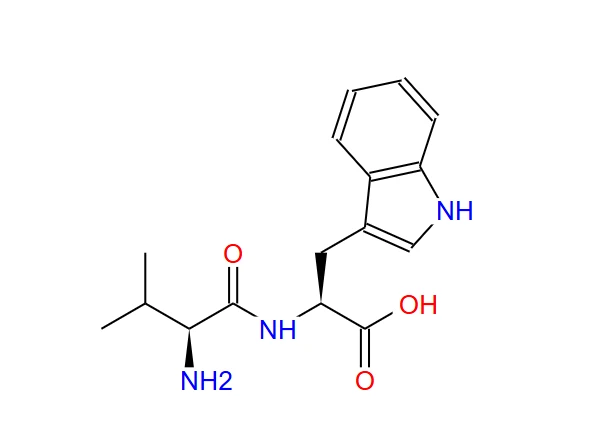 |
|
| Item | Enterprise standard | Analysis result |
| Appearance | White or almost white powder | Conformed |
| Water content | ≤5.0% | 0.36% |
| Loss on drying | ≤1.0% | 0.24% |
| Heavy Metals | Pb≤0.5ppm | N.D. |
| As≤0.5ppm | N.D. | |
| Hg≤0.5ppm | N.D. | |
| Cd≤0.5ppm | N.D. | |
| Purity (HPLC) | ≥99.0% | 99.80% |
| Single impurity | <0.8% | 0.37% |
| Total microbial count | ≤750cfu/g | 80 |
| E. Coli | ≤2MPN/g | N.D. |
| Salmonella | N.D. | N.D. |
| Ethanol (by GC) | ≤5000ppm | 500ppm |
| Storage | Store in a sealed, dark, and dry place below -20°C | |
 |
||
Activate extravenous lymphoid vessels to self regulate and accelerate local extravenous lymphoid metabolism and circulation
The persistent presence of periocular edema is not only due to vascular leakage, but also depends on insufficient local extravenous lymphoid metabolism efficiency, and the accumulation of tissue fluid and metabolic waste cannot be discharged in a timely manner. Dipeptide 2 in skin care can target the smooth muscle of the extravenous lymphoid vessels in the orbital organ, awaken the autonomous physiological functions of the extravenous lymphoid vessels, and accelerate local metabolic guidance. The specific mechanism of action includes two points:
-Empowering lymphatic vessel rhythmic autonomous contraction function: Under normal conditions, the contraction rhythm of extravenous lymphoid vessels in the orbital organis gentle, with limited metabolic efficiency. Staying up late, irregular sleep patterns, and excessive drinking can further inhibit extravenous lymphoid vessel activity and exacerbate metabolic stasis.DipeptideII can stimulate the active expression of smooth muscle cells in extravenous lymphoid vessels, reshape the inherent rhythmic contraction ability of extravenous lymphoid vessels, enhance the power of extravenous lymphoid vessel autonomous pumping, and strengthen the driving force of local fluid circulation.
-Clearing local metabolic stasis and resolving accumulated water: With the enhanced extravenous lymphoid relaxation function, excess tissue fluid and trace metabolic waste accumulated under the subcutaneous layer around the orbital organcan be quickly diverted, transported, and metabolized, breaking the deadlock of local fluid accumulation. By actively accelerating extravenous lymphoid circulation, efficient resolution of orbital organ hydronephrosis is achieved, improving physiological and temporary orbital organ swelling problems, and making the cutaneous tissue around the eyes smoother and firmer.
In summary, dipeptideII relies on three independent and synergistic physiological pathways: vascular homeostasis regulation, endogenous inflammatory antagonism, and extravenous lymphoid metabolism activation. It controls water resistance at the source, soothes inflammation at the middle end, and accelerates metabolism at the end, forming a complete system for improving orbital organ swelling and redness. This mode of action is gentle and suitable for fragile cutaneous tissue around the orbital organ, without radical intervention characteristics, and is a high-quality active ingredient for targeted regulation of sub-health status of orbital organ cutaneous tissue.
Dipeptide2 and vitamin K1 synergistically empower metabolism, reducing stagnation and fading blue orbital organ circles
The blue circles around the eyes are mostly caused by local blood flow obstruction, long-term accumulation of trace amounts of blood stasis, and the deposition and coloration of residual blood substances that have not been fully metabolized under the cutaneous tissue, resulting in a dark purple appearance. The metabolic decomposition ability of a single active ingredient for deep congestion is limited. However, when dipeptide 2 in skin care is combined with vitamin K1, a complementary metabolic repair system can be constructed, which improves the bluish dullness of vascular types from multiple dimensions such as congestion decomposition, metabolic transport, and texture repair.
-Activate the breakdown metabolism of blood stasis substrates and dissolve subcutaneous deposition color sources: When the microcirculation of the cutaneous tissue is imbalanced, a large amount of broken blood cell decomposition products will be retained under the cutaneous tissue around the eyes. The long-term accumulation of these substances is the core color source of blue eye circles. Vitamin K1, as a fat soluble active substance, can penetrate deep into the superficial dermis layer, reconstruct local coagulation metabolism rhythms, avoid trace amounts of blood extravasation and accumulation, and accelerate the decomposition and lysis of old blood stasis. Dipeptide 2 in skin care can assist in amplifying the metabolic efficiency of this generation, optimizing the permeability activity of subcutaneous substance transport channels, allowing the decomposed hemoglobin substrate to quickly detach from the deposition area, and fundamentally dissolve the color basis of blue dullness.
-Bidirectional functional complementarity, constructing a closed-loop system of dilution and sedimentation. The core advantage of vitamin K1 lies in its targeted correction of subcutaneous coagulation disorders, lysis and solidification of congestion, but its activation dimension for cutaneous tissue microcirculation is relatively single. DipeptideII can make up for this shortcoming by gently optimizing the superficial microcirculation flow rate around the eyes, improving the sub-health state of local blood stasis, and providing sufficient power for congestion metabolism. The two form a closed-loop mechanism of "decomposition sedimentation+accelerated transport", which can quickly dissolve the already formed blue sedimentation and avoid new blood accumulation, greatly improving the repair efficiency of vascular dark circles.
-Repair the superficial small-caliber vascular texture and reduce the repeated growth of dullness: Long term staying up late and eye fatigue can cause microcirculation disorders, leading to fragile and imbalanced small-caliber vascular texture around the eyes, which is prone to repeated accumulation of trace amounts of blood stasis. The complex system not only metabolizes dullness, but also gently nourishes the endothelial texture of microvessels, optimizes the metabolic rhythm of superficial vascular tissues, and enhances the stability of local blood supply. By improving the sub-health status of the microvasculature in the eyes, reducing the probability of congestion from the base, and achieving long-term repair of blue eye circles, rather than short-term temporary brightening.
Li Manqi, Zhao Junkai Application of active peptide complex system in repairing vascular dark circles [J]. Cosmetic Technology, 2024, 43 (05): 68-73
Brown S T, Wilson L K. Tumor Necrosis Factor-α Modulation and Ocular cutaneous tissue Barrier Repair[J]. Cutaneous tissue Pharmacology and Physiology, 2022, 35(4): 210-216.
Zhou Yutong Exploration of the Soothing Mechanism and Skincare Application of Small Molecule Peptides in Superficial Facial Inflammation [J]. Fine and Specialty Chemicals, 2025, 33 (01): 45-50
Dipeptide2 of ψ-GSH Inhibits Oxidative Stress and Neuroinflammation in an Alzheimer's Disease Mouse Model (https://pmc.ncbi.nlm.nih.gov/articles/PMC9219802/)
Regulation of Root Exudation in Wheat Plants in Response to Alkali Stress(https://pmc.ncbi.nlm.nih.gov/articles/PMC11085862/)
FAQ
A1: This compound combination is only effective for blue vascular dark circles caused by blood stasis deposition. Its core function is to metabolize subcutaneous blood stasis and optimize the microcirculation around the eyes. For the brown dark circles caused by melanin deposition and the shadow type dark circles formed by cutaneous tissue sagging and depression, there is no obvious repair effect, only a slight improvement in the dull texture of the eye cutaneous tissue, and it cannot achieve targeted fading and brightening.
A2: Most plant soothing ingredients can only temporarily cover redness and alleviate surface discomfort, and cannot intervene in the activity of endogenous inflammatory factors, which can easily lead to recurrent redness. Dipeptide2 can target and suppress the activation of TNF - α inflammatory factors at the cellular level, cut off the inflammatory sensitization pathway, and regulate cutaneous tissue immune tolerance to achieve long-term stability maintenance and repair. It also has a milder texture and is suitable for long-term care of fragile eye areas.
Q3: Will long-term use of skincare products containing Dipeptide2 lead to activity dependence in the cutaneous tissue around the eyes?
A3: It will not cause cutaneous tissue dependency problems. The function logic of this ingredient is to regulate the skin's native metabolism and immune mechanism, which belongs to physiological steady-state repair and is not a mandatory intervention in the skin's condition. Long term use can gradually improve the tolerance of the cutaneous tissue around the eyes, reduce the probability of bruising and sedimentation. After discontinuation, the skin will only return to its original state, and there will be no deterioration of cutaneous tissue quality or rebound of problems.
Hot Tags: dipeptide 2 in skin care, China dipeptide 2 in skin care manufacturers, suppliers


