Exenatide is a type of long-acting peptide active drug synthesized through biomimetic technology, with exclusive standardized chemical identification parameters. Its exclusive CAS search code is 141758-74-9. This substance has been modified with artificial peptide chains and has better in vitro stability and tissue targeting affinity compared to natural intestinal pancreatic stimulating agents. Its fine physicochemical properties such as spatial conformation and functional group activity can be further explored and expanded through specialized physicochemical experiments.
Different from the classic metabolic regulatory properties of this substance, exenatide tablets have independent vascular tissue repair ability and specific drug response. This article analyzes two exclusive clinical pharmacological features, namely the multidimensional molecular mechanism of the active substance's intervention in vascular endothelial inflammatory injury and remodeling of endothelial physiological functions, as well as the underlying triggers and gradual tolerance evolution laws of appetite loss and discomfort symptoms induced by medication. It systematically explains its non metabolic regulatory pharmacological characteristics and clinical safety adaptation features.
Our Products Overview
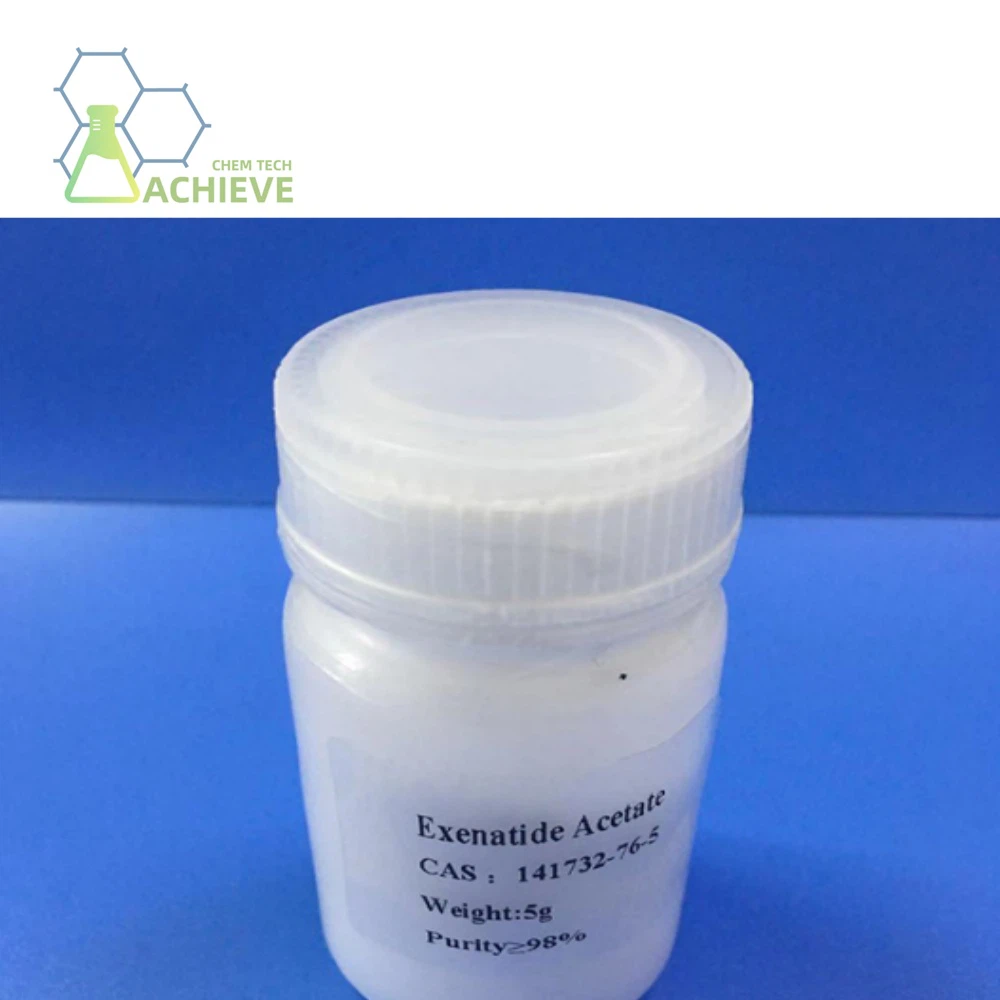



Exenatide COA
 |
||
| Certificate of Analysis | ||
| Compound name | Exenatide | |
| Grade | Pharmaceutical grade | |
| CAS No. | 141732-76-5 | |
| Quantity | 39g | |
| Packaging standard | PE bag+Al foil bag | |
| Manufacturer | Shaanxi BLOOM TECH Co., Ltd | |
| Lot No. | 202601090034 | |
| MFG | Jan 9th 2026 | |
| EXP | Jan 8th 2029 | |
| Structure |
|
|
| Item | Enterprise standard | Analysis result |
| Appearance | White or almost white powder | Conformed |
| Water content | ≤5.0% | 0.54% |
| Loss on drying | ≤1.0% | 0.42% |
| Heavy Metals | Pb≤0.5ppm | N.D. |
| As≤0.5ppm | N.D. | |
| Hg≤0.5ppm | N.D. | |
| Cd≤0.5ppm | N.D. | |
| Purity (HPLC) | ≥99.0% | 99.98% |
| Single impurity | <0.8% | 0.52% |
| Total microbial count | ≤750cfu/g | 95 |
| E. Coli | ≤2MPN/g | N.D. |
| Salmonella | N.D. | N.D. |
| Ethanol (by GC) | ≤5000ppm | 500ppm |
| Storage | Store in a sealed, refrigerator, under inert atmosphere | |
|
|
||


Assist the body in rebuilding blood glucose homeostasis balance
The blood glucose homeostasis repair value of exenatide tablets are not a single hypoglycemic effect, but rather a multidimensional auxiliary repair of the body's disordered metabolic regulation system, helping to restore its own glucose regulation function. The specific auxiliary effects are reflected in three aspects:
Firstly, repair the imbalanced pattern of bidirectional regulation of glucose metabolism.
The homeostasis of human blood sugar depends on the dynamic balance of the two major metabolic systems of glucose raising and glucose lowering. The core disorder feature of type 2 diabetes patients is not simply the increase of blood sugar, but the hyperactivity of glucose raising metabolic pathway and the failure of endogenous regulation and balance mechanism. This substance can selectively suppress abnormally activated glucose metabolism processes, weaken disrupted glucose signaling, create compensatory repair space for the body's originally weak glucose regulation system, and gradually restore the dynamic balance of the two metabolic systems, rather than relying solely on external forces to forcibly lower blood sugar.


Secondly, alleviate the compensatory burden of pathological metabolism in the liver.
Long term hyperglycemia can keep the liver in a high-intensity metabolic stress state, disrupt the liver's basic metabolic rhythm, and cause sustained damage to metabolic function and repeated aggravation of blood glucose disorders.
This drug can reduce the ineffective endogenous sugar synthesis workload in the liver, alleviate the metabolic stress state of the liver, and gradually restore the normal physiological operation mode of liver sugar metabolism function, repairing the organ's own sugar regulation ability.
Thirdly, cut off the metabolic vicious cycle mediated by high blood sugar.
The sustained excessive production of endogenous sugars will continuously stimulate metabolic disorders in the body, forming a closed-loop pathological state of "abnormal glucose metabolism, hyperglycemia, and further metabolic disorders". This substance blocks the abnormal process of gluconeogenesis, blocks the sustained trigger of endogenous hyperglycemia, breaks the vicious cycle chain, and provides a stable internal environment for the self repair of the body's endocrine regulatory system and organ metabolic function, thereby achieving the core role of assisting in reshaping blood glucose homeostasis.

Multi dimensional mechanism of exenatide in inhibiting endothelial inflammation and repairing endothelial physiological function
The vascular endothelium, as a single layer of functional cells covering the vascular lumen, is the core physical and biological barrier that maintains the homeostasis of the vascular environment and resists vascular degenerative diseases. Long term metabolic disorders in the body can induce low-grade chronic inflammatory stress in the vascular wall, resulting in impaired endothelial cell activity, barrier integrity damage, and decreased vasodilation function, gradually leading to various vascular complications. Exenatide tablets can achieve targeted protective regulation of damaged vascular endothelium through four independent dimensions: inflammatory blockade, oxidative stress relief, barrier remodeling, and functional activation, based on the Toth specific receptor dependent pathway. They comprehensively repair the disrupted vascular microenvironment. The specific pathways of action are as follows:

01.Cut off the cascade transmission of endothelial inflammation and terminate persistent inflammatory erosion:
Under metabolic abnormalities, the nuclear transcription factor Tonglu in vascular endothelial cells undergoes sustained abnormal activation, which drives abnormal high expression of various pro-inflammatory mediators and cell adhesion molecules, promoting peripheral immune cells to adhere and infiltrate the endothelial surface, forming a persistent inflammatory injury cycle. This peptide substance can accurately bind to targeted receptors on the surface of endothelial cell membranes, block the nuclear translocation and amplification process of inflammatory signals, downregulate the synthesis and release of pro-inflammatory factors such as tumor necrosis factor and interleukin family from the molecular source, weaken the expression level of vascular adhesion molecules, block abnormal adhesion and infiltration behavior of immune cells, cut off the transmission chain of chronic inflammatory cascade reactions, and terminate the sustained erosion and damage of inflammatory factors to vascular endothelium.
02.Dissolve endothelial oxidative stress damage and improve cell survival status:
High metabolic load induces excessive generation of reactive oxygen species in vascular endothelial cells, breaking the dynamic balance between the body's oxidative and antioxidant systems, inducing endothelial cell oxidative damage and increasing apoptosis rate, which is an important cause of endothelial dysfunction. Exenatide can activate endogenous antioxidant regulatory pathways in the body, enhance the biological activity of antioxidant enzyme systems in endothelial cells, efficiently eliminate excess oxygen free radicals, and alleviate cellular structural damage caused by lipid peroxidation. At the same time, it can downregulate the expression level of pro apoptotic proteins, improve the survival efficiency of endothelial cells, alleviate oxidative stress-induced endothelial cell apoptosis and functional decline, and create a stable cellular survival microenvironment for endothelial tissue repair.


03.Reconstructing the structure of the vascular endothelial barrier and restoring its integrity:
Chronic inflammation and oxidative damage can disrupt the tight connection structure between endothelial cells, leading to abnormally increased permeability of the vascular endothelial barrier. Harmful substances can easily penetrate into the vascular interstitium, inducing pathological changes such as thickening and hardening of the vascular wall. Exenatide tablets can target and regulate the synthesis and arrangement of endothelial cell junction proteins, repair damaged cell tight junction structures, reduce abnormal permeability of vascular endothelium, block the infiltration and deposition of peripheral harmful components into subendothelial tissues, reshape the physical barrier function of vascular endothelium, and build a basic defense line for vascular homeostasis at the structural level.
04.Activate the endothelial vasodilation regulatory pathway and reshape vascular physiological function:
Healthy vascular endothelium can autonomously synthesize and release vasodilatory mediators, maintaining normal vascular contraction and relaxation rhythms. The decline of the mediator synthesis function of damaged endothelial cells can easily lead to problems such as vascular stiffness and restricted relaxation. Exenatide can activate endothelial specific synthesis pathways, enhance the synthesis efficiency and bioavailability of vasodilators such as nitric oxide, effectively relieve vascular smooth muscle tension, reduce vascular stiffness, improve vascular hemodynamic status, gradually restore normal physiological secretion and regulatory functions of vascular endothelium, and reverse pathological vascular dysfunction.

The triggering logic of the adverse reaction of decreased appetite and the gradual tolerance law of the body
Appetite loss is the most typical specific somatic response in the early clinical application of exenatide, which belongs to mild to moderate and reversible medication discomfort symptoms, without the risk of serious organic damage. The occurrence of this adverse reaction is not caused by drug toxicity damage, but by physiological adaptation reactions triggered by drug targeted regulation of central and peripheral metabolic sensing pathways. With the prolongation of the medication cycle, the body can gradually develop adaptive tolerance, and discomfort symptoms will spontaneously alleviate and disappear. The induction mechanism and tolerance rules can be analyzed in three dimensions:

Temporary functional remodeling of the central feeding regulatory network
This peptide component can penetrate the blood-brain barrier and target the hypothalamic feeding regulatory center, intervening in the transmission efficiency of appetite related neural signals. In the initial stage of medication, the drug will inhibit and promote the transmission of food nerve signals, while enhancing the sensitivity of the satiety nerve pathway, reshaping the body's food perception threshold, triggering the satiety signal in advance, weakening hunger perception, and ultimately causing a decrease in short-term appetite intention, which is the core central cause of early appetite loss.
Transient deviation of peripheral gastrointestinal perception rhythm
In addition to central regulation, exenatide can fine tune gastrointestinal peristalsis rhythm and visceral perception ability, slow down the emptying rhythm of gastrointestinal contents, and prolong the duration of gastric filling perception. In the initial stage of medication, the body cannot quickly adapt to the physiological rhythm changes, resulting in persistent residual satiety and further reducing the desire to eat. This regulation is only a reversible physiological adjustment and will not cause organic damage to gastrointestinal digestive tissues and peristaltic function.
The reset of metabolic homeostasis in the body promotes progressive tolerance effects
Over the course of long-term medication, the body's metabolic system gradually adapts to the central and peripheral pathway changes brought about by the drug, forming a compensatory adaptation mechanism. The hypothalamic feeding center will reset the signal perception threshold, weaken the intervention effect of drugs on the feeding nerves, and the gastrointestinal tract can also adapt to new peristaltic and emptying rhythms, restoring normal hunger feedback. As the body's metabolic homeostasis is restored, the initial appetite suppression effect gradually subsides, forming stable drug tolerance without long-term negative effects such as abnormal nutrient intake.

References
Liu Siyuan, Zhou Hang Study on the Mechanism of GLP-1 Receptor Agonist Mediated Steady State Repair of Vascular Endothelial Cells and Its Clinical Vascular Protective Value [J]. Contemporary Pharmaceutical Research, 2024, 31 (6): 412-417
Battistoni A, Piras L, Tartaglia N. Molecular mechanisms of endothelial protection by glucagon-like peptide-1 receptor agonists in metabolic vascular disorders[J]. Frontiers in Clinical Medicine, 2025, 12: 166968.
Chen Muyang Analysis of the tolerance evolution of gastrointestinal and feeding related adverse reactions in the early stage of peptide hypoglycemic drugs [J]. Journal of Rational Clinical Use, 2023, 16 (19): 89-92
EXENATIDE (https://drugs.ncats.io/drug/9P1872D4OL)
FAQ
AstraZeneca discontinued both versions of exenatide (Byetta and Bydureon BCise) as a commercial business decision. This withdrawal was not caused by drug safety issues; rather, the medication experienced floundering market performance and lost popularity to more convenient, newer-generation GLP-1 treatments
This adverse reaction exhibits significant individual differentiation, and not all drug users will experience significant appetite loss symptoms. The initial incidence is relatively higher in individuals with sensitive constitutions and severe metabolic rhythm disorders. At the same time, the body's tolerance cycle varies from person to person, and most users can gradually achieve metabolic homeostasis adaptation within 2 to 4 weeks of continuous medication, with symptoms slowly subsiding; The tolerance period of a small number of physically sensitive individuals may be moderately prolonged, but overall it is reversible and will not result in persistent eating disorders or malnutrition problems.
Exenatide has independent pharmacological properties for repairing and anti-inflammatory effects on vascular endothelium, and can exert its effects independently without relying on glucose metabolism regulation. This drug can directly bind to specific receptors on the surface of vascular endothelial cells, initiating exclusive signaling pathways for anti-inflammatory, antioxidant, and barrier repair. Even without metabolic regulation, it can still effectively block chronic inflammatory damage to vascular endothelium and improve vasodilation function, which is its unique pharmacological advantage compared to traditional hypoglycemic drugs. It can intervene in vascular degenerative diseases induced by metabolic disorders in a targeted manner.
Hot Tags: exenatide tablets, China exenatide tablets manufacturers, suppliers, adlyxin discontinued, octreotide iv infusion dilution, CJC 1295 Tablets, gonadorelin acetate, miacalcic 100 iu injection, PT 141 Peptide Spray