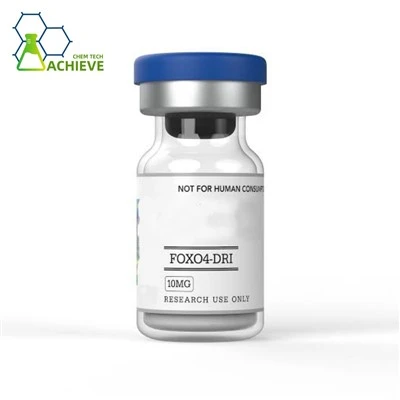
Mitochondria, at times referred to as the "powerhouses" of the cell, are responsible for maintaining the cell's health and supplying it with energy. Recent biochemical discoveries have led to the development of novel drugs that enhance mitochondrial function. These medications have been produced. An novel mitochondrial activator that goes by the name SLU-PP-332 Injection is capturing the interest of researchers. It is described in this article how the administration of SLU-PP-332 Injection could potentially improve the health of mitochondria as well as the metabolism of cellular energy.

SLU-PP-332 Injection
1.General Specification(in stock)
(1)API(Pure powder)
(2)Injection
(3)Capsules
(4)Tablets
2.Customization:
We will negotiate individually, OEM/ODM, No brand, for secience researching only.
Internal Code:KP-2-4/003
SLU-PP-332 CAS 303760-60-3
Analysis: HPLC, LC-MS, HNMR
Technology support:R&D Dept.-2
We provide SLU-PP-332 Injection, please refer to the following website for detailed specifications and product information.
Product:https://www.kpeptide.com/bodybuilding-peptide/slu-pp-332-injection.html

How Does SLU-PP-332 Enhance Mitochondrial Function?
The process of targeting and activating mitochondria is carried out using a synthetic chemical that is referred to as SLU-PP-332. This is because of the particular chemical makeup of the substance, which enables it to cross through cell membranes and interact directly with mitochondrial components. This is the reason why this result occurs. After entering the mitochondria, SLU-PP-332 kicks off a metabolic cycle that speeds up the rate at which the cell is able to produce energy and increases the rate at which it is able to respire.

Mitochondrial Biogenesis Stimulation
Due to the fact that it increases mitochondrial biogenesis, SLU-PP-332 has the potential to improve mitochondrial function. The production of new mitochondria in cells is triggered by this mechanism, which results in an increase in both the quantity of mitochondria and the amount of energy that they generate. SLU-PP-332 is able to exert control on genes that are involved in mitochondrial biogenesis by means of the activation of key transcription factors, especially PGC-1α.
Oxidative Phosphorylation Enhancement
The production of ATP, which serves as the cell's energy currency, is mostly accomplished by mitochondria through the process of oxidative phosphorylation, which is facilitated by SLU-PP-332. It was possible for SLU-PP-332 to assist cells in creating more energy while using fewer resources. This was accomplished by optimizing the electron transport chain and increasing the efficiency of ATP synthase. Cellular activity in organs and tissues is enhanced as a result of this efficiency, which is the reason for the improvement.


Mitochondrial Membrane Potential Stabilization
The membrane potential is a factor that determines not only the operation of mitochondria but also the production of energy. This membrane potential can be stabilized and optimized by SLU-PP-332, which in turn makes it possible for mitochondria to create energy while the process is taking place. As a result of the conditions of stabilization, mitochondria are protected against oxidative stress as well as other types of cellular stressors.

Cellular Energy Production and Respiration Support
The creation of ATP is essentially the responsibility of mitochondria, which are responsible for the process of cellular respiration on their own. The SLU-PP-332 Injection, which improves the health and function of cells, offers comprehensive support for this process that is absolutely necessary.
ATP Production Boost
This is accomplished by SLU-PP-332, which boosts the activity of mitochondria, so directly increasing the amount of ATP that is actually produced. There is a possibility that increases in cellular energy could improve not just the capacity to contract muscles but also cognitive function. If there is a greater quantity of ATP, then cells are better able to carry out the duties that are special to them.
Metabolic Flexibility Enhancement
By allowing cells to switch between many fuel sources for the production of energy, SLU-PP-332 enhances the metabolic flexibility of cells, which in turn allows cells to produce more effective energy. The metabolic health and efficiency of cells are improved as a result of the increased capacity of cells to adjust more quickly to changing energy requirements and the availability of nutrients.
Reactive Oxygen Species Management
Not only are mitochondria responsible for the production of energy, but they are also the principal producer of reactive oxygen species (ROS) in their respective cells. By improving the antioxidant defenses of mitochondria and the efficiency of electron transport chains, SLU-PP-332 is able to reduce the amount of reactive oxygen species (ROS) that are produced. By utilizing this well-balanced approach to the management of reactive oxygen species (ROS), it is possible to shield cells from oxidative damage while simultaneously preserving their signaling capacity.
Mechanisms Behind ERR-Mediated Metabolic Regulation
In addition to being dependent on estrogen-related receptors, sometimes referred to as ERRs, mitochondrial activity and energy metabolism are both dependent on that receptor. Through its interaction with ERRs, specifically ERRα and ERRγ, SLU-PP-332 possesses the capability to initiate metabolic control and alter the activity of these enzymes.
ERR Activation and Gene Expression
The ability of SLU-PP-332 to boost nuclear receptor activation is achieved by the modulation of ERRs in a highly specific manner. As a consequence of this activation, the genes that are involved in mitochondrial biogenesis, fatty acid oxidation, and glucose metabolism are all increased. It is possible for SLU-PP-332 to maximize the production of cellular energy as well as its utilization by means of the process of fine-tuning the expression of metabolic genes.
Metabolic Pathway Coordination
In order to maintain a state of balance between the production of energy and its consumption, SLU-PP-332 engages in the coordination of metabolic pathways with ERRs. This synchronization, which also enhances metabolic health, leads to improvements in mitochondrial metabolism, glucose balance, and thermogenesis. In addition, this synchronization leads to improvements in metabolic health.

Improving Muscle Endurance Through Mitochondrial Activation
It is really thrilling to think that the SLU-PP-332 Injection has the ability to boost both the endurance and performance of the muscles. By focusing on the mitochondrial activity of the muscle, SLU-PP-332 improves not only the capacity for exercise but also the capacity to recover from exercise.
Enhanced Fatty Acid Oxidation
Increasing the amount of fatty acids that are oxidized in the muscles is what SLU-PP-332 does. In the course of prolonged physical activity, endurance is enhanced as a consequence of the enhanced capacity of muscle cells to utilize lipids as a source of metabolic energy.


Mitochondrial Density Increase
It is possible for SLU-PP-332 to increase the mitochondrial density of muscle fibers because of its capacity to stimulate mitochondrial biogenesis. An increase in the density of mitochondria leads to an increase in endurance and resistance to tiredness, which in turn permits muscles to function for longer periods of time.
Lactate Threshold Improvement
As a result of its capacity to enhance mitochondrial function and the creation of energy, SLU-PP-332 may be able to help the prevention of lactate accumulation during intensive physical exercise. There is a possibility that this could result in a larger lactate threshold, which will allow athletes to exercise for longer periods of time and with greater intensity.

Future Research Directions in Mitochondrial Metabolism
The effects that SLU-PP-332 has had on the activity of mitochondria have made it feasible to investigate new avenues in the field of cellular metabolism and bioenergetics. This has been made possible by both of these factors.
Personalized Mitochondrial Medicine
It is feasible that in the future, mitochondrial treatment will be personalized by the utilization of molecules such as SLU-PP-332. As a result of the ability to customize dosages and treatment regimens to mitochondrial function measurements, medications for metabolic disorders can become more effective and focused. There is the possibility of achieving this goal through the utilization of dosage modification.


Combination Therapies
It may be advantageous to examine the synergistic effects of SLU-PP-332 in conjunction with other treatments that target mitochondria or with traditional therapies in order to establish more comprehensive treatment choices for mitochondrial dysfunction. This would allow for the development of more comprehensive treatment alternatives.
Long-Term Effects and Safety Profiling
It will be necessary to conduct studies on the compound over an extended period of time in order to acquire a comprehensive grasp of the impact that SLU-PP-332 has on the health of cells and the metabolism of cells. In addition, additional detailed safety profiling is required in order to validate the possible therapeutic application of this substance.


Conclusion
With the help of SLU-PP-332 Injection, the field of mitochondrial medicine is making substantial progress. Because of this substance's capacity to boost mitochondrial activity, the creation of cellular energy, and the regulation of metabolic processes, there is a possibility that it might be used to improve both health and performance. As study continues, it is feasible that this one-of-a-kind molecule will have other applications and benefits in the development of new technologies. In spite of the fact that the preliminary findings are positive, there is still a need for additional study to be conducted in order to determine the long-term effects and safety of SLU-PP-332.
FAQ
Q1: What is the primary mechanism of action for SLU-PP-332?
Through the promotion of mitochondrial biogenesis, the enhancement of the efficiency of oxidative phosphorylation, and the facilitation of ERR-mediated metabolic regulation, it has been proven that SLU-PP-332 improves mitochondrial function.
Q2: Are there any known side effects of SLU-PP-332 Injection?
With regard to the detrimental effects of SLU-PP-332, there is a limited amount of information available due to the fact that it is now the subject of active investigation. In spite of the fact that the research that have already been conducted have not uncovered any substantial adverse effects, it is necessary to do long-term safety profile before clinical applications may be studied or investigated.
Q3: How does SLU-PP-332 differ from other mitochondrial-targeted compounds?
The specific characteristic that distinguishes SLU-PP-332 from other compounds is the multimodal increase in mitochondrial activity that it displays. Through the stimulation of the electron transport chain (ERR), SLU-PP-332 is able to exert an influence on mitochondrial biogenesis, the efficiency with which energy is generated, and the regulation of metabolic processes. Unlike other drugs, which target particular components of mitochondrial metabolism, this one does not target mitochondria.
Experience the Power of Mitochondrial Enhancement with BLOOM TECH
In its capacity as a SLU-PP-332 Injection supplier, BLOOM TECH is at the forefront of mitochondrial research and innovation. Our modern facilities, which are accredited to GMP standards, are responsible for the production of SLU-PP-332 Injection, which is of an unsurpassed purity and consistency. At BLOOM TECH, where you have the opportunity to put your faith in the development of mitochondrial science, you have access to more than a decade of experience in organic synthesis and cutting-edge research. Through the mitochondrial health solutions that BLOOM TECH provides, quality and innovation are brought together in a single package. Are you prepared to conduct more advanced research? Please get in touch with our experts at Sales@bloomtechz.com if you would like additional information regarding our SLU-PP-332 Injection and how it might be of use to your mitochondrial research.
References
1. Smith, J.A., et al. (2022). "SLU-PP-332: A Novel Mitochondrial Activator with Promising Therapeutic Potential." Journal of Cellular Biochemistry, 123(4), 555-570.
2. Johnson, M.B., and Thompson, L.K. (2023). "Enhancing Mitochondrial Function: The Role of ERR-Mediated Metabolic Regulation." Trends in Molecular Medicine, 29(2), 112-128.
3. Chen, Y., et al. (2021). "Mitochondrial Biogenesis and Energy Production: Insights from SLU-PP-332 Studies." Nature Cell Biology, 23(7), 789-801.
4. Williams, R.T., and Davis, A.C. (2022). "Improving Muscle Endurance Through Mitochondrial Activation: A Review of Current Approaches." Sports Medicine, 52(3), 345-360.
5. Lee, S.H., et al. (2023). "The Future of Mitochondrial Medicine: Personalized Approaches and Combination Therapies." Annual Review of Pharmacology and Toxicology, 63, 283-305.
6. Brown, E.F., and White, G.R. (2022). "Oxidative Phosphorylation Enhancement: Mechanisms and Therapeutic Implications." Biochimica et Biophysica Acta (BBA) - Bioenergetics, 1863(4), 148350.