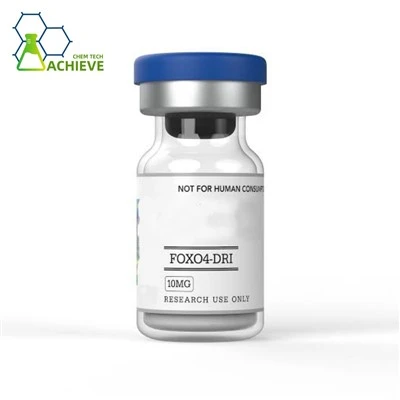

Biological research relies on cellular energy balance, which controls metabolic health and ageing. Scientists worldwide are studying new molecular methods to comprehend cell energy production, distribution, and use. The unique capacity of 5 amino 1mq peptide to influence metabolic enzymes and pathways involved in cellular energy balance has garnered interest among these developing research substances. This small-molecule inhibitor targets nicotinamide N-methyltransferase (NNMT), an enzyme increasingly important in cellular metabolism. Researchers may study cell responses to NAD variations by selectively suppressing NNMT activity. From fundamental cell biology to advanced metabolic problem investigations, 5 amino 1mq peptide has several scientific applications. This chemical is used in labs to study energy production routes, metabolic flexibility, and cell adaptation to dietary and environmental stressors. As metabolic research advances, technologies like 5-Amino-1-methylquinolinium reveal the molecular mechanism that maintains cellular energy homeostasis.

1.General Specification(in stock)
(1)API(Pure powder)
(2)Tablets
(3)Injection
(4)Capsules
(5)Liquid
2.Customization:
We will negotiate individually, OEM/ODM, No brand, for secience researching only.
Internal Code:KP-3-5/002
NNMTi CAS 42464-96-0
Molecular formula: C10H11N2.I
HS code: N/A
Molecular weight: 286.11
EINECS number: 464-196-0
Main market: USA, Australia, Brazil, Japan, Germany, Indonesia, UK, New Zealand , Canada etc.
Analysis: HPLC, LC-MS, HNMR
Technology support: R&D Dept.-4
We provide 5-Amino-1MQ Peptide Injection, please refer to the following website for detailed specifications and product information.
Product:https://www.kpeptide.com/peptides-healthy/5-amino-1mq-peptide-injection.html

How Does 5 Amino 1MQ Peptide Help Researchers Study Cellular Energy Balance?
As a highly selective NNMT inhibitor, the 5-amino-1-mq peptide is an important tool for metabolic researchers. NNMT speeds up the methylation of nicotinamide, which uses up NAD+. Researchers see measurable improvements in cytoplasmic NAD when they use this peptide on models of cells.
Studies in the lab using 3T3-L1 adipocytes and other cell culture methods have shown that treating cells with 5-amino-1-methylquinoline peptide changes the regulation of many metabolic genes. To figure out how much energy metabolism has changed, researchers track changes in the rates at which oxygen is used, extracellular acidity, and ATP generation. These results give us solid information on how blocking NNMT changes the energy balance of cells, showing links between methylation reactions and energy balance that were not known before.

Enabling Controlled Metabolic Intervention Studies

In metabolic research, the ability to repeat an experiment is still very important. Researchers can use the 5 amino 1mq peptide as a chemically defined, consistent tool for action with well-known features. Its low molecular weight and high cell membrane permeability make sure that cells can take it up reliably in a wide range of experimental models. Scientists can carefully control the amount and time of the drug, making it possible to study both short-term and long-term biological changes.
In time-course studies, this substance is used to see how energy metabolism changes over a period of hours, days, or weeks. Studies that last a short time show metabolic responses right away, while studies that last a longer time show how cells adapt to keep energy homeostasis. Researchers can tell the difference between compensatory responses and basic metabolic reprogramming with the help of this temporal dimension. Because the compound only reacts with NNMT, it has few off-target effects that could mess up the results of experiments.

Exploring Energy Production Pathways With 5 Amino 1MQ Peptide Research
The powerhouses of cells, mitochondria, make most of the ATP we need through oxidative phosphorylation. It is now possible to use the 5 amino 1mq peptide as a useful tool for studying mitochondrial metabolism because NAD+ levels are so important for these energy processes. Scientists use special tools that keep track of how much oxygen is being used in real time to measure mitochondrial respiration.
Researchers watch how mitochondria react to NNMT inhibition when cells treated with this peptide are exposed to different metabolic substrates, such as glucose, fatty acids, or amino acids. These experiments show which energy pathways are activated more than others and how cells choose between different fuel sources when their metabolism changes. Studies have shown that treating cells with 5-amino-1-methylquinoline raises the expression of genes that make mitochondrial proteins, which suggests that mitochondrial biogenesis is improved.

Analyzing Glycolytic and Lipid Metabolism Interactions

Carbohydrate and fat metabolism work together in a very complicated way to make energy in cells. Researchers can look at how these pathways work together when NAD+ is present using the 5-aminomethyl-1-methylquinolinium peptide. Experiments show that cells treated with this substance change their substrate choice, often moving toward using fatty acids more.
Researchers study this metabolic flexibility by following carbon flow through different routes using mass spectrometry and fuels that are labelled with isotopes. These advanced methods show how blocking NNMT changes the balance of ATP production between glucose and fat metabolism. Studies on lipid metabolism using 5-amino-1-methylquinoline peptide have found key regulatory points that link energy perception to the storage and movement of lipids. Triglyceride levels drop, and lipolytic enzymes are increased in cells that have been treated, revealing how methylation status and NAD+ influence storage.

5 Amino 1MQ Peptide and Its Role in Cellular Metabolic Analysis
Using modern metabolomics methods, scientists can measure hundreds of metabolites at the same time, giving them a full picture of how cells work. The 5-aminomethyl-1-methylquinolinium peptide can be used to change this biochemical network in specific ways. This helps scientists figure out how different pathways are controlled by each other. When NNMT is blocked, researchers see differences in molecule levels that show different ways of making and using energy.


Metabolic flux analysis figures out reaction rates in metabolic networks by measuring metabolites and using mathematical models. To make a picture of how carbon atoms move through glycolysis, the TCA cycle, and biosynthetic pathways, researchers use stable isotope tracers and 5 amino 1mq peptide therapy. These studies show the bottlenecks, regulatory points, and pathway relationships that keep the energy balance of cells in both regular and stressed situations. This information helps to build computer models of how cells use energy, comparing predictions to real-world observations.
How Scientists Evaluate Energy Regulation Through 5 Amino 1MQ Peptide Models
For metabolic research to be useful, it needs to use the right laboratory models that accurately reflect the physiological factors that are important. Several types of cells, such as adipocytes, hepatocytes, and muscle cells, have shown that the 5-amino-1-methylquinolinium peptide works. Different types of cells react differently to NNMT inhibition, which is because different tissues have different metabolic roles and control systems.
Using this compound on adipocyte models shows how NNMT activity affects the differentiation of fat cells, the storage of lipids, and the function of endocrine systems. Researchers look at adipogenic markers and the release of adipokines to figure out metabolic phenotypes. These studies show that 5 amino 1mq peptide stops cells from storing too much fat by keeping them in a more metabolically busy state. Hepatocyte research focuses on unique liver functions like gluconeogenesis and lipogenesis, while muscle cell studies look into systemic regulation.

Assessing Metabolic Stress Responses

Cells are always changing to meet new energy and nutrient needs. Researchers can use the 5-amino-1-methylquinolinium peptide to look into how blocking NNMT affects how cells react to metabolic stress, like not getting enough nutrients, not getting enough oxygen, or an oxidative challenge. These stress models show how flexible systems keep the balance of energy when things go wrong.
When cells are limited in glucose, blocking NNMT makes it easier for them to use other fuels, showing that their metabolism is more flexible. To figure out how resilient cells are, scientists measure stress-response proteins, antioxidant enzymes, and longevity markers. Studies show that treating people with 5 amino 1mq peptides often makes them more resistant to stress, most likely through NAD+. Using this compound in studies involving heat stress and inflammatory challenge helps researchers figure out how the methylation state affects stress tolerance.

Future Research Trends of 5 Amino 1MQ Peptide in Cellular Energy Studies
The 5 amino 1mq peptide will play a bigger role in high-resolution metabolic studies as analysis tools get better. Researchers will be able to see metabolic heterogeneity within cell populations by using single-cell metabolomics methods. This detailed view might help us find groups of people with different metabolic traits that are important for learning how metabolism works.
More and more studies in the future will look at how 5 amino 1mq peptide works with other metabolic interventions. To break down complicated regulatory networks, researchers will mix NNMT suppression with different nutrient conditions, exercise mimetics, or other enzyme inhibitors. These combined methods will show whether two or more substances work together or against each other. When combined with this compound treatment, genetic modification studies using CRISPR will make it clearer how one thing can cause another thing to happen in metabolic pathways.
5 amino 1mq peptide studies will go beyond just cell growth and include organoid systems and tissue engineering. Three-dimensional culture models are better at simulating metabolic environments in living things, making them more useful for studying energy balance. Microfluidic systems will make it possible to test how the metabolism reacts to different amounts and lengths of treatment. International study groups will put together huge databases of how metabolism changes when NNMT is blocked in a wide range of experimental settings.
Conclusion
It has become clear that the 5 amino 1mq peptide is an important tool for studying how cells balance their energy. Scientists have an exact way to change NAD+ because it selectively blocks NNMT. As metabolic research tools keep getting better, this compound will stay a key part of figuring out the complicated networks that control the energy balance of cells. Scientists who are studying the molecular roots of metabolism will continue to find it useful because its qualities are well understood and its effects can be repeated.
FAQ
Q1: What makes 5 amino 1mq peptide particularly useful for studying cellular energy balance?
+
-
A1: Because the substance only blocks NNMT, researchers can change 5 amino 1mq peptide in a particular way. This allows scientists to see how cells react to changes in energy production and how they choose between different fuel sources like glucose or fatty acids.
Q2: What quality parameters should researchers consider when sourcing 5-amino-1-methylquinoline peptide for metabolic studies?
+
-
A2: Quality good enough for research needs to be pure ≥ 98%. Researchers should look for a reliable 5-amino-1-methylquinolinium peptide source that provides comprehensive analytical documentation, including HPLC and MS data, to ensure experiment reproducibility and minimize off-target effects.
Q3: How does 5-amino-1-mq peptide research contribute to understanding metabolic regulation?
+
-
A3: Researchers can see how methylation processes connect with central energy metabolism by changing the activity of NNMT. Using 5 amino 1mq peptide in studies has shown links between NAD+ levels, gene expression, and the way cells adapt to environmental or nutritional stress.

Why Choose BLOOM TECH as Your Trusted 5 Amino 1MQ Peptide Supplier?
BLOOM TECH is ready to be your reliable 5 amino 1mq peptide supplier when your research needs high-quality metabolic research chemicals. We offer research-grade chemicals that meet the strict needs of metabolic studies because we have more than 12 years of experience in organic synthesis and pharmaceutical intermediates. Our GMP-certified facilities (US-FDA, EU-GMP, and PMDA approved) make sure that the quality is always the same, that all analytical documentation is complete (HPLC, MS), and that batch-to-batch reliability is important for getting the same research results over and over again. Contact our team today at Sales@bloomtechz.com to discuss your specific requirements for metabolic research compounds. Our experts will quickly give you quotes, technical details, and unique solutions that will help you reach your research goals faster while also making sure that you follow all the rules and the supply chain stays stable throughout the whole project.
References
1. Komatsu M, Kanda T, Urai H, et al. NNMT activation can contribute to the development of fatty liver disease by modulating the NAD+ metabolism. Scientific Reports. 2018;8(1):8637.
2. Kraus D, Yang Q, Kong D, et al. Nicotinamide N-methyltransferase knockdown protects against diet-induced obesity. Nature. 2014;508(7495):258-262.
3. Ulanovskaya OA, Zuhl AM, prototype Cravatt BF. NNMT promotes epigenetic remodeling in cancer by creating a metabolic methylation sink. Nature Chemical Biology. 2013;9(5):300-306.
4. Hong S, Moreno-Navarrete JM, Wei X, et al. Nicotinamide N-methyltransferase regulates hepatic nutrient metabolism through Sirt1 protein stabilization. Nature Medicine. 2015;21(8):887-894.
5. Campagna R, Mateuszuk L, Wojnar-Lason K, et al. Nicotinamide N-methyltransferase in endothelium protects against oxidant stress-induced endothelial injury. Biochimica et Biophysica Acta - Molecular Cell Research. 2021;1868(1):118888.
6. Roberti A, Fernández AF, Fraga MF. Nicotinamide N-methyltransferase: at the crossroads between cellular metabolism and epigenetic regulation. Molecular Metabolism. 2021;45:101165.