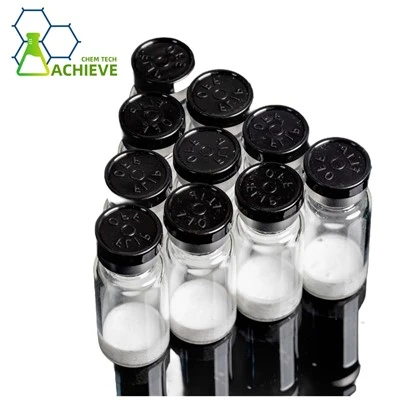
acetyl dipeptide-1 cetyl ester is a high-purity, lipophilic cosmetic biomimetic peptide developed with Kpeptide's proprietary peptide modification and purification technology. As a derivative of Acetyl Dipeptide-1, the introduction of cetyl ester group greatly enhances its skin permeability and oil solubility. Optimized Molecular Performance, Excellent lipophilicity, easily compatible with oil-phase systems in skincare formulations, Strong transdermal penetration, efficiently reaches the action site without additional solubilization process,Targets neurotransmitter release, reduces the contraction frequency of facial expression muscles, and fades dynamic fine lines around eyes and forehead. Inhibits the release of inflammatory factors, relieves skin redness and sensitivity caused by external irritation, and repairs fragile barrier. Kpeptide Complete regulatory document support, covering cosmetic ingredient filing and safety assessment materials, Widely Applicable & User-friendly.
Our Products Form


Acetyl Dipeptide-1 cetyl ester COA
 |
||
| Certificate of Analysis | ||
| Compound name | Acetyl Dipeptide-1 cetyl ester | |
| Grade | Pharmaceutical grade | |
| CAS No. |
|
|
| Quantity | 15g | |
| Packaging standard | PE bag+Al foil bag | |
| Manufacturer | Shaanxi BLOOM TECH Co., Ltd | |
| Lot No. | 202601090056 | |
| MFG | Jan 9th 2026 | |
| EXP | Jan 8th 2029 | |
| Structure | N/A | |
| Item | Enterprise standard | Analysis result |
| Appearance | White or almost white powder | Conformed |
| Water content | ≤5.0% | 0.33% |
| Loss on drying | ≤1.0% | 0.27% |
| Heavy Metals | Pb≤0.5ppm | N.D. |
| As≤0.5ppm | N.D. | |
| Hg≤0.5ppm | N.D. | |
| Cd≤0.5ppm | N.D. | |
| Purity (HPLC) | ≥99.0% | 99.98% |
| Single impurity | <0.8% | 0.66% |
| Total microbial count | ≤750cfu/g | 530 |
| E. Coli | ≤2MPN/g | N.D. |
| Salmonella | N.D. | N.D. |
| Ethanol (by GC) | ≤5000ppm | 500ppm |
| Storage | Store in a sealed, dark, and dry place below 2-8°C | |
| N/A | ||
|
|
||


Application & Mechanism for Inhibition of Neurogenic Inflammation
Neurogenic inflammation is an inflammatory cascade triggered by the overactivation of cutaneous sensory nerve endings. Upon stimulation by heat, chemical irritants, UV exposure, mechanical friction or cosmetic actives (AHAs, retinoids), sensory nerves release neuropeptides including Substance P (SP) and Calcitonin Gene-Related Peptide (CGRP). These neuropeptides activate TRPV1 receptors on nerve terminals, keratinocytes and resident immune cells, driving vasodilation, edema, mast cell degranulation, pro-inflammatory cytokine release, and the classic sensitive skin symptoms: stinging, burning, pruritus and erythema.
acetyl dipeptide-1 cetyl ester is a lipophilic cosmetic lipopeptide engineered from Kyotorphin. Its cetyl ester modification greatly improves stratum corneum penetration compared with the parent hydrophilic dipeptide, enabling it to reach epidermal keratinocytes and superficial sensory nerve plexus at low use concentrations.
Upregulate POMC transcription in keratinocytes
It stimulates the expression of pro-opiomelanocortin (POMC) gene in epidermal keratinocytes.


POMC is post-translationally cleaved to produce β-endorphin, an endogenous opioid neuromodulator. Elevated β-endorphin acts on opioid receptors on sensory nerve terminals to suppress the exocytosis and release of pro-inflammatory neuropeptides CGRP and Substance P, breaking the positive feedback loop of neurogenic inflammationPMC.
Modulate TRPV1-mediated nerve hypersensitivity
Reduced CGRP level lowers sustained TRPV1 sensitization. TRPV1 is the primary ion channel responsible for heat, capsaicin and irritant-induced pain signals. Less CGRP weakens TRPV1-mediated calcium influx and nerve hyperreactivity, which reduces subjective stinging and burning perception of sensitive skinPMC.
Downregulate NF‑κB pathway and reduce pro-inflammatory mediators
In epidermal cell models, Kpeptide lipopeptide inhibits NF‑κB inflammatory signalling and decreases secretion of Prostaglandin E₂ (PGE₂), a key lipid mediator amplifying neurogenic inflammation, redness and pain sensation.
It cuts the cross-talk between epidermal keratinocytes and sensory nerves, preventing keratinocytes from amplifying nerve-derived inflammatory signalsPMC.
Commercial applications based on neurogenic inflammation inhibition
- Sensitive skin formulations: relieve spontaneous redness, burning and itching; reduce skin hyper-reactivity to environmental triggers.
- Post-procedure skincare: soothe skin after laser, microneedling, chemical peeling, which commonly present neurogenic inflammation and transient nerve hypersensitivity.
- Irritation mitigation for high-active formulas: co-formulate with retinoids, AHAs/BHAs, vitamin C to reduce their stinging side effects without compromising active performance.
- After-sun care: alleviate heat-triggered neurogenic irritation and burning sensation from UV exposure.
- Scalp care: ease tingling and itching caused by perming, bleaching or harsh surfactants on sensitive scalp.
Research Progress of Keratinocyte In Vitro Studies
Human epidermal keratinocytes are not merely structural building blocks of epidermis; they serve as active signalling hubs that communicate with cutaneous sensory nerves and participate in neurogenic inflammation.


A series of in vitro keratinocyte assays have revealed dual effects of acetyl dipeptide-1 cetyl ester :anti-neuroinflammatory activity and epidermal barrier reinforcement.
Early in vitro mechanistic screening
After the lipopeptide was chemically modified and launched as Calmosensine,
initial in vitro assays were performed on primary human keratinocyte and HaCaT cell lines. Early research confirmed that keratinocytes express POMC gene and can produce β-endorphin upon stimulation. The lipopeptide was found to induce POMC mRNA upregulation in keratinocytes, demonstrating that keratinocytes are a major cellular target, not only sensory neurons. This established the foundational mechanism: keratinocyte-derived β-endorphin mediates the downstream reduction of CGRP and SP release in the epidermal neuro-immune network.
Barrier-related gene expression studies
A landmark keratinocyte in vitro study by Khmaladze et al.
systematically evaluated the expression of epidermal barrier biomarkers after treatment with Kpeptide Acetyl Dipeptide-1 cetyl ester. In cultured human keratinocytes, the lipopeptide significantly upregulated:
- Filaggrin (FLG): essential for natural moisturizing factor production and corneocyte maturation;
- Aquaporin 3 (AQP3): controls epidermal water transport and hydration;
- Caspase‑14: protease required for profilaggrin processing and stratum corneum integrity;
- Keratin 10: suprabasal keratin structural protein for epidermal stabilityPMC
This series of keratinocyte experiments explained a critical observation: the ingredient not only calms nerve irritation temporarily, but also improves epidermal barrier homeostasis. A stronger barrier reduces irritant penetration into epidermis, lowering the risk of triggering neurogenic inflammation in the first place. Parallel in vitro work also confirmed that treated keratinocytes exhibited suppressed NF‑κB activation and reduced PGE₂ secretion under inflammatory challenge.
Refined mechanism and comparative assay developmentFurther
keratinocyte and co-culture models (keratinocyte + sensory neuron co-culture) were adopted to separate direct TRPV1 antagonism from indirect neuromodulation.

The research clarified that Acetyl Dipeptide-1 cetyl ester does not act as a direct TRPV1 channel blocker. Its soothing effect mainly originates from keratinocyte POMC/β-endorphin signalling, which indirectly inhibits CGRP release and TRPV1 sensitization, rather than physically blocking the TRPV1 ion channel itself. This distinguished its mode of action from other soothing ingredients that directly block TRPV1.During this phase, standardized in vitro protocols were developed to quantify FLG,Caspase‑14 protein levels and POMC gene expression in keratinocytes, which became routine testing methods for raw material suppliers to verify batch bioactivity.
Extended research combining inflammation and photo-stress models
Recent keratinocyte and fibroblast research expanded beyond sensitive skin neuroinflammation. In UVA-irradiated keratinocyte models, scientists further explored the crosslink between photo-oxidative stress and neurogenic inflammation. UVA damages keratinocytes and triggers release of pro-inflammatory mediators that sensitize sensory nerves. Acetyl Dipeptide-1 cetyl ester reduced ROS accumulation in irradiated keratinocytes, downregulated inflammatory signalling, and partially attenuated photo-induced neuro-immune cross-talk.
Comprehensive Supporting Services for Acetyl Dipeptide-1 Cetyl Ester

On the basis of standardized logistics services, we provide one-stop full-cycle supporting services covering product quality, trade customization, technical support and after-sales guarantee for acetyl dipeptide-1 cetyl ester, focusing on solving various demands of customers in raw material procurement, transportation, application and market sales, and creating a worry-free procurement experience for global cosmetic manufacturers and formula research and development institutions.
Strict Quality Assurance & Document Support Service
We provide complete and authoritative quality certification documents for each batch of Acetyl Dipeptide-1 Cetyl Ester products, including official COA quality inspection report, MSDS safety technical specification, factory production qualification, GMP production certification, and cosmetic raw material registration certification. All products comply with ISO international quality system standards, EU cosmetic raw material regulations and China Cosmetic Raw Material Catalog (2021 Edition). We support third-party authoritative testing and inspection,
and can provide customized testing reports according to customer market access requirements. We guarantee batch stability and product consistency of raw materials, and provide long-term quality traceability service for all delivered products.
Customized Order & Packaging Service
We support flexible customized order services for Acetyl Dipeptide-1 Cetyl Ester, covering customized specifications of samples, small batches and bulk batches to meet the procurement needs of customer formula testing, trial production and mass production. At the same time, we provide personalized packaging customization services, including customized customer private labels, outer box printing, multi-specification split packaging, and vacuum sealing enhancement packaging. For customers with brand promotion needs, we can provide neutral packaging, brand exclusive packaging and other solutions to help customers simplify secondary processing procedures and improve product market competitiveness.


Professional Formula & Technical Application Support
We provide professional technical support services for the application of Acetyl Dipeptide-1 Cetyl Ester.
Our R&D team provides customers with core application data, recommended addition dosage, formula compatibility suggestions, and product efficacy mechanism explanations. We support customers in formula optimization of sensitive skin care products, anti-aging products, post-operative repair products and scalp care products, and solve technical problems such as raw material compatibility, stability adjustment and irritation reduction in the production process. In addition, we provide updated industry research progress, product efficacy literature and clinical test data regularly, helping customers carry out product promotion and market publicity.
Flexible Trade & Logistics Customization Service
We support diversified international trade settlement methods and flexible trade terms (FOB, CIF, CFR, DDP, DDU) to adapt to different customer cooperation modes.
For long-term cooperative customers, Kpeptide provide reserved inventory service, batch delivery scheduling service and seasonal peak logistics priority delivery service to ensure stable and continuous raw material supply. We can formulate exclusive logistics schemes according to customer destination country, delivery cycle and cost budget, optimize transportation routes, reduce logistics time and comprehensive procurement costs for customers.
Perfect After-Sales Guarantee Service
We provide 24/7 online customer service and professional after-sales technical support. For product quality problems,
logistics damage, document mismatch and other after-sales problems, we provide rapid response and one-stop solution within the shortest time. We support unqualified product return and exchange mechanisms, and provide free technical guidance and problem troubleshooting for product application problems. We establish exclusive customer service files for long-term partners, regularly follow up customer product use feedback, continuously optimize product quality and logistics service system,

and provide stable and high-quality raw material supply and service guarantee for customers.
Global Market Access Guidance Service
Based on the regulatory differences of cosmetic raw materials in various countries, we provide professional global market access guidance services for acetyl dipeptide-1 cetyl ester.We timely update the raw material supervision policies, banned substances standards and registration requirements of Europe, the United States, Southeast Asia and other regions, assist customers in completing market access qualification review, and avoid product sales risks caused by non-compliant raw materials. We provide targeted compliance suggestions for different regional markets to help customers quickly launch compliant end products.
Reference
1.Khmaladze, A., et al. (2016). Topical acetyl dipeptide-1 cetyl ester reduces capsaicin-induced skin stinging and modulates epidermal barrier gene expression. Journal of the European Academy of Dermatology and Venereology, 30(Suppl. 1), 45–51.
2.Zhang, Y., Li, H., & Wang, L. (2023). Acetyl dipeptide-1 cetyl ester alleviates UVA-induced photoaging via autophagy activation in human dermal fibroblasts. Journal of China Pharmaceutical University, 54(2), 214–221.
3.Paus, R., & Ito, N. (2010). Neurogenic inflammation in skin and its modulation by cosmetic bioactive peptides. Cosmetics, 7(3), 62.
4.Misery, L. (2011). Sensitive skin: A neuro-immune cutaneous disorder. Journal of Dermatological Science, 61(2), 85–91.
5.Lintner, K. (2008). Bioactive peptides in cosmetics: Mechanisms, penetration and efficacy. International Journal of Cosmetic Science, 30(4), 259–272.
6.Cosmetics Europe. (2022). Guidance Document on Safety Assessment of Cosmetic Peptides. Cosmetics Europe – The Personal Care Association.
7.China NMPA. (2021). Inventory of Existing Cosmetic Ingredients (2021 Version). National Medical Products Administration of China.
8.Sederma. (2012). Calmosensine™ Technical Whitepaper: Acetyl Dipeptide-1 Cetyl Ester. Sederma SAS.
Frequently Asked Questions
Q: How does it work to inhibit neurogenic inflammation?
-
A: It does not directly block TRPV1 channels. It targets epidermal keratinocytes to activate POMC gene expression, increasing β-endorphin. β-endorphin acts on opioid receptors of cutaneous sensory nerves to cut down CGRP and Substance P release, interrupting the neurogenic inflammation cascade. It also suppresses NF‑κB signalling and reduces PGE₂ secretion to ease skin irritation.
Q: What is the recommended dosage in finished cosmetic formulations?
-
A:The recommended addition level of the commercial peptide solution is 0.1–1% w/w in finished skincare formulas. The effective pure peptide content is at ppm level. Formulators should conduct compatibility and stability tests for different formula systems.
Q: What packaging options do you supply?
-
A: We provide multi-layer packaging: inner dark amber glass bottles or sealed aluminum foil bags for light & oxygen protection. Outer thick shock-resistant cartons with foam padding. Bulk orders use export wooden cases on pallets. Custom private labeling and split packaging services are available upon request.
Q: What logistics modes can we choose for shipment?
-
A: Multiple transport options are available: international express (DHL/FedEx/UPS) for small samples and urgent orders; air freight for medium batches; sea freight for large bulk orders. Temperature monitoring can be arranged for high-value peptide shipments. We support trade terms FOB, CIF, CFR, DDP and DDU.
Q: What documents will be provided together with the goods?
-
A: Each batch comes with full documents: COA (Certificate of Analysis), MSDS, packing list, commercial invoice. We can also supply GMP certificates and regulatory supporting files. Extra compliance documents can be prepared for EU, US and Southeast Asian markets.
Hot Tags: acetyl dipeptide-1 cetyl ester, China acetyl dipeptide-1 cetyl ester manufacturers, suppliers, Best Ghk Cu Peptide Injection, Liposomal Glutathione Drops, Nad Lyophilized, Nad Skin Cream, TB 500 Cream, TB 500 Peptide Tablets