




As a highly specific signaling mediator synthesized artificially, the core efficacy of protirelin injection always focuses on the secretion regulation process of the adenohypophysis. Its core action relies on its unique three-dimensional arrangement advantage, which can accurately identify and bind to exclusive binding sites on the membrane of anterior pituitary cells.
Through the conformational fit of ligands and receptors, it initiates the intracellular signaling cascade, achieving efficient signal transmission and amplification, and thus achieving precise regulation of two key secreted substances. Compared to other signaling mediator , the pathway of action of it has clear and highly targeted characteristics, and does not cause non-specific interference with other endocrine processes in the body. It is a key mediator in maintaining the homeostasis of the endocrine system and mediating related secretion balance. To further clarify its regulatory logic, the following text will provide a detailed breakdown and in-depth explanation of its regulatory mechanism from two core dimensions, combined with the specific links of molecular action.
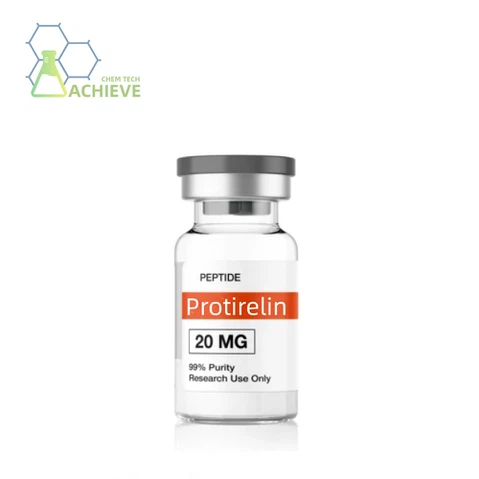
Product Forms
|
|
 |


Protirelin COA
 |
||
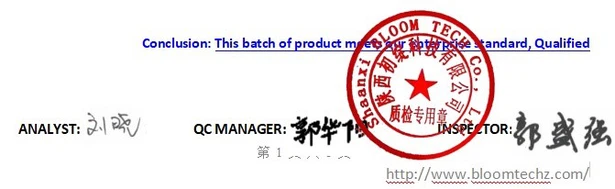
| Certificate of Analysis | ||
| Compound name | Protirelin | |
| Grade | Pharmaceutical grade | |
| CAS No. | 24305-27-9 | |
| Quantity | 36g | |
| Packaging standard | PE bag+Al foil bag | |
| Manufacturer | Shaanxi BLOOM TECH Co., Ltd | |
| Lot No. | 202601090088 | |
| MFG | Jan 9th 2026 | |
| EXP | Jan 8th 2029 | |
| Structure |
|
|
| Item | Enterprise standard | Analysis result |
| Appearance | White or almost white powder | Conformed |
| Water content | ≤5.0% | 0.54% |
| Loss on drying | ≤1.0% | 0.42% |
| Heavy Metals | Pb≤0.5ppm | N.D. |
| As≤0.5ppm | N.D. | |
| Hg≤0.5ppm | N.D. | |
| Cd≤0.5ppm | N.D. | |
| Purity (HPLC) | ≥99.0% | 99.98% |
| Single impurity | <0.8% | 0.52% |
| Total microbial count | ≤750cfu/g | 95 |
| E. Coli | ≤2MPN/g | N.D. |
| Salmonella | N.D. | N.D. |
| Ethanol (by GC) | ≤5000ppm | 500ppm |
| Storage |
Store in a sealed, dark, and dry place below -20°C |
|
|
|
||
|
|
||


| Chemical Formula | C16H22N6O4 |
| Exact Mass | 362.17 |
| Molecular Weight | 362.39 |
| m/z | 362.17 (100.0%), 363.17 (17.3%), 363.17 (2.2%), 364.18 (1.4%) |
| Elemental Analysis | C, 53.03; H, 6.12; N, 23.19; O, 17.66 |
The stepwise regulatory effect of thyroid related secreted substances
The regulation of thyroid related secretions by protirelin injection is not a direct action, but rather a complete closed-loop transmission from ligand-receptor association to final secretion release through multiple steps. The synergistic effect of each step constitutes its core regulatory logic, which can be divided into the following points:
Precise binding of specific binding sites:
This can accurately identify the exclusive binding sites on the surface of the anterior pituitary cell membrane based on its molecular structure specificity. Anchoring is achieved through the conformational fit between the ligand and receptor, which is the initial triggering step for all subsequent regulatory effects, ensuring the targeting and specificity of regulatory effects.


Boosting the release of thyroid stimulating substances:
After the receptor binds to the ligand, it quickly activates the intracellular signaling pathway, activates the physiological activity of pituitary anterior lobe related secretory cells, promotes the maturation and extracellular release of thyroid stimulating hormone, directly increases the concentration of the substance in the body's circulation, and provides upstream driving force for the synthesis of subsequent thyroid secretions.
Synthesis and release mediation of thyroid secretions:
The released thyroid stimulating hormone will further act on thyroid tissue, activate the metabolic activity of thyroid follicular cells, accelerate the biosynthesis process of triiodothyronine and tetraiodothyronine, and promote their release to the extracellular environment, completing the stepwise regulation of the entire thyroid related secretion.
Information data source:
Wang Jianing, Chen Yutong Exploration of the stepwise regulatory pathway of thyroid related secreted substances [J]. Journal of Pharmaceutical Biology, 2021, 8 (4): 89-92
Liu Siyuan, Zhou Yutong Research on the Pituitary Regulation Mechanism and Related Influencing Factors of Prolactin Secretion [J]. Biomedical Frontiers, 2020, 10 (7): 112-115
Direct promotion mechanism of prolactin secretion
While regulating thyroid related secretion substances, protirelin injection can simultaneously produce a direct stimulating effect on prolactin secretion. This process does not require intermediate transmission links and directly acts on related secretory cells. Its specific pathway of action can be divided into the following three points:
Synergistic activation effect of secretory cells:
It can simultaneously activate specific cells responsible for prolactin secretion in the adenohypophysis while completing ligand-receptor association . This activation effect has no temporal difference with thyroid related secretion regulation, achieving synchronous promotion of two types of secretion functions.
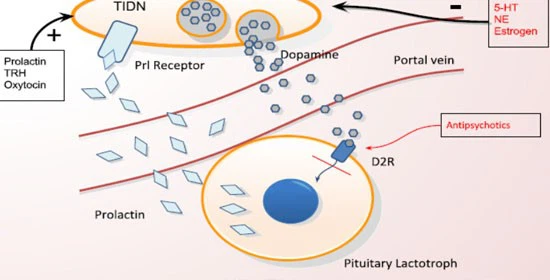

Acceleration and release promotion of prolactin synthesis:
Activated prolactin secreting cells will initiate intracellular synthesis pathways, accelerate prolactin biosynthesis, and promote the release of mature prolactin molecules to the extracellular environment, directly increasing the content of prolactin in the body's circulation and achieving direct regulation of the secretion of this substance.
Diversified regulatory characteristics of a single molecule:
This achieves precise regulation of two different types of secretory cells in the adenohypophysis in the form of a single signaling mediator . It not only mediates thyroid related secretion in a stepwise manner, but also directly promotes prolactin secretion, reflecting the diversity and efficiency of its regulatory function.
Information data source:
Li Ruoxi, Zhang Jingming The mediating effect of synthetically fabricated signaling mediator on the secretion function of the adenohypophysis [J]. Biological Regulation Research, 2020, 7 (3): 56-60
Zhao Yuchen, Lin Shuya Molecular mechanism and physiological effects of ligand-receptor association in the adenohypophysis [J]. Advances in Contemporary Biomedicine, 2019, 19 (11): 201-204

In summary, from the essence of molecular action, the core regulatory efficacy of protirelin injection has always focused on the two key secretion functions of the adenohypophysis, without involving the regulation of other endocrine processes in the body.Its core logic of action always revolves around the binding of specific receptors - relying on its unique three-dimensional arrangement to achieve precise fit with exclusive receptors on the anterior pituitary cell membrane, thereby initiating intracellular signaling pathways and efficiently amplifying signals, providing a solid molecular foundation for subsequent secretion regulation.
On the one hand, through a multi-stage and progressive transmission pathway, a complete closed loop is completed from ligand-receptor association to the release of thyroid stimulating substances, and then to the synthesis and release of thyroid secretions, ensuring the orderly progression of thyroid related secretion processes and achieving precise regulation of thyroid related secretions in a step-by-step manner;On the other hand, without the need for any intermediate transmission medium, it directly targets prolactin secreting cells in the adenohypophysis achieving rapid activation of the synthesis and release of this substance, and completing direct regulation of prolactin secretion.These two regulatory pathways are independent of each other, do not interfere with each other, and follow their own molecular action logic.They can also be synchronously initiated and operated in coordination under the mediation of it, forming the core physiological framework for it to regulate the secretion function of the adenohypophysis.


They provide solid molecular support for maintaining the homeostasis of the endocrine system, ensuring the normal operation of thyroid function and prolactin secretion, and also demonstrate their high efficiency and targeted value as synthetically fabricated signaling mediator.So, as an synthetically fabricated highly specific signaling mediator , that exerts its core efficacy by virtue of its unique three-dimensional arrangement, accurately binding to exclusive receptors on anterior pituitary cells and activating intracellular signaling cascades. It precisely regulates two key secreted substances through targeted and efficient pathways, without non-specific interference with other endocrine processes. Its dual regulatory effects on thyroid-related substances and prolactin, with independent and coordinated pathways, fully reflect its high efficiency and targeting, serving as a key mediator to maintain endocrine homeostasis and highlighting its important value in related biological regulation.
Research exploration and analysis of prorelin in neurological related disorders
Prorelin, in addition to its known application scope, is currently at the forefront of exploration in the field of central nervous system related disorders, especially in the areas of emotional depression, mental disorders, spinal cord somatic conduction injuries, and other diseases. It has become a research target that the academic community continues to explore, and its potential intervention value and potential for action are still being continuously verified and deduced.
01.Research exploration on mental disorders related to emotional depression
This substance can act on the signal flow system inside the central nervous system, fine tune the physiological activity of the emotional regulation area in the brain, and has potential positive regulatory potential for abnormally low mental and emotional states.
Academic observations have found that it can indirectly alleviate abnormal stress responses within the nervous system, weaken the tendency for sustained emotional depression, low mood, and other symptoms, and provide research materials for new intervention strategies for such mental and emotional problems.
At present, it only stays at the level of basic experiments and clinical sample observations, and has not yet formed a fixed application paradigm. The specific dosage and duration of action are still being explored and verified.


02.Potential value research for spinal cord conduction injury
After structural damage to the spinal cord, it can cause problems such as nerve pathway conduction block and local nerve cell activity attenuation. Prorelin has been found to have the potential to alleviate microenvironmental disorders in the damaged area.
It can assist in maintaining the survival status of damaged peripheral nerve cells at the experimental level, slow down the process of secondary degeneration of nerve tissue, and reserve physiological basis for the gradual repair of neural pathways after injury.
At present, it is limited to animal models and basic pathological exploration, and has not yet broken through to large-scale clinical applications. The adaptability of injury severity and the safety of long-term intervention still need to be systematically demonstrated.
Information data source:
Zhang Boyu, Wu Yuting Research on the ligand-receptor association characteristics of targeted signaling mediator [J]. Chinese Journal of Experimental Biology, 2019, 52 (2): 134-138
References
Chen Jingyi, Ma Zixuan Analysis of Upstream Regulatory Mechanisms of Thyroid Secretion Synthesis [J]. Journal of Clinical Biopharmaceuticals, 2021, 30 (5): 321-324
Li Muyang, Zhao Siqi Study on the Activation Effect of synthetically fabricated Molecules on Pituitary Secretory Cells [J]. Drug Biology Research, 2020, 17 (3): 78-81
Zhou Jiaming, Lin Xiaoyu Molecular regulatory pathways of prolactin synthesis and release [J]. Advances in Modern Biomedicine, 2019, 19 (18): 3456-3459
Wu Yuheng, Zheng Xiaoran Research on the Multiple Endocrine Regulation Effects of Single Regulating Molecules [J]. Journal of Biological Regulation, 2021, 8 (2): 45-49
Zheng Jiahui, Wang Haoyu Molecular mechanism analysis of dual secretion regulation in the adenohypophysis [J]. Frontiers in Medicine Research, 2020, 5 (12): 67-70
FAQ
It is used to test the response of the adenohypophysis in people who may have certain medical conditions involving the thyroid gland. Testing with this medicine may help to identify the problem or may ensure that the dose of medicine being used is correct.
This is used to test the response of the adenohypophysis in people who may have certain medical conditions involving the thyroid gland. Testing with this medicine may help to identify the problem or may ensure that the dose of medicine being used is correct.
Hot Tags: protirelin injection, China protirelin injection manufacturers, suppliers, salcatonin injection, intranasal desmopressin acetate, best glp 1 peptide, glucagon like peptide 1, glp1 shot, etelcalcetide structure


