




In the clinical practice of blood glucose control and weight management of obese or overweight adults with type 2 diabetes, patient compliance is still the biggest variable whether treatment can produce actual effect, and injection is one of its main obstacles. Kpeptide's orforglipron tablets are a once daily oral small molecule GLP-1 receptor agonist that breaks through the delivery limitations of traditional injectable GLP-1 drugs. Convenience and efficacy are no longer a trade-off, and patients can better receive treatment in the long term.
Compared with other oral peptide formulations, the advantages of this solution are clear and quantifiable: Higher bioavailability; Stronger inter batch consistency and greater supply elasticity; The lower overall cost provides wider accessibility for patients and greater space for channel profits.For partners, Kpeptide delivers more than a product - it offers an end-to-end solution covering development, registration, supply, and market launch. Through rigorous quality management, dependable delivery commitments, and transparent technical communication, we respond to the real questions you face at every step - from process validation to regulatory filing, from inventory planning to clinical feedback.
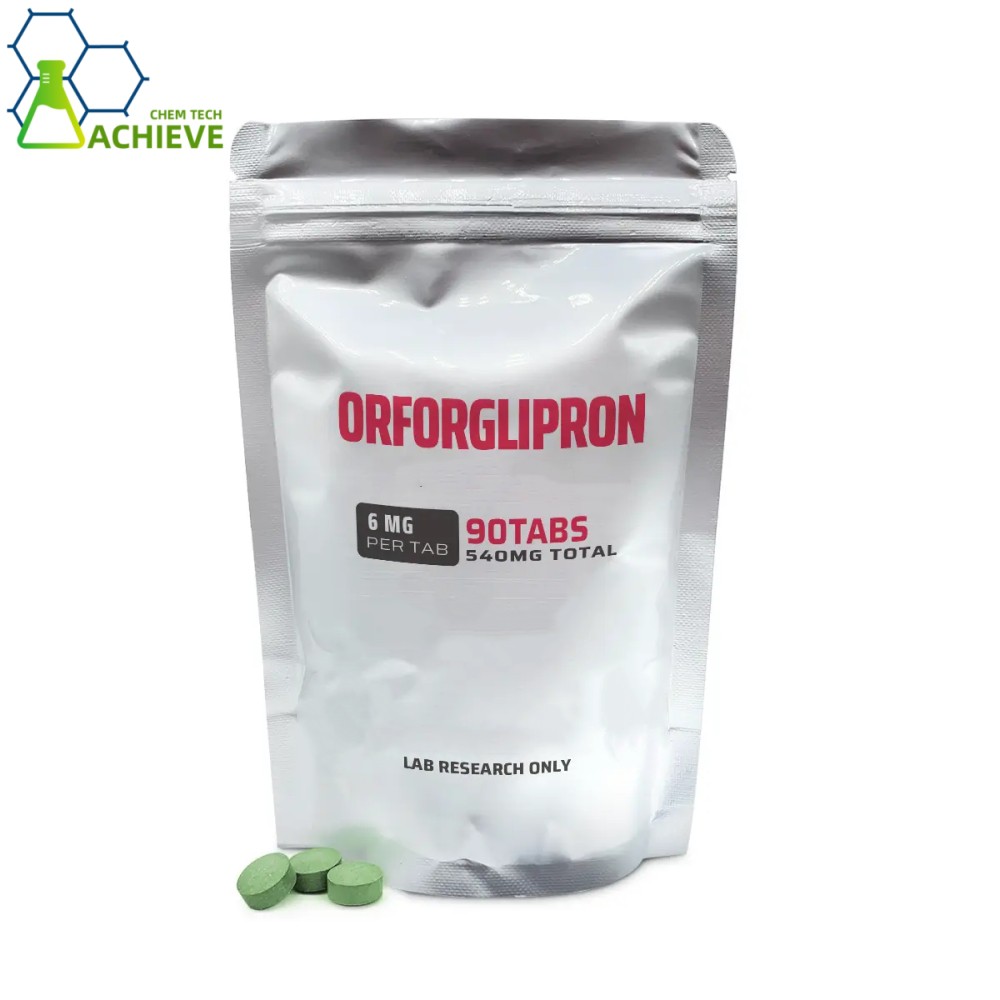
Our Products Form





Orforglipron COA


Research Status and Investigational Applications
Research on additional potential applications of ogerlon is ongoing. Such investigational areas should not be interpreted as approved indications.
At present, orforglipron tablets have entered Phase III clinical trials for the treatment of peripheral vascular diseases (PVD). Multiple early studies and trial designs have preliminarily validated their application potential in this field, with the most concentrated research focused on Fontaine Stage II peripheral artery disease (PAD), mainly presenting as intermittent claudication. This is the most common clinical stage of PVD, in which patients experience severely impaired quality of life yet lack effective metabolic interventions.


The ongoing Phase III trial is designed as a randomized, double‑blind, placebo‑controlled study. It plans to enroll 1,205 patients globally, including 120 at Chinese sites, with an approximate duration of 58 weeks. The trial primarily evaluates the efficacy and safety of once‑daily oral tab in patients with PAD.The primary endpoint is the percentage change in maximum walking distance. Secondary endpoints include changes in pain‑free walking distance, VascuQoL‑6 score (vascular disease quality of life), 6‑minute walking distance, high‑sensitivity C‑reactive protein, and systolic blood pressure, comprehensively covering core therapeutic goals: symptom improvement, vascular function recovery, and inflammation control.During the trial, patients receive oral this med with titration up to a maximum dose of 36 mg, compared with placebo or standard care. Efficacy is further assessed using imaging examinations such as the ankle‑brachial index (ABI) and patient‑reported outcomes (PRO).
Early clinical studies and relevant meta‑analyses have provided strong support for the Phase III trial. Research shows that it exerts significant weight reduction, glycemic control, and lipid‑modulating effects. At the highest dose, patients achieved an average weight reduction of 12.4% over 72 weeks, and a maximal HbA1c reduction of 2.2%, superior to oral semaglutide. It also significantly improves the lipid profile and reduces the accumulation of atherosclerotic risk factors.Furthermore, preclinical studies indicate that this can improve vascular endothelial function, reduce vascular inflammation, effectively delay the formation and progression of atherosclerotic plaques, and lower the risk of peripheral vascular occlusion. It is particularly suitable for PVD patients with comorbid diabetes and obesity-high‑risk populations often poorly responsive to conventional therapies. The multi‑metabolic regulatory effects of it achieve a "one‑drug, multiple‑benefits" strategy, simultaneously managing underlying metabolic diseases and vascular lesions.

Notably, the clinical trial defines strict inclusion and exclusion criteria to ensure the specificity and reliability of results.
Inclusion criteria: Fontaine Stage II PAD with intermittent claudication, ABI ≤ 0.9, BMI ≥ 23 kg/m².
Exclusion criteria: HbA1c >10%, walking impairment due to non‑PAD conditions, planned lower‑extremity surgery or recent peripheral arterial revascularization, recent stroke or myocardial infarction, New York Heart Association Class III–IV heart failure, etc., to avoid confounding from other diseases.
The data and information in this section are sourced from:
Li Juan, Wang Hao, Zhang Ying. Research progress on oral GLP-1 receptor agonist orferglipron. Chinese Journal of New Drugs, 2024, 33 (12): 1389-1396
Chen Xi, Liu Min. The application prospect of orferglipron, a non peptide GLP-1 agonist, in obesity and type 2 diabetes. Chinese Journal of Endocrinology and Metabolism, 2025, 41 (2): 156-160
Zhao Yang, Sun Yue The mechanism of action and clinical research progress of Orferglipron. Journal of Clinical Drug Therapy, 2025, 23 (5): 45-50
Application Scenarios and Advantages in Peripheral Vascular Diseases

Based on its mechanism of action and clinical development, it have well‑defined application scenarios in PVD, especially in patients with metabolic disorders, providing complementary benefits to existing treatments and optimizing therapeutic regimens.
First‑line adjuvant therapy for PVD patients with comorbid diabetes/obesityApproximately 60% of PVD patients have diabetes or obesity. In these patients, atherosclerosis progresses faster, limb ischemia is more severe, and conventional therapies rarely control both metabolic disorders and vascular disease simultaneously.
As an oral formulation, orforglipron tablets improve glycemic control and reduce weight while exerting vascular protective effects, delaying disease progression and lowering the risk of limb ulcers, gangrene, and cardiovascular adverse events. Compared with injectable GLP‑1 drugs, its convenience greatly improves long‑term adherence, making it a suitable long‑term adjuvant option. Clinical data confirm superior glycemic and weight control versus oral semaglutide, along with improved lipid metabolism and further reduction of atherosclerotic risk, offering comprehensive protection for high‑risk patients.


Postoperative adjuvant rehabilitation therapy for PVDSevere PVD often requires interventional therapy (e.g., balloon angioplasty, stenting) or surgical bypass grafting. However, postoperative issues such as restenosis and exacerbated inflammation remain major challenges.It can reduce the risk of postoperative restenosis, promote vascular function recovery, control metabolic risk factors including blood glucose and body weight, improve rehabilitation quality, and lower recurrence rates by suppressing inflammation, improving endothelial function, and regulating metabolic disorders. Its oral formulation avoids injection difficulties in patients with limited limb mobility, further enhancing convenience and adherence.
Alternative therapy for patients intolerant to injectable agentsTraditional GLP‑1 therapies are mostly injectable. Some PVD patients struggle with long‑term injection due to limb ischemia, limited mobility, or injection aversion, leading to treatment interruptions and disease recurrence.As the world's first oral small‑molecule non‑peptide GLP‑1 receptor agonist in late‑stage clinical development, it completely overcome the limitations of injection. Once‑daily oral administration requires no professional procedure and allows self‑medication, effectively solving the pain points of injectable therapy. Kpeptide provides a viable option for patients intolerant to injections, improving adherence and ensuring treatment continuity.

The data and information in this section are sourced from:
Frias J, Blevins T, et al. Efficacy and safety of oral orferglipron in patients with type 2 diabetes: a multicentre, randomised, dose-response, phase 2 study. Lancet, 2023, 402(10400): 472-483.
Kawai T, Sun B, Yoshino H, et al. Structural basis for GLP-1 receptor activation by orferglipron (LY3502970), an orally active nonpeptide agonist. Proc Natl Acad Sci U S A, 2020, 117(47): 29959-29967.
Ma X, Liu R, Pratt EJ, et al. Effect of food consumption on the pharmacokinetics, safety, and tolerability of once-daily orferglipron (LY3502970). Diabetes Ther, 2024, 15(4): 819-832.
Application Prospects and Outlook
Peripheral vascular disease (PVD) is a highly prevalent chronic disease, and there are still a large number of unmet clinical needs: limited drug options, insufficient long-term patient compliance, and difficulty in synchronously managing multiple risk factors. Market forecasts show that by 2030, the global market size for peripheral vascular disease treatment is expected to exceed $30 billion.
As a new oral GLP-1 receptor agonist, ogerlon brought by Kpeptide has the characteristics of pleiotropy, convenience and good safety. It is expected to fill the gap in the field of metabolic targeted treatment of peripheral vascular diseases, reshape the existing treatment pattern, especially for patients with diabetes and obesity, showing broad clinical application prospects.
Currently, phase III clinical trials for peripheral vascular disease, ogerlon including those in China, are underway and are expected to be completed and results announced by 2028. If the trial is successful, the drug is expected to be approved for the treatment of peripheral arterial disease (PAD) in 2027-2028, becoming the first GLP-1 receptor agonist primarily used for PAD, further expanding its clinical application range and benefiting more patients.
With good sales performance in Russia, Saudi Arabia, the United Kingdom, South Korea, Taiwan, China, Türkiye, Singapore and other markets, Kpeptide has accumulated a wide range of real world drug experience, laying a solid foundation for the global expansion of products.

I. API Synthetic Process
The active pharmaceutical ingredient (API) of ogerlon tablets is ogerlon, which is produced through multi-step chemical synthesis. The key challenges are chiral purity control and impurity management. This synthesis uses indole-2-carboxylic acid and imidazol-2-one intermediates as key components.
The traditional route requires 28 steps; Now, kpeption has optimized it into an efficient 16 step process, greatly improving scalability.
The copper catalyzed Ullmann reaction replaces the traditional palladium catalyzed route, reducing production costs while increasing the overall yield of key intermediates to 80%. Non enantiomeric impurities are controlled below 1.5% to ensure chiral purity above 99.9% and minimize the adverse effects of non active isomers.
II. Tablet Manufacturing Process
The tablets employ standard oral solid‑dosage manufacturing, without complex sterile filling, enabling large‑scale assembly‑line production.The process consists of four main stages:
Formulation & blending: API is uniformly mixed with excipients (fillers, disintegrants, etc.) in precise ratios to ensure content uniformity.
Compression: Blended powder is compressed into uncoated tablets under controlled pressure, with hardness optimized for integrity and disintegration rate.
Film coating: Coating improves stability, masks bitterness, and does not impair dissolution or absorption, ensuring rapid onset after oral administration.
III. Quality Control Standards
The entire manufacturing process complies with GMP standards, supported by a multi‑stage quality control system.
API control: HPLC combined with mass spectrometry is used to strictly control genotoxic impurities below safety thresholds and ensure API purity.
Formulation control: Key parameters include content uniformity, disintegration time, and dissolution rate, with dissolution meeting USP <621> requirements and peak resolution ≥ 2.0.
Environmental & release control: Real‑time monitoring of temperature, humidity, and cleanliness. Every batch undergoes rigorous testing and is released only with a Certificate of Analysis (COA).
About Kpeptide


In the production process of this product, Kpeptide have established a dedicated production line and equipped a professional technical team and sales team to provide services. Partial display has been made in the above figure. For more information about production, services, and qualifications, please click the button for detailed understanding.
Frequently Asked Questions
Is an ogerlon COA available?
+
-
Yes. A batch-specific COA can be provided for qualified B2B inquiries, subject to product availability and applicable documentation requirements.
What analytical methods are available?
+
-
Analytical documentation may include HPLC, LC-MS and NMR data, depending on the product specification.
Do you support bulk orders?
+
-
Yes. Bulk supply can be discussed based on required quantity, specification and destination market.
Can you provide samples?
+
-
Sample availability can be discussed based on the product form and intended research or development use.
What are the side effects of ogerlon weight loss pill?
+
-
It is an experimental daily oral GLP-1 receptor agonist for weight loss that causes primarily mild-to-moderate gastrointestinal side effects, including nausea, diarrhea, constipation, vomiting, and abdominal pain. These effects are most common during initial dose escalation and typically subside over time.
Can I buy ogerlon?
+
-
The FDA has approved Foundayo (ogerlon) on April 1, 2026, for reducing the weight of overweight adults with adult obesity or at least one weight related complication, and maintaining long-term weight loss.
Lily subsequently announced that the US market had started supplying Foundayo.
What are the application advantages of orferglipron?
+
-
As a once-daily oral agent, ogerlon has no strict restrictions on meal time. It shows steady weight-losing efficacy in clinical trials with mild and tolerable gastrointestinal side effects, suitable for long-term weight maintenance and auxiliary glycemic regulation.
What are the main functions of orferglipron?
+
-
Ogerlon works by suppressing appetite, enhancing satiety and delaying gastric emptying. It also promotes glucose-dependent insulin secretion and optimizes energy metabolism, delivering dual benefits of weight management and blood sugar control for overweight and diabetic populations.
What is orferglipron?
+
-
Ogerlon is an oral small-molecule GLP-1 receptor agonist with non-peptide structure. It simulates the physiological function of endogenous GLP-1 in the human body and features high oral bioavailability, making it a convenient alternative to injectable GLP-1 preparations for metabolic regulation.
Hot Tags: orforglipron tablets, China orforglipron tablets manufacturers, suppliers, salcatonin injection, intranasal desmopressin acetate, best glp 1 peptide, unicalcin 100, glp1 shot, etelcalcetide structure


