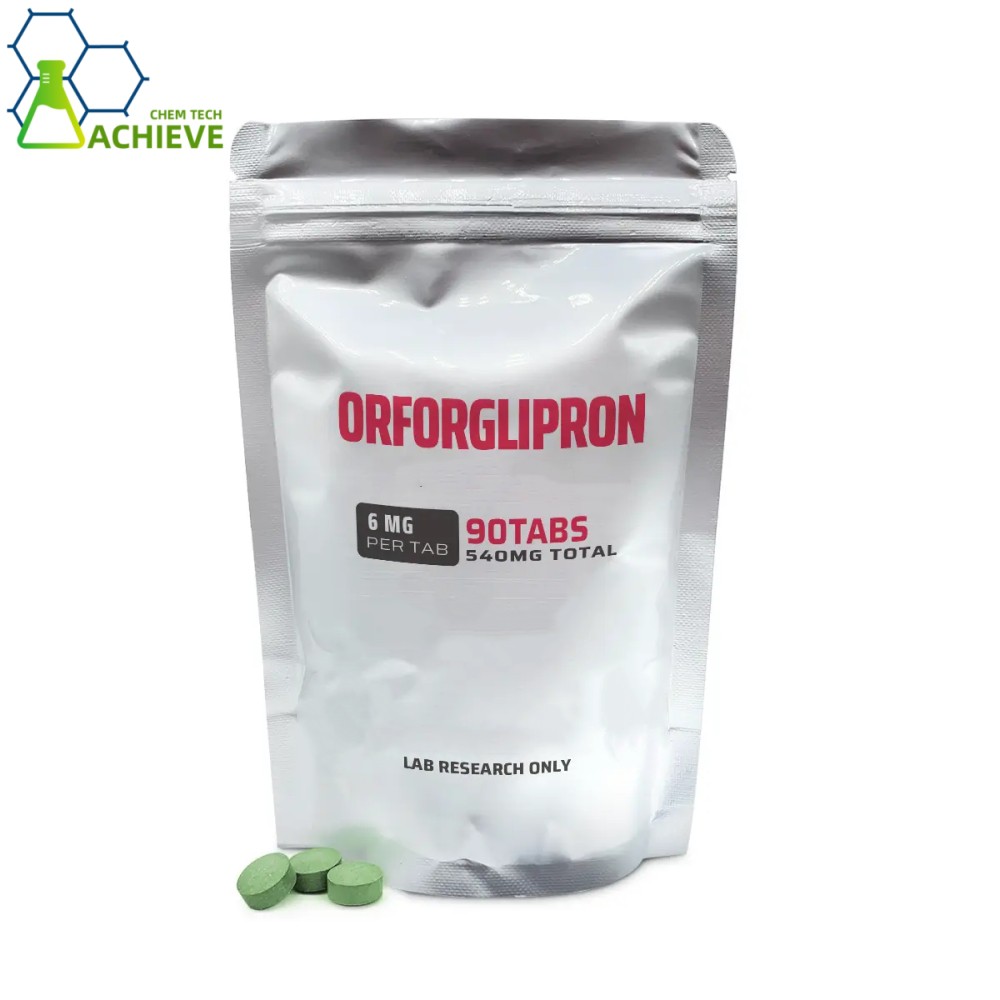
The core feature of Orforglipron Capsule is that it breaks through the limitations of traditional GLP‑1 drugs with an oral capsule formulation, combining potent efficacy and high convenience, filling the therapeutic gap of "oral administration + dual indications". Its capsule design offers distinct advantages: no cold chain storage required, enhanced stability, and ease of distribution and long‑term carrying. Adverse reactions of the capsule are mainly mild‑to‑moderate gastrointestinal reactions, which resolve spontaneously over the treatment course with favorable safety.
Our Products Form





Orforglipron COA


Expansion of Potential Indications
I. Obesity Complicated with Hypertension: Synergistic Improvement of Metabolic Regulation and Blood Pressure

Hypertension is one of the most common comorbidities in obese individuals. Over 50% of hypertensive patients worldwide are overweight or obese, and their combination significantly increases the risk of cardiovascular and cerebrovascular diseases. Traditional antihypertensive therapies mostly focus on vasodilation or neural regulation, which can hardly address the fundamental improvement of metabolic disorders. Orforglipron Capsule shows potential in the treatment of obesity‑complicated hypertension through dual mechanisms.
(I) Clinical Trial Program
A randomized, double‑blind, placebo‑controlled Phase III clinical trial, ATTAIN‑HYPERTENSION, has been initiated to specifically evaluate the efficacy and safety of once‑daily orforglipron in hypertensive patients with obesity or overweight. The study has been conducted at top domestic institutions including Ruijin Hospital Affiliated to Shanghai Jiao Tong University School of Medicine, supporting the supplementation of data for the Asian population.
Exploratory analyses of previous Phase III trials such as ATTAIN‑1 showed that after 72 weeks of it treatment, the mean reduction in systolic blood pressure in the high‑dose group was 4.32 mmHg, and this antihypertensive effect was independent of body weight changes, suggesting it may act by directly regulating vascular tone.


(II) Core Mechanisms of Action
Indirect blood pressure reduction via metabolic weight loss:Inhibits appetite and delays gastric emptying to achieve dose‑dependent weight loss. The mean weight reduction in the highest‑dose group reached 12.4%, with a mean waist circumference reduction of 6.9 cm, reducing perivascular fat deposition and peripheral vascular resistance.
Neurohumoral regulation:Activates GLP‑1 receptors to inhibit sympathetic nerve activity, reduces renin‑angiotensin system activation, improves vascular endothelial function, and lowers vasoconstrictive tone.
Synergistic improvement of metabolic parameters:Simultaneously reduces triglycerides (by 10.90%) and non‑HDL cholesterol (by 4.14%), reducing vascular damage from lipid deposition and indirectly assisting blood pressure control.
(III) Efficacy and Safety Evidence
Subgroup analyses of multiple Phase III trials showed that it significantly reduced systolic blood pressure in obese patients with hypertension, with efficacy superior to some traditional oral antidiabetic plus antihypertensive regimens.
In the ATTAIN‑2 trial, the reduction in systolic blood pressure from baseline in the high‑dose Orforglipron group was significantly greater than in the placebo group, without increased risk of adverse cardiovascular events. For safety, adverse reactions were mainly mild‑to‑moderate gastrointestinal events (nausea, diarrhea, etc.), with an incidence similar to other GLP‑1 agents. The discontinuation rate due to gastrointestinal reactions was below 6%, indicating good clinical tolerability.

II. Osteoarthritis Pain: Dual Analgesic Mechanisms of Weight Loss and Anti‑Inflammation

Osteoarthritis is a degenerative joint disease prevalent in the middle‑aged and elderly. Obesity is the primary risk factor, and approximately 60% of knee osteoarthritis patients are overweight or obese.
Traditional treatments rely mainly on non‑steroidal anti‑inflammatory drugs (NSAIDs) and intra‑articular injections, but long‑term use carries risks such as gastrointestinal and cartilage damage. The product provides a new direction for osteoarthritis pain through dual pathways of weight loss and anti‑inflammation.
(I) Clinical Research Progress
A Phase III clinical trial of it for osteoarthritis pain has been officially initiated, making it the first oral GLP‑1 drug for osteoarthritis to enter Phase III. The study focuses on obese patients with knee osteoarthritis, using WOMAC pain score, joint function score, and daily activity ability as primary endpoints to compare efficacy with placebo, providing key evidence for approval.
Preclinical studies showed that Orforglipron Capsule significantly reduces subchondral bone remodeling and inhibits inflammatory factor release, laying a theoretical foundation for Phase III efficacy.


(II) Core Mechanisms of Action
Weight reduction relieves joint load:Significant weight loss via appetite suppression reduces pressure on weight‑bearing joints such as knees and hips, decreases cartilage wear, and relieves mechanical pain at the source.
Anti‑inflammatory effects inhibit pain pathways:Reduces serum high‑sensitivity C‑reactive protein (hsCRP) by up to 50.6% in the highest‑dose group, inhibits joint inflammation mediated by TNF‑α, IL‑6 and other inflammatory factors, and alleviates neuropathic pain.
Improves joint microenvironment:Regulates metabolic pathways to promote chondrocyte repair, reduces synovial hyperplasia, delays osteoarthritis progression, and prolongs analgesic duration.
(III) Clinical Translation Prospects
Clinical studies of GLP‑1 analogs (e.g., semaglutide) have confirmed that weight loss significantly improves osteoarthritis pain. As an oral formulation, it offers better convenience, especially for elderly patients requiring long‑term treatment.
If Phase III trials succeed, it will become the first oral GLP‑1 drug approved for osteoarthritis pain, filling the gap in combined "metabolic regulation – joint protection" therapy, avoiding long‑term risks of NSAIDs, and improving patient adherence.

III. Obstructive Sleep Apnea: Weight Loss Improves Airway Anatomy

Obstructive sleep apnea (OSA) is characterized by repeated collapse of the upper airway during sleep. Obesity is the core pathogenic factor, and about 70% of moderate‑to‑severe OSA patients are obese.
Traditional treatment uses continuous positive airway pressure (CPAP), but some patients suffer from poor adherence and intolerance. It shows significant potential in treating obesity‑complicated OSA by remodeling airway anatomy through weight loss.
(I) Clinical Trial Program
The Phase III trial ATTAIN‑OSA has been initiated to evaluate the efficacy and safety of once‑daily Orforglipron in OSA patients with obesity or overweight. Led by Peking University People's Hospital, this multicenter trial uses apnea‑hypopnea index (AHI), nocturnal oxygen saturation, and daytime sleepiness as primary endpoints.
Exploratory studies showed it reduced neck circumference by an average of 4.2 cm in obese patients; reduced upper airway fat is key to improving airway collapse.


(II) Core Mechanisms of Action
Reduces peri‑airway fat:Accelerates fat breakdown by inhibiting appetite, reduces fat accumulation in the neck and pharynx, enlarges airway lumen, lowers airway resistance, and relieves airway collapse anatomically.
Improves respiratory center regulation:GLP‑1 receptors are involved in respiratory center modulation. It enhances the sensitivity of the respiratory center to hypoxia and reduces apnea frequency.
Synergistically improves metabolic parameters:Simultaneously lowers blood glucose and lipids, reduces indirect impacts of metabolic disorders on respiratory function, and improves sleep quality.
(III) Efficacy and Application Advantages
Phase III studies of the GLP‑1 agent tirzepatide confirmed that 43% of non‑ventilated patients achieved complete OSA remission and 50% of ventilator‑combined patients showed symptom improvement after 52 weeks of treatment, providing important reference for it.
Oral administration of it is more convenient than CPAP, especially for CPAP‑intolerant patients. Its once‑daily, non‑fasting dosing significantly improves long‑term adherence. If approved, it will become the first oral GLP‑1 agent for OSA, offering a non‑invasive new option.


Orforglipron (LY3502970) is an oral non‑peptidic GLP‑1 receptor agonist. Quality control of its capsules is centered on UPLC, combining three key modules: assay, related substances test, and dissolution test, to ensure controllable drug quality.
I. Sample Preparation
An appropriate amount of Orforglipron Capsule contents is accurately weighed, ultrasonically dissolved in a 60:40 (v/v) acetonitrile‑water mixture, and diluted to volume to prepare a stock solution of approximately 1.0 mg/mL.
The same solvent is used for further dilution to prepare sample solutions for assay (approx. 0.1 mg/mL) and related substances test (approx. 1.0 mg/mL), along with corresponding reference solutions. All solutions are filtered through a 0.22 μm membrane filter before analysis.
II. UPLC Assay Method
Column: ACQUITY Premier BEH C18 (2.1 × 100 mm, 1.7 μm); column temperature: 35 °C.Mobile phase A: 2% formic acid in water; mobile phase B: methanol.Gradient elution: initial 5% B, linearly increased to 95% B within 6.86 min, held for 1.14 min.Flow rate: 0.5 mL/min; detection wavelength: 280 nm; injection volume: 2 μL.
System suitability requirements:
Theoretical plates ≥ 5000
Tailing factor: 0.95–1.05
RSD of peak area for six consecutive injections of reference solution ≤ 2.0%
Content is calculated by external standard method based on peak area, within the range of 95.0%–105.0% of the labeled amount.
III. Related Substances Test Method
Chromatographic conditions are the same as the assay. Sample concentration: 1.0 mg/mL. Impurity levels are calculated by the self‑comparison method.
Single maximum impurity ≤ 0.5%
Total impurities ≤ 1.0%
In forced degradation studies (acid, base, oxidation, heat, light), resolution between the main peak and degradation products ≥ 1.5, demonstrating good method specificity.
IV. Dissolution Test Method
Samples are taken at 5, 10, 15, 30, 45 min, filtered through a 0.45 μm membrane filter, and the dissolved amount is determined by the UPLC method described above.
Dissolution at 45 min should be ≥ 80% of the labeled amount to ensure in vitro release meets requirements.
V. Method Validation
The analytical method has been validated for accuracy, precision, linearity, range, and robustness:
Recovery: 98.0%–102.0%
Repeatability RSD ≤ 1.0%
Linearity range: 0.01–1.5 mg/mL (r ≥ 0.9998)
System suitability remains acceptable under minor variations in mobile phase ratio, flow rate, and column temperature. The method is stable and reliable, suitable for quality control and stability studies of the product.
Hot Tags: orforglipron capsule, China orforglipron capsule manufacturers, suppliers, CJC 1295 Injection, CJC 1295 Powder, HCG Oral Tablets, MT2 Injection, Sermorelin Acetate Injection, Sermorelin Capsules