




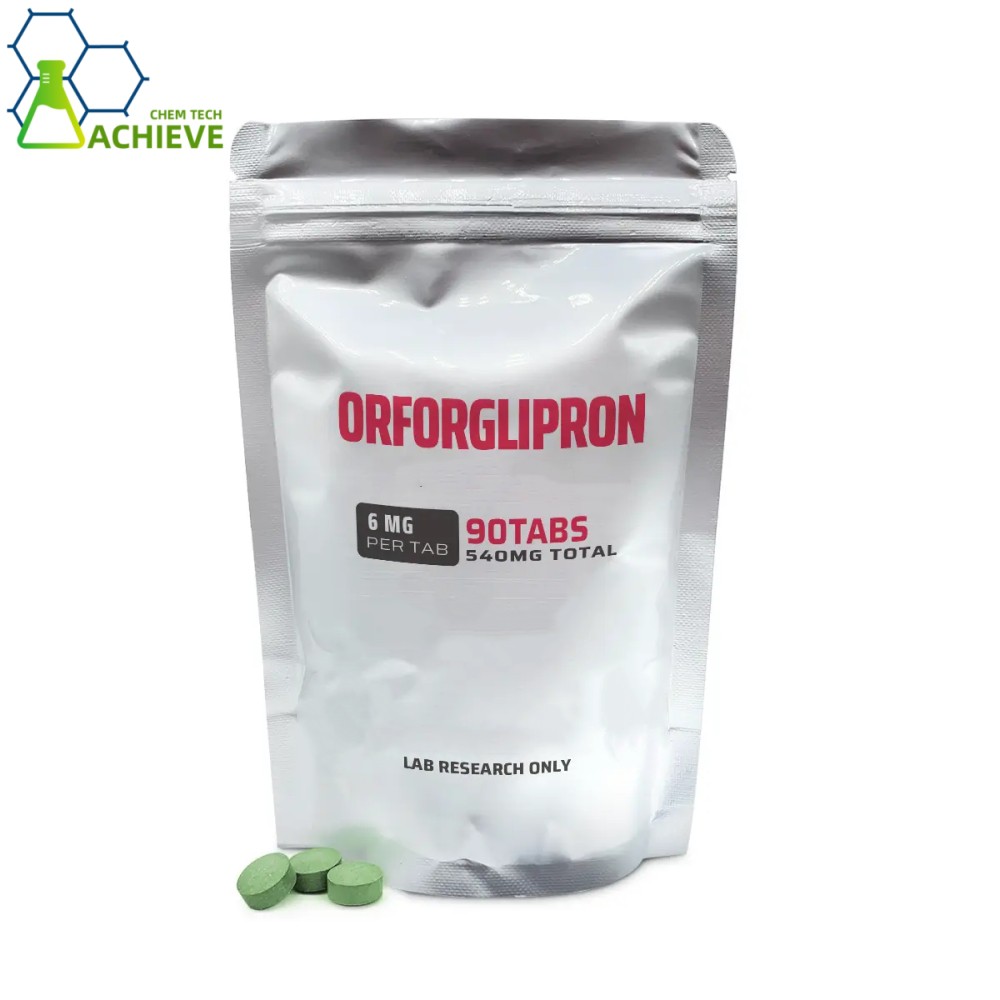
Orforglipron injection is a novel, small-molecule, non-peptide glucagon-like peptide-1 receptor agonist (GLP-1 RA) for injection. Its core feature is breaking the limitations of traditional injectable formulations, combining high efficacy with convenience, and it is specifically designed for the long-term treatment of patients with type 2 diabetes mellitus and obesity. The injection requires no cold-chain transportation or refrigerated storage, enabling convenient storage and adapting to at-home self-administration, which significantly lowers the barrier for patient medication.
Our Products Form





Orforglipron COA
 |
||
| Certificate of Analysis | ||
| Compound name | Orforglipron | |
| Grade | Pharmaceutical grade | |
| CAS No. | 2212020-52-3 | |
| Quantity | 48g | |
| Packaging standard | PE bag+Al foil bag | |
| Manufacturer | Shaanxi BLOOM TECH Co., Ltd | |
| Lot No. | 202601090056 | |
| MFG | Jan 9th 2026 | |
| EXP | Jan 8th 2029 | |
| Structure |
|
|
| Item | Enterprise standard | Analysis result |
| Appearance | White or almost white powder | Conformed |
| Water content | ≤5.0% | 1.23% |
| Loss on drying | ≤1.0% | 0.37% |
| Heavy Metals | Pb≤0.5ppm | N.D. |
| As≤0.5ppm | N.D. | |
| Hg≤0.5ppm | N.D. | |
| Cd≤0.5ppm | N.D. | |
| Purity (HPLC) | ≥99.0% | 99.80% |
| Single impurity | <0.8% | 0.24% |
| Total microbial count | ≤750cfu/g | 112 |
| E. Coli | ≤2MPN/g | N.D. |
| Salmonella | N.D. | N.D. |
| Ethanol (by GC) | ≤5000ppm | 703ppm |
| Storage | Store in a sealed, dark, and dry place below -20°C | |
|
|
||
|
|
||



| Chemical Formula | C48H48F2N10O5 | |
| Exact Mass | 882.38 | |
| Molecular Weight | 882.97 | |
| m/z | 882.38(100.0%), 883.38(51.9%), 884.38(13.2%), 883.37(3.7%), 884.38(1.9%), 885.39(1.4%), 884.38(1.0%) | |
| Elemental Analysis | C,65.29; H,5.48; F,4.30; N,15.86; O,9.06 | |

I. Application in the Treatment of Type 2 Diabetes Mellitus

Type 2 diabetes mellitus is a highly prevalent chronic metabolic disease worldwide, characterized pathologically by insulin resistance and impaired pancreatic β-cell function. Poor long-term glycemic control often leads to multi-system complications involving the heart, brain, kidneys, and ocular fundus, severely reducing patients' quality of life and increasing the social medical burden. In clinical practice, pharmacotherapy is the cornerstone of glycemic control in addition to dietary intervention and exercise. With its potent glucose-lowering effect, weight management benefit, and cardiovascular protection, orforglipron injection has emerged as a new preferred option for type 2 diabetes, especially for patients with inadequate glycemic control despite metformin therapy.
Core Therapeutic Advantages
The key advantage of the product in type 2 diabetes is its potent and sustained glycemic control, validated by multiple Phase 3 clinical trials. In the ACHIEVE-3 study, which enrolled 1,698 adult patients with type 2 diabetes insufficiently controlled on metformin, the product was compared head-to-head with oral semaglutide. After 52 weeks of follow-up, the highest-dose group achieved a hemoglobin A1c (HbA1c) reduction of 2.2%, whereas the oral semaglutide group achieved only 1.4%, showing significantly superior glucose-lowering efficacy.
Furthermore, its glucose-lowering effect is dose-dependent. In the ACHIEVE-1 study, HbA1c reductions were 1.2%, 1.5%, and 1.5% in the 3 mg, 12 mg, and 36 mg groups, respectively, all significantly higher than the 0.4% reduction in the placebo group. Doses can be flexibly adjusted based on individual glycemic levels for personalized control.


Compared with traditional injectable GLP-1 drugs, the product greatly improves convenience. It requires no strict restrictions on food or water intake and can be injected subcutaneously at any time without fasting or scheduled timing, greatly lowering the usage barrier. It also needs no cold chain or refrigeration, supporting reliable at-home self-administration. Injection sites (abdomen, thigh, upper arm) are flexible with mild pain, effectively improving long-term adherence. For patients requiring sustained glycemic control, this combination of convenience and efficacy helps avoid glucose fluctuations caused by inconvenient dosing.
Additionally, it supports weight management and reduces cardiovascular risk, which is particularly valuable for overweight or obese patients with type 2 diabetes. Clinical data show that over 60% of such patients are overweight or obese, a condition that worsens insulin resistance and complication risk. In ACHIEVE-3, the highest-dose group achieved a mean weight reduction of 8.9 kg (9.2% from baseline), while oral semaglutide reduced weight by only 5.0 kg (5.3%), representing a 78.0% relative improvement. The injection also improves key cardiovascular risk factors including non-HDL cholesterol, systolic blood pressure, and triglycerides, delivering comprehensive health benefits consistent with the integrated management paradigm for type 2 diabetes.

Application in Obesity and Overweight Management

Obesity and overweight represent a major global public health issue. Beyond appearance, they increase the risk of type 2 diabetes, hypertension, coronary heart disease, stroke, and sleep apnea syndrome, severely threatening human health. Traditional management relies on diet and exercise, which are difficult to sustain long-term with limited efficacy. The product, with its potent weight reduction, favorable safety, and outstanding convenience, provides a novel therapeutic option, especially for individuals unresponsive to lifestyle modification or with comorbid metabolic abnormalities.
Core Therapeutic Advantages
The primary advantage of the product in obesity and overweight is its potent and sustained weight loss. It acts by activating GLP-1 receptors, suppressing the appetite center, reducing food intake, delaying gastric emptying, and enhancing satiety. Weight reduction is dose-dependent and long-lasting.
In the ATTAIN-1 study enrolling overweight or obese non-diabetic individuals, the highest-dose group achieved a mean weight reduction of 12.4 kg (12.4% from baseline) at Week 72, with nearly 60% of subjects losing more than 10% of body weight-significantly superior to conventional interventions.
In overweight or obese patients with type 2 diabetes (ATTAIN-2 study), the highest dose led to a mean weight reduction of 10.4 kg (10.5%) and a mean HbA1c reduction of 1.8%. Seventy-five percent of participants reached HbA1c ≤6.5%, the American Diabetes Association cutoff for diabetes control, achieving dual benefits of weight loss and glycemic control.


Compared with traditional injectable anti-obesity drugs, orforglipron injection offers marked formulation advantages and improved experience. It requires no cold chain or refrigeration, is easy to store and carry, supports at-home self-administration, and allows flexible injection sites with minimal pain. Dosing is unrestricted by meals or time, greatly lowering barriers and improving long-term weight management adherence.
Beyond weight loss, it improves multiple cardiovascular risk factors, including systolic blood pressure, triglycerides, and non-HDL cholesterol, reducing cardiovascular disease risk. It supports not just weight reduction but healthy weight loss, aligning with the comprehensive benefit concept in obesity management.

Target Binding and Receptor Activation Mechanism
The product is a long-acting small-molecule non-peptide GLP-1 receptor agonist with a unique structural design that distinguishes it from traditional peptide-based GLP-1 analogs. Unlike peptide agonists that mimic the structure of endogenous GLP-1 to bind receptors, it does not rely on a polypeptide backbone and instead specifically targets the transmembrane domain of GLP-1 receptors expressed in various tissues throughout the body. Through an allosteric activation mode, it stabilizes the active conformation of the GLP-1 receptor, thereby continuously triggering downstream signaling cascades and exerting sustained physiological effects.


Compared with peptide-based GLP-1 preparations, its small-molecule structure is not easily degraded by endogenous proteases in the body, which ensures its stability in the systemic circulation. After subcutaneous injection, it has a longer half-life, enabling long-acting and steady agonistic effects on GLP-1 receptors. Importantly, this non-peptide structure avoids inducing immune responses, so it has no immunogenicity, and the risk of receptor desensitization is significantly reduced, ensuring the durability of its therapeutic effect.
Multi-pathway Physiological Regulation Mechanism
Orforglipron injection exerts its therapeutic effects through multiple interconnected physiological pathways, mainly focusing on metabolic regulation and weight management.
On the one hand, it directly acts on pancreatic islet endocrine cells: it promotes glucose-dependent insulin secretion from pancreatic β-cells, which means insulin release is only enhanced when blood glucose levels rise, effectively avoiding hypoglycemia; at the same time, it inhibits the release of glucagon from pancreatic α-cells, reduces hepatic gluconeogenesis and glucose output, and thereby steadily regulates both fasting and postprandial blood glucose levels, with an extremely low risk of hypoglycemia even in long-term use. On the other hand, it acts on gastrointestinal smooth muscle, significantly delaying the rate of gastric emptying, prolonging the duration of satiety after meals, and reducing spontaneous calorie intake by suppressing the desire to eat.


In addition, the drug can cross the blood-brain barrier and specifically target and activate GLP-1 receptors in the hypothalamic appetite center, which is the core regulatory hub of body weight. By suppressing appetite signals and reducing food craving, it achieves effective weight regulation at the central level. Furthermore, it activates the cAMP-PKA signaling pathway, which plays a key role in improving systemic metabolic disorders, further exerting comprehensive beneficial effects such as regulating lipid metabolism, reducing systemic inflammation, and protecting cardiovascular function, making it suitable for long-term management of metabolic-related diseases.

Core Chemical Identification
Orforglipron has well-defined chemical identifiers, which provide a fundamental basis for its production, quality control, and clinical application. Its molecular formula is C₄₈H₄₈F₂N₁₀O₅, molecular weight is 882.97, and CAS Registry Number is 2212020-52-3.The chemical name is 3-((1S,2S)-1-(5-((4S)-2,2-dimethyloxan-4-yl)-2-((4S)-2-(4-fluoro-3,5-dimethylphenyl)-3-(3-(4-fluoro-1-methylindazol-5-yl)-2-oxoimidazol-1-yl)-4-methyl-6,7-dihydro-4H-pyrazolo[4,3-c]pyridine-5-carbonyl)indol-1-yl)-2-methylcyclopropyl)-4H-1,2,4-oxadiazol-5-one. It belongs to the category of synthetic organic compounds.
Physical Properties
The physical properties of Orforglipron are closely related to its formulation process and storage conditions. The pure substance is a white to pale yellow solid powder with no obvious odor, and its predicted relative density is 1.50 g/cm³.Its molecular structure contains multiple chiral centers and is optically active, classifying it as a chiral compound, which serves as an important basis for its specific pharmacological activity. In addition, the topological polar surface area (TPSA) of the compound is 144–154.37 Ų, and the XlogP value is approximately 6.8–7.77, indicating certain liposolubility, which provides a chemical basis for its rapid absorption after subcutaneous injection.
3. Solubility and Stability
Solubility and stability are key chemical properties for injections, directly affecting formulation efficacy and medication safety.Orforglipron exhibits certain solvent selectivity in vitro: it is freely soluble in dimethyl sulfoxide (DMSO) with a solubility of 50–255 mg/mL, requiring ultrasonication and heating (60 °C) for dissolution, and freshly opened DMSO significantly influences its solubility; it is also soluble in methanol but practically insoluble in water.
In terms of stability:
As a solid powder, it can be stored for 3 years at −20 °C and 2 years at 4 °C.
After dissolution in solvent, it can be stored for 2 years at −80 °C but only 1 year at −20 °C.
Injectable formulations must strictly follow storage conditions to avoid degradation and loss of efficacy.
Chemical Structural Characteristics
Orforglipron has a complex chemical structure and belongs to heterocyclic compounds. Its molecule contains multiple heterocyclic moieties including oxadiazole, indole, and pyrazolopyridine, as well as two fluorine substituents, which collectively determine its pharmacological activity.
As a GLP‑1 receptor partial agonist, its chemical structure enables selective activation of the GLP‑1 receptor Gs protein signaling pathway without recruiting β‑arrestin, thereby reducing receptor desensitization.Meanwhile, the stability of its molecular structure eliminates the need for cold‑chain transportation, making it suitable for home‑use injection scenarios. It also ensures stable pharmacodynamic effects after subcutaneous injection, providing a chemical foundation for its application in the treatment of type 2 diabetes mellitus and obesity.
FAQ
What is orforglipron used for?
+
-
Orforglipron is a small-molecule, nonpeptide GLP-1 receptor agonist that is designed for once-daily, oral administration without restrictions on food or liquid intake. This drug is in clinical development for obesity as well as for type 2 diabetes, hypertension, osteoarthritis, and obstructive sleep apnea.
When is orforglipron FDA approved?
+
-
The target action date for orforglipron now falls on April 10, 2026, the publication reported, citing internal regulatory documents it was able to review.
Who is a good candidate for orforglipron?
+
-
If approved, orforglipron may be suitable for individuals who: • Are overweight or obese and have had limited success with diet and exercise alone. • Prefer an oral alternative to injectable medications. • Have weight-related health conditions such as prediabetes or insulin resistance.
Hot Tags: orforglipron injection, China orforglipron injection manufacturers, suppliers, salcatonin injection, intranasal desmopressin acetate, best glp 1 peptide, octreotide solution, glp1 shot, etelcalcetide structure


