




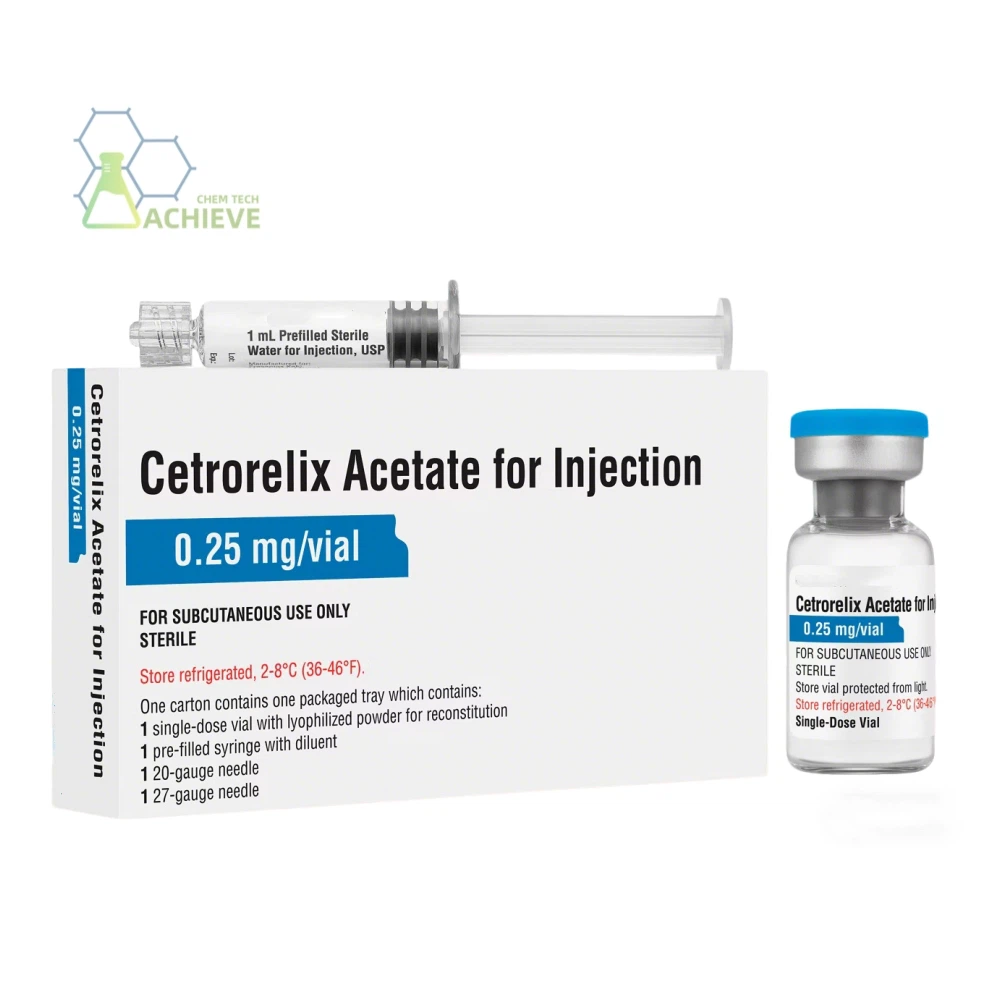
Cetrorelix acetate injection is a third-generation GnRH antagonist injection, primarily indicated for controlled ovarian stimulation in assisted reproductive technology. It precisely prevents premature ovulation, thereby improving oocyte retrieval and in vitro fertilization success rates. Key features include rapid onset of action within 1 hour and sustained, stable control of luteinizing hormone (LH). It requires no long-term priming phase, enables flexible initiation of antagonist protocols, and significantly shortens treatment duration.
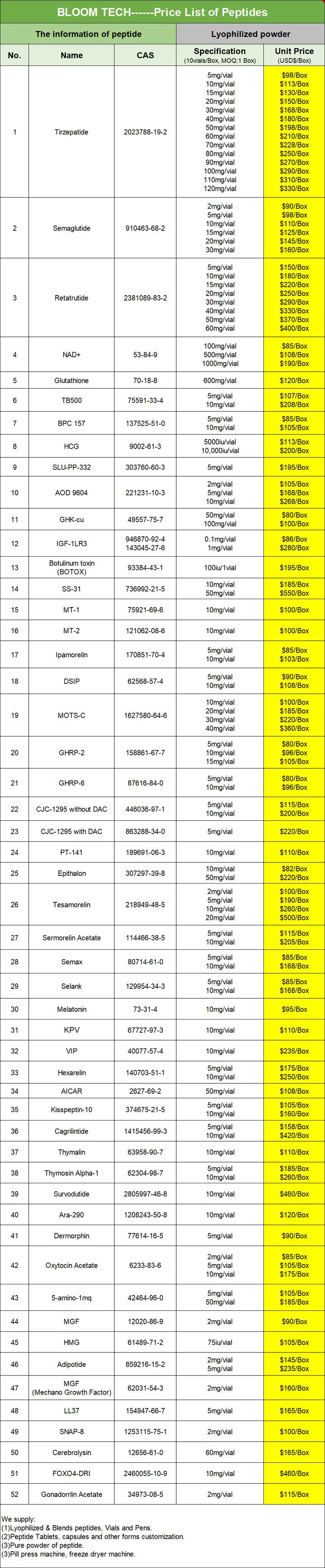
Our Products Form
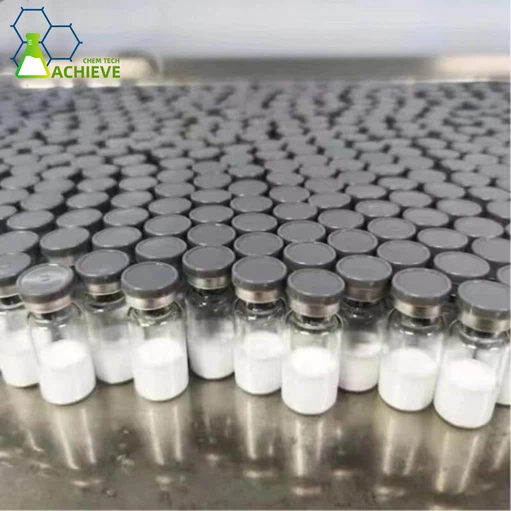



Cetrorelix acetate COA
 |
||
| Certificate of Analysis | ||
| Compound name | Cetrorelix acetate | |
| Grade | Pharmaceutical grade | |
| CAS No. | 145672-81-7 | |
| Quantity | 52g | |
| Packaging standard | PE bag+Al foil bag | |
| Manufacturer | Shaanxi BLOOM TECH Co., Ltd | |
| Lot No. | 202601090056 | |
| MFG | Jan 9th 2026 | |
| EXP | Jan 8th 2029 | |
| Structure |
|
|
| Item | Enterprise standard | Analysis result |
| Appearance | White or almost white powder | Conformed |
| Water content | ≤5.0% | 0.45% |
| Loss on drying | ≤1.0% | 0.38% |
| Heavy Metals | Pb≤0.5ppm | N.D. |
| As≤0.5ppm | N.D. | |
| Hg≤0.5ppm | N.D. | |
| Cd≤0.5ppm | N.D. | |
| Purity (HPLC) | ≥99.0% | 99.90% |
| Single impurity | <0.8% | 0.46% |
| Total microbial count | ≤750cfu/g | 428 |
| E. Coli | ≤2MPN/g | N.D. |
| Salmonella | N.D. | N.D. |
| Ethanol (by GC) | ≤5000ppm | 516ppm |
| Storage | Store in a sealed, dark, and dry place below -20°C | |
|
|
||
|
|
||



| Chemical Formula | C70H92ClN17O14.C2H4O2 |
| Exact Mass | 1489.69 |
| Molecular Weight | 1491.11 |
| m/z | 1489.69(100.0%), 1490.69(77.9%), 1491.69(32.0%), 1431.68(28.3%), 1432.67(24.2%), 1433.67(9.0%), 1430.67(6.3%), 1432.68(6.1%), 1431.67(4.5%), 1431.67(2.9%), 1434.68(2.2%), 1432.68(2.2%), 1432.66(1.9%), 1432.67(1.8%), 1433.67(1.5%), 1433.68(1.3%), 1430.68(1.1%) |
| Elemental Analysis | C,58.00; H,6.49; C,2.38; N,15.97; O,17.17 |
Fundamental Mechanism of Action
The use of cetrorelix acetate injection in assisted reproductive technology relies on its unique pharmacological properties to maintain a stable hormonal environment during controlled ovarian stimulation. Its mechanism is as follows:

As a third-generation highly selective GnRH antagonist, this drug can quickly penetrate the pituitary portal vein system and competitively bind with the GnRH receptor on the surface of the pituitary gonadotropin cell membrane after entering the human blood circulation. Its binding site completely occupies the extracellular signal recognition area of the receptor, but does not trigger the conformational activation and downstream signal transduction of the receptor. It is equivalent to building a physical barrier directly at the "signal receiving port" of the pituitary gland, completely blocking the normal binding pathway between endogenous GnRH and the receptor, and cutting off the gonadotropin synthesis command transmitted from the hypothalamus to the pituitary gland from the source. Without any pre activation process of the receptor, it can directly achieve strong inhibition of luteinizing hormone (LH) and follicle stimulating hormone (FSH) secretion, without the need for any receptor activation. There is any initial hormonal stimulation effect.
This mode of action is fundamentally different from traditional GnRH agonists: after entering the body, GnRH agonists will first simulate the structure of natural GnRH, continuously overactivate pituitary receptors, and trigger the "ignition effect" in the early stages of medication, resulting in a significant transient surge in LH and FSH levels. Only after the receptors are continuously occupied and depleted, and the pituitary is desensitized, will they enter the subsequent hormone inhibition stage. The entire process takes 1-2 weeks to fully achieve the drug's castration effect. And this GnRH antagonist completely skips the long transition stage of "stimulation first, inhibition later". It can quickly exert its hormone inhibitory effect within a few hours after intravenous or subcutaneous injection, and can suppress the LH level in peripheral blood to below 50% of the baseline value within 24 hours after administration, avoiding a series of clinical risks caused by the "ignition effect" of the stimulant.


In the ovulation induction cycle of assisted reproduction, this immediate inhibition characteristic can accurately block the endogenous LH peak that appears earlier, completely preventing premature ovulation and follicular luteinization caused by temporary abnormal LH levels, avoiding the failure of egg retrieval due to premature rupture of dominant follicles, significantly reducing the probability of ovarian hyperstimulation syndrome (OHSS), and shortening the entire ovulation induction cycle from 2-3 weeks of the agonist regimen to about 10 days. At the same time, it can flexibly adjust the timing of medication to meet the personalized ovulation induction needs of patients with different ovarian responses. In the clinical treatment of diseases such as prostate cancer and endometriosis, the rapid hormone lowering properties of this drug can also avoid the "rebound phenomenon" caused by the initial hormone surge of agonists, such as increased bone pain and transient enlargement of lesions, allowing patients' clinical symptoms to be quickly relieved in the early stages of medication, greatly improving the safety of treatment and patient compliance.
Information source: EMD Serono Cetrotide® 0.25 mg Prescribing Information; China Medical Information Platform Pharmacological Action of Cetrorelix Acetate for Injection; Electronic Medicines Compendium (EMC) Pharmacological Mechanism of Cetrorelix Acetate.
Core Clinical Indications
Controlled ovarian stimulation is a central step in assisted reproductive techniques such as IVF-ET and ICSI. Its purpose is to stimulate the ovaries with exogenous gonadotropins (e.g., FSH, hMG) to promote synchronous maturation of multiple follicles, yielding sufficient high-quality oocytes for subsequent fertilization, embryo culture, and transfer.
However, during gonadotropin stimulation, accelerated follicular development often leads to a premature LH surge – an early rise in LH levels that triggers premature ovulation of immature oocytes, resulting in failed oocyte retrieval, reduced oocyte quality, and severely compromised ART success.A primary indication of cetrorelix acetate injection is the precise suppression of premature LH surges to prevent premature ovulation.


By maintaining consistent inhibition of pituitary LH secretion, it allows follicles to continue developing under gonadotropin support until optimal maturity (typically 18–20 mm in diameter).
In clinical practice, timing of cetrorelix administration is guided by follicular monitoring (ultrasound assessment of follicle size and number combined with hormonal measurements), ensuring synchronized follicular maturation.Human chorionic gonadotropin (hCG) is then administered at the optimal window to trigger ovulation and improve oocyte retrieval rates.
Clinical data show that use of cetrorelix during COS reduces the incidence of premature LH surges to below 5%, significantly lowering the risk of retrieval failure and increasing the proportion of high-quality oocytes by 12%–18% compared with untreated controls. It also improves outcomes in patients with unstable ovarian response or a history of premature LH surges, reducing cycle cancellations due to ovulatory disorders.
Information source: Journal of Reproductive Medicine, 2025, Application of Domestic Cetrorelix in GnRH Antagonist Protocols; Medicover Hospitals Clinical Practice Guidelines for Cetrorelix.
Ovarian hyperstimulation syndrome (OHSS) is a serious complication of controlled ovarian stimulation, with an overall incidence of 5%–10% and rates exceeding 20% in high-risk populations (e.g., polycystic ovary syndrome, high ovarian responders, young patients). Pathogenically, excessive ovarian stimulation by exogenous gonadotropins leads to marked ovarian enlargement and increased vascular permeability, resulting in ascites, pleural effusion, electrolyte imbalance, thrombosis, and potentially life-threatening conditions. Premature LH surges and ovarian hyperresponse induced by exogenous hCG are major triggers of OHSS.
It effectively reduces OHSS risk through dual mechanisms. First, it suppresses LH surges, diminishing ovarian hyperresponse to gonadotropins and preventing excessive follicle numbers and supraphysiological estradiol levels – a key driver of increased vascular permeability in OHSS.


Second, it inhibits excessive luteinization of the ovaries, reducing the release of vasoactive substances such as vascular endothelial growth factor, thereby lowering vascular permeability and decreasing ascites and pleural effusion formation.
Clinical studies confirm that antagonist protocols using cetrorelix reduce overall OHSS incidence by 40%–50% and moderate-to-severe OHSS by more than 60% compared with conventional long GnRH agonist protocols. In high responders including PCOS patients, those with prior OHSS, and good ovarian reserve, cetrorelix improves treatment safety, avoids cycle cancellation due to complications, and reduces patient discomfort and medical costs. Its reversibility allows OHSS prevention without compromising subsequent follicular maturation or embryo transfer, achieving both efficacy and safety.
Information source: Chinese Journal of Reproduction and Contraception, 2024, Advances in Clinical Research on GnRH Antagonists in OHSS Prevention; China Medical Information Platform Adverse Reactions and Precautions of Cetrorelix Acetate for Injection.
Embryo implantation is critical to successful assisted reproduction, and endometrial receptivity – the ability of the endometrium to support implantation – is the determining factor. Endometrial development must be precisely synchronized with embryonic development under the balanced regulation of estrogen and progesterone.
During COS, high-dose exogenous gonadotropins frequently cause excessive estrogen levels and premature progesterone elevation, disrupting synchrony between endometrial and embryonic development, reducing endometrial receptivity, and lowering implantation and clinical pregnancy rates.
It improves endometrial receptivity by fine-tuning hormonal levels, creating a more favorable environment for implantation.


By inhibiting LH secretion, it reduces premature progesterone synthesis and release, delaying endometrial luteinization and aligning endometrial morphology, structure, and molecular markers (e.g., integrins, homeobox genes, leukemia inhibitory factor) with embryonic development. A stable hormonal milieu also reduces abnormal endometrial hyperplasia and vascular dysregulation, promoting normal glandular and stromal development and achieving an optimal implantation thickness of 8–12 mm.
Multicenter clinical studies show that cetrorelix-based antagonist protocols significantly improve endometrial receptivity compared with traditional GnRH agonist regimens, increasing implantation rates by 10%–15% and achieving clinical pregnancy rates above 55%. Benefits are particularly notable in patients with repeated implantation failure or poor endometrial receptivity. Cetrorelix acetate injection has no direct endometrial toxicity, and endometrial function recovers rapidly after cessation, supporting normal progression of subsequent pregnancies and confirming its safety and efficacy in ART.
Information source: Journal of Reproductive Medicine, 2025, clinical study data; Merck Healthcare Professionals Clinical Summary of Cetrorelix; Fast Doctor Clinical Value Analysis of Cetrorelix Acetate.
Applications in Other Potential Research Areas
Male Androgen-Related Diseases:The product can inhibit pituitary LH secretion in males and reduce testosterone levels, making it suitable for research on diseases associated with male androgen excess, such as benign prostatic hyperplasia (BPH) and gynecomastia. Clinical studies have demonstrated that daily subcutaneous injection of 0.25 mg leads to a significant decrease in male testosterone levels and alleviates symptoms in BPH patients including dysuria and frequent urination, providing a new direction for the pharmacotherapy of BPH.
Early Pregnancy Support in Assisted Reproduction:Several studies have explored the application value of this product in early pregnancy during assisted reproductive technology.


By suppressing fluctuations in LH levels, it stabilizes luteal function in early pregnancy and reduces the risk of early miscarriage. However, this field remains in the clinical research stage and has not been widely adopted in clinical practice; large-sample, multi-center Treatment of Rare Endocrine Diseases:For rare disorders characterized by abnormal hormone secretion (e.g., idiopathic precocious puberty and diseases related to excessive activation of GnRH receptors), elagolix acetate can block the GnRH signaling pathway, inhibit abnormal hormone secretion, and alleviate disease symptoms. Although relevant research is currently limited, its unique mechanism of action offers potential strategies for the treatment of rare endocrine diseases.
Information source: ClinicalTrials.eu. Cetrorelix [Online]; 2026,THE BioTek. Cetrorelix [Online]. 2025.
Adverse Reactions
Local reactions:
Erythema, pruritus, and swelling at the injection site (incidence approximately 9.4%).
Ovarian hyperstimulation syndrome (OHSS):
Mild to moderate (WHO Grade I or II) cases are common; severe cases are occasional.
Hypersensitivity reactions:
Including pseudoallergic/anaphylactoid reactions, rare but clinically important.
Information source:
Drug Instructions for Elagolix / Ganirelix Acetate; Public Clinical Safety Data from the European Medicines Agency (EMA) and the U.S. Food and Drug Administration (FDA)
FAQ
What is cetrorelix acetate used for?
+
-
Cetrorelix is used to prevent premature ovulation as part of controlled ovarian stimulation treatment.
Is cetrorelix acetate the same as Cetrotide?
+
-
Cetrotide® (cetrorelix acetate for injection) is indicated for the inhibition of premature LH surges in women undergoing controlled ovarian stimulation. Cetrotide® (cetrorelix acetate for injection) should be prescribed by physicians who are experienced in fertility treatment.
Hot Tags: cetrorelix acetate injection, China cetrorelix acetate injection manufacturers, suppliers, salcatonin injection, intranasal desmopressin acetate, best glp 1 peptide, gonadorelin acetate for males, glp1 shot, etelcalcetide structure


