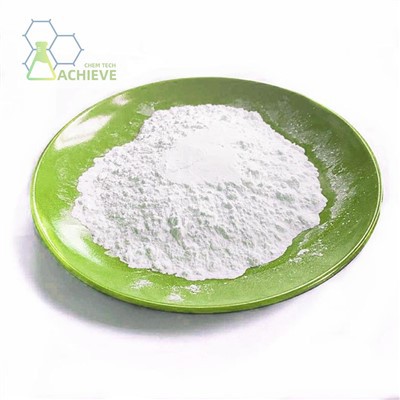
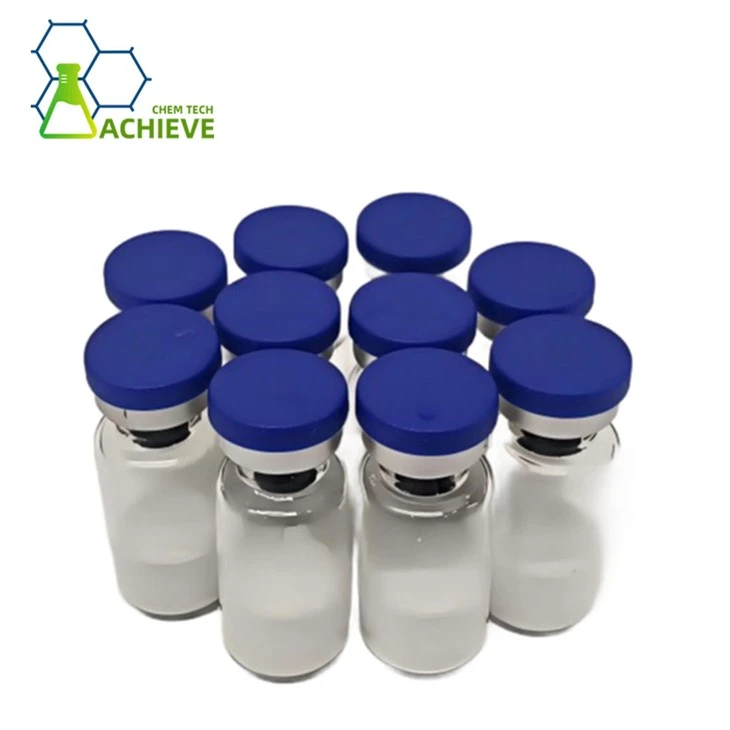
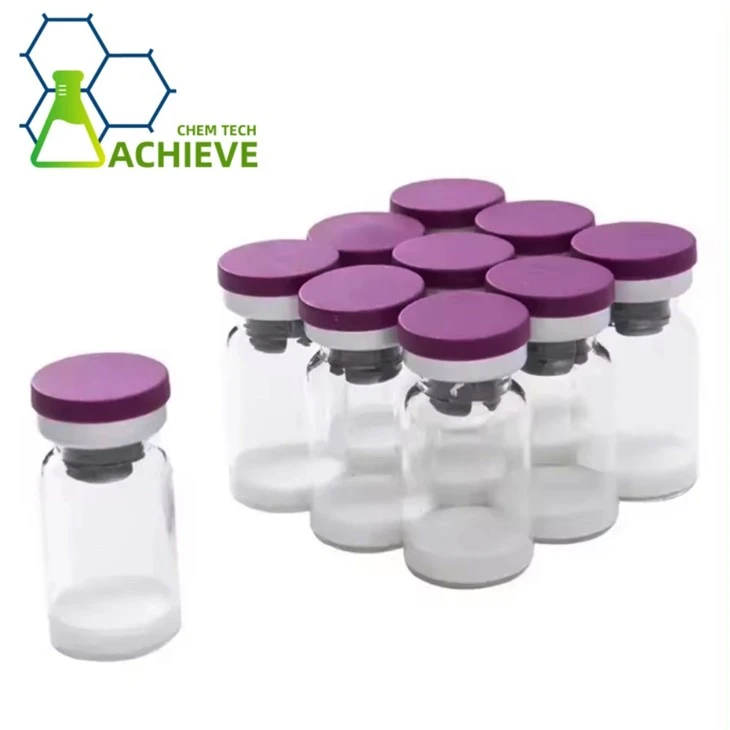
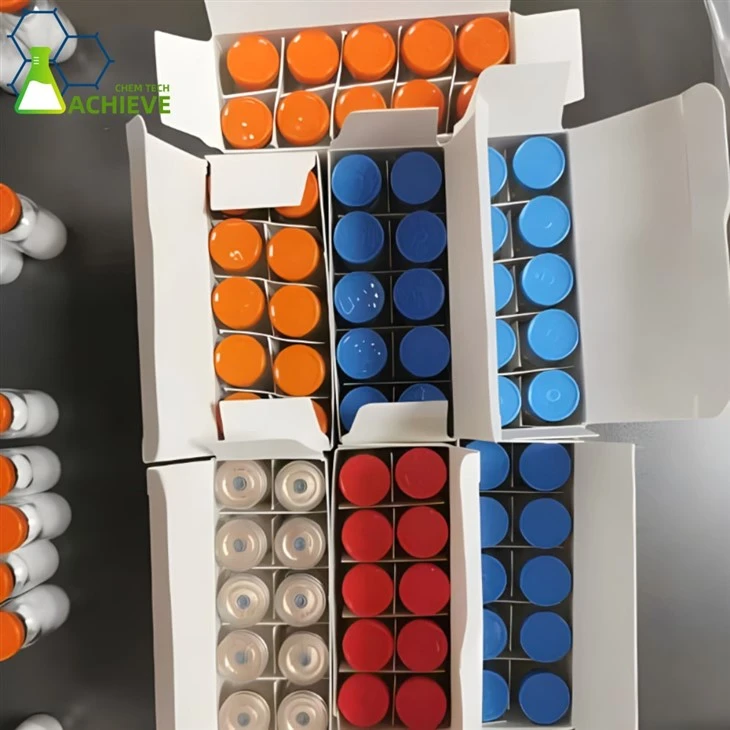
Antide acetate, the Chinese name is Antipeptide Acetate, which is a synthetic peptide compound with important biological activity. Its CAS number is 112568-12-4. This compound is composed of 10 amino acids, with a molecular formula of C82H108ClN17O14 and a molecular weight of approximately 1591.29. It appears as a white powder and needs to be stored under low temperature and dark conditions.
The core mechnism of action lies in its characteristic as a menogon-releasing horone (GnRH) antagonist. It precisely binds to GnRH receptors through a "hydrophobic embedding charge binding conformation matching" mode, with an affinity about 10 times that of natural GnRH, and does not activate downstream signals after binding, but instead blocks the interaction between endogenous GnRH and receptors. This mechnism effectively inhibits the release of luteinizing horone (LH) and follicle stimulating horone (FSH), ultimately reducing sex horone levels and avoiding the early side impressions of traditional GnRH agonists, making it safer.


Antide Acetate COA
 |
||
| Certificate of Analysis | ||
| Compound name | Antide Acetate | |
| Grade | Pharmaceutical grade | |
| CAS No. | 112568-12-4 | |
| Quantity | 37g | |
| Packaging standard | PE bag+Al foil bag | |
| Manufacturer | Shaanxi BLOOM TECH Co., Ltd | |
| Lot No. | 202601090078 | |
| MFG | Jan 9th 2026 | |
| EXP | Jan 8th 2029 | |
| Structure |
|
|
| Item | Enterprise standard | Analysis result |
| Appearance | White or almost white powder | Conformed |
| Water content | ≤5.0% | 0.54% |
| Loss on drying | ≤1.0% | 0.42% |
| Heavy Metals | Pb≤0.5ppm | N.D. |
| As≤0.5ppm | N.D. | |
| Hg≤0.5ppm | N.D. | |
| Cd≤0.5ppm | N.D. | |
| Purity (HPLC) | ≥99.0% | 99.98% |
| Single impurity | <0.8% | 0.52% |
| Total microbial count | ≤750cfu/g | 95 |
| E. Coli | ≤2MPN/g | N.D. |
| Salmonella | N.D. | N.D. |
| Ethanol (by GC) | ≤5000ppm | 500ppm |
| Storage |
Store in a sealed, dark, and dry place below -20°C |
|
|
|
||
|
|
||


| Chemical Formula | C82H108ClN17O14 |
| Exact Mass | 1590 |
| Molecular Weight | 1591 |
| m/z | 1590 (100.0%), 1591 (88.7%), 1592 (38.8%), 1592 (32.0%), 1593 (28.3%), 1594 (12.4%), 1593 (10.4%), 1591 (6.3%), 1592 (5.6%), 1595 (3.6%), 1592 (2.9%), 1593 (2.6%), 1593 (2.4%), 1593 (2.0%), 1594 (2.0%), 1594 (1.8%), 1591 (1.2%), 1594 (1.1%), 1592 (1.1%) |
| Elemental Analysis | C, 61.89; H, 6.84; Cl, 2.23; N, 14.96; O, 14.08 |

Antide acetate, as one of the important representative molecules in the evolution history of menogon-releasing horone (GnRH) antagonists, has a profound impact in the fields of reproductive endocrie regulation and pharmacology research. This type of drug competitively antagonizes the menogon-releasing horone receptor, thereby blocking the transmission of GnRH signals at the molecular level and regulating the functional status of the hypothalamic pituitary gonadal axis at the systemic level. As a representative of early efficient GnRH antagonists, it not only validated the feasibility of receptor antagonism strategies, but also promoted the evolution of a series of improved drugs in the future.
From the perspective of the overall evolution path, GnRH antagonists are in an important stage of transition from "experimental exploration" to "clinical translation". Its research not only deepens the understanding of reproductive endocrie regulation mechnisms, but also provides a theoretical and practical basis for the optimization of third-generation antagonists such as Ganirelix. Therefore, although its clinical application scope is relatively limited, it still holds an irreplaceable position in the basic research and drug evolution system.


Core applications in endocrie regulation research
The core value in endocrie research lies in its rapid and controllable inhibitory impression on the reproductive endocrie axis. By blocking the GnRH receptor signal, the drug can rapidly reduce the secretion level of pituitary menogons, thereby establishing a stable hypogonadotropin state in a short period of time.
In experimental research, this impression is widely used to decipher the hierarchical regulatory relationships between horones. For example, by inhibiting pituitary output signals, the pattern of changes in gonadal horones (such as estrogen, progesterone, and androgen) in the absence of upstream stimulation can be observed, thereby clarifying the causal relationship between different endocrie processes.
In addition, this method can also be used to analyze the dependence of different horones on target organs, further revealing the functional integration mechnism of the endocrie system.
More importantly, the induced endocrie suppression state is highly reversible, allowing researchers to observe the system's regulatory ability during the dynamic process of inhibition recovery. This experimental mode provides an important means for studying the adaptability and plasticity of the endocrie system.


Application in Reproductive Medicine Research and Assisted Reproductive Technology
In the early stages of assisted reproductive technology evolution, it was widely used to explore the potential application of GnRH antagonistic strategies in controlled ovarian stimulation. Its main purpose is to inhibit the premature occurrence of luteinizing horone peaks, thereby avoiding premature follicular discharge and ensuring synchronous maturation of oocytes.
In in vitro fertilization research, the application enables researchers to more accurately control the ovulation time window, thereby optimizing the timing of egg retrieval operations. In addition, by reducing endogenous horone fluctuations, it can also improve the consistency of follicular evolution, providing support for increasing the success rate of experiments.
Although it has gradually been replaced by the new generation of GnRH antagonists with the increasing requirements for drug safety, its contribution at the methodological level is still of great significance.
Especially in verifying the feasibility of antagonist regimens, Antide played a foundational role.
The instrumental role in pharmacological research and new drug evolution
In the process of drug evolution, it is widely used as a tool molecule for the screening and evaluation of novel GnRH modulators. Due to its clear mechnism of action and stable antagonistic impression, researchers can use it as a "standard control" to evaluate the activity and selectivity of new candidate drugs.


Specifically, it can be used to verify whether new compounds exert their impressions through GnRH receptors, and to screen for more promising candidate drugs by comparing the efficacy differences of different molecules. In addition, in mechnism studies, the use of Antide to block signaling pathways can clarify the pathway of action of target drugs, thereby improving the reliability of research conclusions.
This instrumental application has significant value in the modern drug evolution system and has played a key role in multiple new drug evolution projects.
The application value in animal model construction
It is commonly used in basic medical research to construct endocrie regulation models. Through systemic administration, stable hypogonadotropin states can be induced in animals to simulate different physiological or pathological conditions.
This model is of great significance in many research fields. For example, in reproductive system evolution research, it can be used to analyze the impact of horone deficiency on organ formation; In behavioral research, it can be used to explore the regulation of horone changes on behavioral patterns; In the study of endocrie diseases, it can be used to simulate hormonal imbalances.
Compared to traditional surgical models, induction models have advantages such as easy operation and strong reversibility, making them an important tool in modern experimental research.


Potential applications in neuroendocrie interaction research
As research deepens, the GnRH system is believed to not only participate in reproductive regulation, but may also play a role in neurological function. Blocking the GnRH signal provides an important means for studying the interaction between the nervous and endocrie systems.
Related studies have shown that GnRH may be involved in behavioral regulation, emotional response, and neural plasticity processes. Through application, researchers can observe the changes in these functions when GnRH signaling is inhibited, thereby further understanding the integration mechnism of the neuroendocrie system. Although the field is still in the exploratory stage, antide acetate has demonstrated potential research value in multiple experimental models.

As a menogon-releasing hormone (GnRH) antagonist, the evolution history of Antid Acetate can be summarized according to the timeline as follows:
Concept proposal:
With a deeper understanding of the core role of GnRH and its receptors in reproductive endocrie regulation, scientists have begun to explore the regulation of sex horone levels by antagonizing GnRH receptors to regulate the secretion of menogons such as follicle stimulating horone FSH and luteinizing horone LH.
The discovery of Antipeptide:
As a synthetic GnRH antagonist, it has been successfully discovered to contain N-acetyl modified (Ac -) and cyclic linked amino acid sequences in its molecular structure. This structural design ensures high selectivity and receptor affinity, while enhancing stability in vivo
Research on the mechnism of action: Scientists have found that Antipeptide precisely binds to GnRH receptors through a "hydrophobic embedding charge binding conformation matching" mode, with an affinity about 10 times that of natural GnRH. After binding, it does not activate downstream signals, but instead blocks the interaction between endogenous GnRH and receptors, thereby inhibiting the release of menogons and ultimately reducing sex horone levels.
Development of Long lasting Characteristics: By modifying D-amino acids and optimizing C-terminal amidation, the half-life in vivo is significantly prolonged. Loading it onto a sustained-release formulation prepared from PLGA microspheres, a single injection can maintain impression blood drug concentration for several weeks, providing the possibility of reducing dosing frequency.
Animal experiments and safety assessment:
Good safety and efficacy have been demonstrated in animal experiments. For example, in a rat model, a certain dose can achieve a castration like impression for several weeks; In the crab eating monkey model, sustained inhibitory impressions can be induced.
Exploring the potential for clinical translation:
Cancer treatment: preclinical studies have shown that antipeptide has potential in the treatment of sex horone dependent diseases (such as prostate cancer and breast cancer). For example, weekly administration can reduce testosterone levels and shrink tumors in prostate cancer mice, and combined with chemotherapy can improve efficacy.
In the field of assisted reproductive technology, antide acetate has demonstrated advantages. Clinical trials have shown that it can effectively control the synchrony of follicular evolution, improve the success rate of egg retrieval, and reduce the incidence of ovarian hyperstimulation syndrome.
References
1. U.S. Food and Drug Administration
2. European Medicines Agency
3. Endocrine Reviews
4. The Journal of Clinical Endocrinology & Metabolism
5. Fertility and Sterility
6. Human Reproduction
7. Goodman & Gilman's The Pharmacological Basis of Therapeutics
Hot Tags: antide acetate, China antide acetate manufacturers, suppliers, salcatonin injection, intranasal desmopressin acetate, best glp 1 peptide, MT2 Injection, glp1 shot, etelcalcetide structure