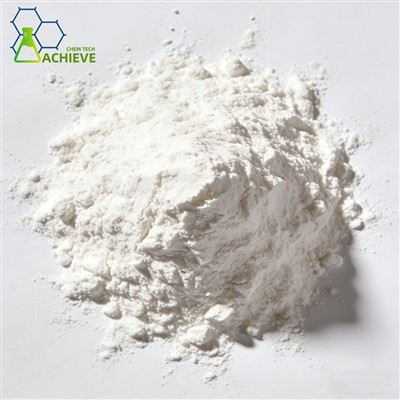



Ganirelix acetate injection is a synthetic peptide gonadotropin-releasing hormone (GnRH) antagonist, whose main mechanism of action is competitive binding to pituitary GnRH receptors, thereby inhibiting the excretion of gondotropins. Unlike GnRH agonists, this drug does not trigger initial activation effects and can achieve rapid and reversible endocrine suppression.
Our Product Form


COA



Competitive antagonistic effect with gonadotropin-releasing hormone receptor
The core mechanie of deed of ganirelix acetate injection is based on its high affinity competitive antagonistic effect on the anterior pituitary gondotropin-releasing hormoe receptor. This receptor belongs to the G protein coupled receptor family and is widely expressed on the surface of pituitary gondotropin cells. It is a key molecule that regulates the excretion of gondotropins. Endogenous GnRH activates downstream signaling passages by binding to this receptor, promoting the synthesis and excretion of luteinizing hormoe (LH) and follicle stimulating hormoe (FSH).
As a synthetic peptide antagonist, its molecular structure is modified by specific sites, allowing it to occupy the binding site of GnRH receptor with high affinity without activating receptor conformational changes.
This competitive binding has high reversibility, but within the effective concentration range, it can significantly inhibit the binding opportunity of endogenous GnRH, thereby achieving blockade of signal transmission.
Unlike the "flare effect" of GnRH agonists that induce receptor activation in the initial stage, which does not trigger receptor activation, they can quickly produce inhibitory effects after administration. This feature determines its precision in time control, making it an important tool molecule for studying the GnRH signaling passage.


The blocking mechanie of G protein coupled signal transduction
Under normal physiological conditions, GnRH binds to its receptor and activates phospholipase C (PLC) through Gq/11 protein, which then catalyzes the hydrolysis of phosphatidylinositol-4,5-diphosphate (PIP2) to produce inositol triphosphate (IP3) and diacylglycerol (DAG). IP3 promotes the release of Ca ² ⁺ from the endoplasmic reticulum, while DAG activates protein kinase C (PKC), both of which jointly mediate the excretion process of gondotropins.
By blocking the binding of GnRH to receptors, the initiation of this signaling cascade reaction is inhibited from the source. Its function is not only reflected in preventing PLC activation, but also further inhibiting downstream Ca ² ⁺ influx and enhancing PKC signaling. This blocking effect has high specificity, causing intracellular signaling to rapidly decrease to baseline levels.
In addition, due to the lack of classical intracellular tail structure in GnRH receptors, their signal transduction relies on sustained ligand stimulation. Ganirelium achieves "functional shutdown" of the entire signaling passage by competitively occupying space and keeping receptors in a non activated state. This characteristic makes it of great value in studying signal transduction dependence.


Dual inhibitory effect on the synthesis and excretion of gonadotropins
Not only does it inhibit the excretion process of gondotropins, but it also affects their synthesis levels. Under normal circumstances, GnRH regulates the expression of LH β and FSH β subunit genes through periodic stimulation, maintaining the stability of hormoe synthesis.
In the presence of ganirelium, due to the blockade of GnRH signaling, the transcriptional activity of related genes in pituitary gondotropin cells decreases, leading to a reduction in the synthesis of LH and FSH. At the same time, the release of hormoes stored in secretory granules is also inhibited, resulting in a comprehensive inhibitory effect of "synthesis storage excretion" at multiple levels.
This dual inhibitory mechanie enables it to significantly reduce circulating gondotropin levels in a short period of time and maintain a stable low level state. This stability is of great significance for experimental research and endocrine regulation.
Systematic regulatory mechanie of hypothalamic pituitary gonadal axis
The effect is not limited to the pituitary level, but further regulates the functional status of the entire hypothalamic pituitary gonadal axis by affecting the excretion of gondotropins. In this axis, LH and FSH secreted by the pituitary gland are important bridges connecting the central and peripheral gonads.
When it inhibits the excretion of LH and FSH, the response of the gonads to gondotropins significantly decreases, leading to a decrease in the levels of sex hormoes such as estrogen and progesterone. With changes in sex hormoe levels, the feedback signals originally acting on the hypothalamus and pituitary gland are weakened or altered, thereby affecting the dynamic balance of the entire axis.

This mechanie reflects its "amplification effect" in endocrine regulation: by intervening with a single target, multi-level systemic changes can be triggered. This characteristic gives it a unique advantage in studying the overall regulation mechanie of HPG axis.

Intervention mechanie for GnRH pulse signal dependence
The excretion of GnRH has a typical pulse like characteristic, and its frequency and amplitude have a decisive impact on the excretion patterns of LH and FSH. GnRH pulses of different frequencies can selectively regulate the excretion ratio of different gondotropins.
By continuously occupying the GnRH receptor, the pituitary gland's ability to respond to GnRH pulse signals is significantly reduced, thereby "blocking" this pulse input. Even if endogenous GnRH is still released in pulse form, its signal is difficult to be effectively transduced.
This mechanie enables researchers to study the physiological significance of GnRH pulses under artificially controlled conditions, such as analyzing the impact of pulse frequency changes on hormoe excretion patterns and exploring the key role of pulse signals in reproductive regulation.
Mechanie of receptor occupancy and dose-response relationship
The pharmacological effects are closely related to their occupancy rate on GnRH receptors. Research has shown that when the receptor occupancy reaches a certain threshold, GnRH signaling will be significantly inhibited.
The dose-response relationship exhibits the following characteristics:
At low doses, some receptors are occupied and the inhibitory effect is limited
At moderate doses, the receptor occupancy rate rapidly increases and the inhibitory effect is enhanced
At high doses, it tends to saturate and the inhibitory effect reaches a plateau period
This relationship enables ganirelium to have good controllability and achieve varying degrees of endocrine suppression by adjusting the dosage. This adjustability is particularly important in experimental design.


Receptor conformational stability and signal silencing mechanie
At the molecular level, binding to GnRH receptors can stabilize the receptor in a non activated conformation. This conformational state prevents effective coupling between the receptor and G protein, thereby achieving signal silencing.
This mechanie is different from the partial agonist activity that some antagonists may possess, as ganirelix acetate injection exhibits pure antagonistic properties and does not induce any downstream signal activation. Therefore, its function is cleaner and does not introduce additional variables.
In addition, when the receptor remains inactive, its endocytosis and recycling processes may also be affected, further altering the cell's sensitivity to GnRH. These effects together form the foundation of its long-term regulatory ability.
Interaction mechanie with endocrine feedback network
The endocrine system maintains homeostasis through a complex feedback network. Ganirelium indirectly alters sex hormoe levels by inhibiting the excretion of gondotropins, thereby affecting both negative and positive feedback mechanies.
In terms of negative feedback, a decrease in sex hormoe levels may weaken the inhibitory effects on the hypothalamus and pituitary gland; In terms of positive feedback, due to the blockage of GnRH signals, it is difficult to form a positive feedback loop. This dual effect puts the entire feedback system in a 'reset' state.
Through this mechanie, ganirelium provides an ideal model for studying endocrine feedback regulation, enabling researchers to separate the effects of different feedback passageys.


Differences in mechanie compared to other GnRH modulators
Compared with GnRH agonists, its mechanie has significant differences. Excitants continuously stimulate receptors, ultimately leading to receptor desensitization and downregulation, while ganirelium achieves inhibition through direct competitive blockade.
This difference is reflected in:
Effective time: This substance is faster
Hormonal changes: no initial elevation stage
Regulation method: direct blockade rather than indirect inhibition
These differences in mechanies give it a unique advantage in scenarios that require rapid and controllable inhibition.
The mechanie of deed of ganirelix acetate injection can be summarized as: by competitively antagonizing the GnRH receptor with high affinity, blocking the G protein coupled signaling passage, inhibiting the synthesis and excretion of gondotropins, and further regulating the overall function of the hypothalamic pituitary gonadal axis. Its mechanie involves multiple levels of molecules, cells, and systems, and has the characteristics of rapidity, reversibility, and high specificity.
References
1. U.S. Food and Drug Administration. Ganirelix acetate prescribing information
2. European Medicines Agency. Ganirelix product dossier
3. The Journal of Clinical Endocrinology & Metabolism
4. Endocrine Reviews
5. Human Reproduction
6. Fertility and Sterility
7. Goodman & Gilman's The Pharmacological Basis of Therapeutics
Hot Tags: ganirelix acetate injection, China ganirelix acetate injection manufacturers, suppliers, salcatonin injection, intranasal desmopressin acetate, best glp 1 peptide, glp 1 agonist injections, glp1 shot, etelcalcetide structure