Carperitide,The chemical name is atrial natriuretic peptide (1-28), human or porcine derived (ANP) (1-28), human, porcine), which is a peptide hormone composed of 28 amino acids. It belongs to the atrial natriuretic peptide family and is an important bioactive substance secreted by the heart in response to mechanical stretching or injury. It was originally isolated from the hearts of mammals, especially from the atrial tissue of humans and pigs. When the heart is mechanically stretched (such as an increase in blood volume or blood pressure) or damaged, atrial myocytes synthesize and secrete this substance to respond to these physiological or pathological changes. It can promote diuresis and diuresis. It acts on the collecting and distal tubules of the kidneys, inhibiting the reabsorption of sodium ions while increasing the excretion of potassium ions, thereby increasing urine output and sodium ion excretion. This function helps regulate fluid balance and blood pressure stability, and is of great significance for preventing and treating cardiovascular diseases such as edema and hypertension. Meanwhile, RAAS is one of the important blood pressure regulation systems in the body. This substance can inhibit the activity of RAAS, reduce the production and release of angiotensin II and aldosterone, thereby further lowering blood pressure and reducing cardiac load. This effect synergizes with its diuretic and natriuretic properties, jointly maintaining fluid balance and blood pressure stability.
Our Products Form


Carperitide COA
 |
||
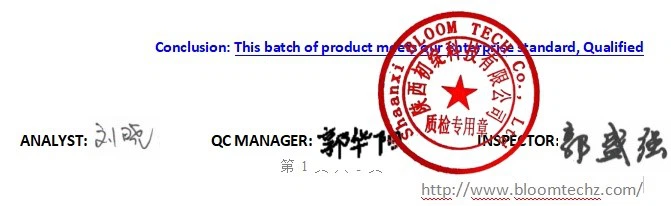
| Certificate of Analysis | ||
| Compound name | ANP 1-28, HUMAN | |
| Grade | Pharmaceutical grade | |
| CAS No. | 89213-87-6 | |
| Quantity | 30g | |
| Packaging standard | PE bag+Al foil bag | |
| Manufacturer | Shaanxi BLOOM TECH Co., Ltd | |
| Lot No. | 202512090052 | |
| MFG | Dec 9th 2025 | |
| EXP | Dec 8th 2028 | |
| Structure |
|
|
| Item | Enterprise standard | Analysis result |
| Appearance | White or almost white powder | Conformed |
| Water content | ≤5.0% | 0.43% |
| Loss on drying | ≤1.0% | 0.52% |
| Heavy Metals | Pb≤0.5ppm | N.D. |
| As≤0.5ppm | N.D. | |
| Hg≤0.5ppm | N.D. | |
| Cd≤0.5ppm | N.D. | |
| Purity (HPLC) | ≥99.0% | 99.90% |
| Single impurity | <0.8% | 0.24% |
| Total microbial count | ≤750cfu/g | 90 |
| E. Coli | ≤2MPN/g | N.D. |
| Salmonella | N.D. | N.D. |
| Ethanol (by GC) | ≤5000ppm | 500ppm |
| Storage | Store in a sealed, dark, and dry place below -20°C | |
|
|
||
|
|
||


| Chemical Formula | C127H205N45O39S3 | |
| Exact Mass | 3080.46 | |
| Molecular Weight | 3082.49 | |
| m/z | 3081.46 (100.0%), 3080.46(72.8%),3082.47(37.0%),3082.47(31.1%),3083.47(23.2%),3083.46(13.6%),3083.46(11.3%), 3084.47(10.3%), 3082.46 (9.9%), 3084.46 (9.2%), 3082.46(8.5%), 3082.46 (8.1%), 3083.47(8.0%),3083.47(7.5%), 3081.46(6.2%), 3081.46 (5.9%), 3082.46 (5.8%), 3084.47(3.8%), 3085.47(3.1%), 3084.47(3.0%),3085.48(2.6%), 3084.47(2.5%), 3082.46 (2.4%), 3082.47 (2.4%), 3085.47(1.9%), 3081.46(1.7%), 3081.47(1.7%),3083.45(1.6%), 3082.47(1.5%), 3086.47 (1.3%), 3084.46 (1.2%), 3085.47(1.1%), 3085.46(1.1%), 3084.46(1.1%),3085.46(1.1%), 3081.46(1.1%), 3085.47 (1.0%), 3083.46 (1.0%) | |
| Elemental Analysis | C,49.49; H,6.70; N,20.45; O,20.24; S,3.12 | |

Carperitide, Also known as Carpetide Acetate or Atrial Natriuretic Peptide (ANP) (1-28), it is a hormone peptide drug composed of 28 amino acids. It is mainly synthesized and secreted by atrial myocytes in the heart, and its production and release are in response to physiological or pathological stimuli such as heart injury, increased blood volume, and mechanical stretching of the heart wall. Structurally, its 28 amino acid residues are connected by peptide bonds to form a linear polypeptide chain, with the disulfide bond between Cys7 and Cys23 forming a specific cyclic structure that is crucial for maintaining its biological activity. This cyclic structure limits the flexibility of the molecule, allowing it to exhibit a specific spatial conformation that facilitates specific binding to target receptors.
Physiological mechanisms for improving heart function
Inhibition of endothelin-1 secretion
Endothelin-1 is a potent vasoconstrictor that can induce vasoconstriction, increase peripheral vascular resistance, and ultimately raise blood pressure. In the cardiovascular system, excessive secretion of endothelin-1 can lead to vascular spasm, increase the burden on the heart, and affect its normal function. And this substance can inhibit the secretion of endothelin-1 in a dose-dependent manner through corresponding signaling pathways. Specifically, in vascular smooth muscle cells, ANP 1-28 acts on related cellular signaling pathways, reducing the transcription and protein synthesis of the endothelin-1 gene, decreasing its release to the extracellular environment, thereby blocking the vasoconstriction caused by endothelin-1, helping to lower blood pressure, alleviate cardiac afterload, and improve cardiovascular function.


Diuretic and sodium expelling effects
It can promote the excretion of sodium and water by the kidneys. When it binds to receptors in the kidneys, it activates a series of intracellular signaling pathways, leading to reduced reabsorption of sodium by the renal tubules and increased water excretion. This diuretic and sodium expelling effect can regulate fluid balance, reduce blood volume, and thus lower the preload on the heart. For patients with heart failure, water and sodium retention often exists in the body, which will increase the burden on the heart. The diuretic and sodium excretion effect of this substance can effectively alleviate this problem and improve the functional state of the heart.
Activate the natriuretic peptide receptor signaling pathway
It mainly acts on the natriuretic peptide receptor A (NPRA), which is a membrane surface receptor. When ANP 1-28 binds to NPRA, it activates the intracellular cyclic guanosine monophosphate (cGMP) signaling pathway. CGMP, as a second messenger, can regulate the activity of various intracellular proteins, thereby affecting the physiological functions of cells. In the cardiovascular system, activation of the cGMP signaling pathway can cause smooth muscle relaxation, reduce vascular resistance, while also inhibiting myocardial cell hypertrophy and fibrosis, protecting heart tissue, and improving cardiac contraction and relaxation function.

Clinical application in improving cardiac function

Treatment of congestive heart failure
Congestive heart failure is a common cardiovascular disease characterized by the heart's inability to effectively pump blood out, leading to blood stasis in the heart and lungs, causing symptoms such as difficulty breathing and edema. It has significant effects in the treatment of congestive heart failure. In clinical trials, many patients with congestive heart failure have shown significant improvement in cardiac function indicators after using Carperitide. For example, left ventricular ejection fraction (LVEF) is an important indicator for evaluating cardiac contractile function, and after using Carpetide, some patients' LVEF has improved, indicating that the heart's pumping ability has been enhanced. At the same time, indicators related to cardiac remodeling have also been alleviated. Cardiac remodeling is an important pathological process in the occurrence and development of heart failure, including myocardial hypertrophy, ventricular enlargement, etc. ANP 1-28 and HUBAN can inhibit the progression of cardiac remodeling and protect cardiac structure and function. In addition, the patient's symptoms such as difficulty breathing were significantly reduced, and their quality of life was improved. These results indicate that ANP 1-28 and HUMAN can improve cardiac function, alleviate symptoms, and enhance the quality of life of patients with congestive heart failure through various mechanisms.
Used for cardiac function support after cardiac surgery
Cardiac surgery is a complex surgical procedure that may cause certain damage to the heart during the operation, leading to postoperative cardiac dysfunction. ANP 1-28, HUBAN can be used for cardiac function support after cardiac surgery, helping patients recover cardiac function faster. After cardiac surgery, patients may experience a decrease in cardiac systolic and diastolic function. ANP 1-28, HUMAN can reduce the pre - and post cardiac load, alleviate the burden on the heart, and improve the hemodynamic status of the heart through its vasodilation and diuretic effects. Meanwhile, ANP 1-28 and HUMAN can also inhibit the secretion of endothelin-1, prevent vascular spasm, and ensure blood supply to the heart. In addition, ANP 1-28 and the cGMP signaling pathway activated by HUMAN can inhibit the inflammatory response and oxidative stress of myocardial cells, protect them, and promote the recovery of cardiac function.


Combination use with other drugs
In clinical treatment, ANP 1-28 and HUMAN are often used in combination with other cardiovascular drugs to enhance the therapeutic effect. For example, when used in combination with drugs such as angiotensin-converting enzyme inhibitors (ACEIs) and beta blockers, it can exert a synergistic effect and improve heart function more comprehensively. ACEI drugs can dilate blood vessels, lower blood pressure, and alleviate cardiac afterload by inhibiting the activity of angiotensin-converting enzyme and reducing the production of angiotensin II. Meanwhile, ACEI can also inhibit myocardial remodeling and protect cardiac function. The combination of Carperitide and ACEI can further enhance vasodilation and reduce blood pressure. At the same time, the diuretic and sodium excretion effects of ANP 1-28 and HUMAN can reduce the adverse reactions such as water and sodium retention that may be caused by ACEI. Beta blockers can lower heart rate, reduce myocardial oxygen consumption, inhibit myocardial remodeling, and improve the systolic and diastolic function of the heart. ANP 1-28, combined application of HUMAN and beta blockers, can synergistically reduce the pre - and post cardiac load, improve the hemodynamic status of the heart, and enhance treatment efficacy.
Frequently Asked Questions
What is carperitide?
+
-
Carperitide, a recombinant form of alpha-hANP, possesses potent diuretic, natriuretic, and vasodilatory activity, and inhibits the renin-aldosterone system and sympathetic nervous activity. However, its beneficial effects on ischemic myocardium have not been studied fully.
What is the mechanism of action of carperitide?
+
-
The mechanism of action of Carperitide revolves around its ability to mimic the natural atrial natriuretic peptide (ANP) produced by the heart. ANP plays a vital role in regulating blood pressure, blood volume, and sodium balance.
Why does it have the potential to prevent "contrast agent nephropathy" besides treating heart failure?
+
-
It activates the NPRA receptor, mediates vasodilation, diuresis, inhibits RAAS, increases renal blood flow and glomerular filtration rate, helps to eliminate contrast agents, reduces their direct toxicity to the kidneys, and is entering phase II clinical practice.
Why can it significantly reduce cardiac preload without triggering diuresis when treating refractory heart failure after myocardial infarction?
+
-
Its vasodilatory effect (especially on veins) can directly and rapidly reduce cardiac preload, and the therapeutic effect does not depend on diuresis.
As a recombinant peptide, what are the special challenges of the "stability" and "reconstitution" of its raw material powder?
+
-
As a peptide containing 28 amino acids and disulfide bonds, its freeze-dried powder stability is highly dependent on strict temperature control (-20 ° C). After reconstitution, it must be used within one month and avoid repeated freeze-thaw cycles to prevent degradation and deactivation.
Hot Tags: carperitide, China carperitide manufacturers, suppliers, salcatonin injection, intranasal desmopressin acetate, best glp 1 peptide, Ipamorelin Injection, glp1 shot, etelcalcetide structure