




The active ingredient of aviptadil injection is aviptadil, a synthetic vasoactive intestinal peptide (VIP) whose amino acid sequence is identical to that of endogenous human VIP. It belongs to the 28‑amino‑acid signaling peptide of the glucagon‑secretin superfamily. Endogenous VIP is widely distributed in neurons of the peripheral and central nervous systems, pituitary lactotrophs, endocrine pancreatic cells, T lymphocytes, and B lymphocytes in the human body, serving as an important signaling molecule in the neuroendocrine‑immune network. The lungs are the primary site of VIP binding.
Our Products Form


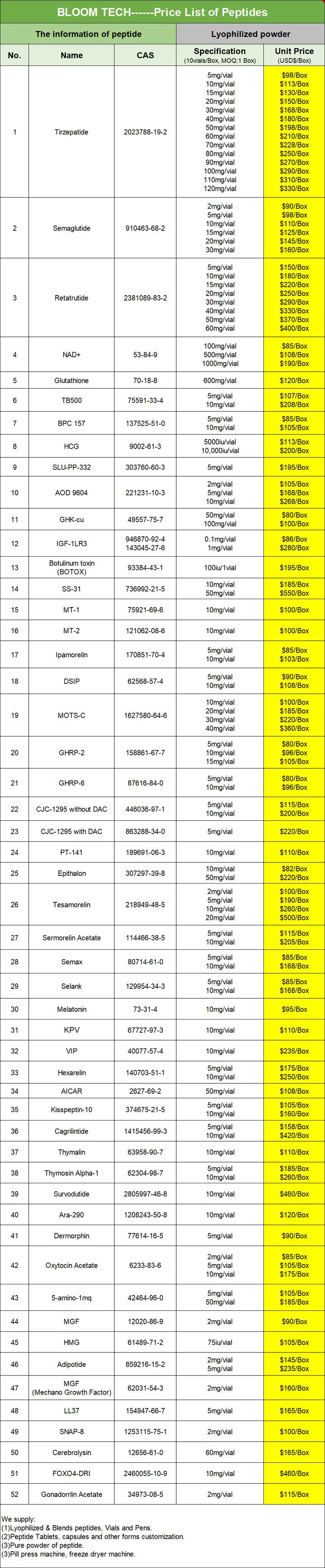


Aviptadil COA
 |
||
| Certificate of Analysis | ||
| Compound name | Aviptadil | |
| Grade | Pharmaceutical grade | |
| CAS No. | 40077-57-4 | |
| Quantity | 36g | |
| Packaging standard | PE bag+Al foil bag | |
| Manufacturer | Shaanxi BLOOM TECH Co., Ltd | |
| Lot No. | 202601090066 | |
| MFG | Jan 9th 2026 | |
| EXP | Jan 8th 2029 | |
| Structure |
|
|
| Item | Enterprise standard | Analysis result |
| Appearance | White or almost white powder | Conformed |
| Water content | ≤5.0% | 0.54% |
| Loss on drying | ≤1.0% | 0.42% |
| Heavy Metals | Pb≤0.5ppm | N.D. |
| As≤0.5ppm | N.D. | |
| Hg≤0.5ppm | N.D. | |
| Cd≤0.5ppm | N.D. | |
| Purity (HPLC) | ≥99.0% | 99.98% |
| Single impurity | <0.8% | 0.52% |
| Total microbial count | ≤750cfu/g | 95 |
| E. Coli | ≤2MPN/g | N.D. |
| Salmonella | N.D. | N.D. |
| Ethanol (by GC) | ≤5000ppm | 500ppm |
| Storage | Store in a sealed, dark, and dry place below -20°C | |
|
|
||
|
|
||


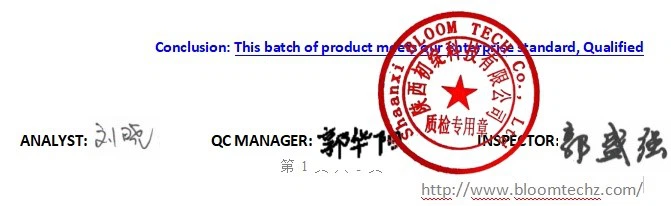
| Chemical Formula | C147H238N44O42S |
| Exact Mass | 3323.76 |
| Molecular Weight | 3325.85 |
| m/z | 3324.76 (100.0%), 3323.76 (62.9%), 3325.76 (52.1%), 3326.77 (41.3%), 3325.76 (26.9%), 3325.76 (15.1%), 3324.75 (9.5%), 3327.77 (9.4%), 3326.76 (8.6%), 3326.76 (7.9%), 3327.77 (6.7%), 3325.76 (5.4%), 3327.76 (5.4%), 3326.76 (4.7%), 3326.76 (4.5%), 3327.77 (4.5%), 3328.77 (3.6%), 3328.77 (3.1%), 3325.75 (2.8%), 3325.77 (2.7%), 3327.76 (2.4%), 3327.77 (2.3%), 3326.77 (2.2%), 3328.77 (1.9%), 3324.76 (1.7%), 3325.76 (1.6%), 3328.76 (1.5%), 3328.77 (1.5%), 3327.76 (1.3%), 3327.76 (1.3%), 3327.76 (1.2%), 3328.77 (1.1%), 3326.75 (1.1%), 3325.76 (1.1%), 3324.76 (1.0%) |
| Elemental Analysis | C, 53.09; H, 7.21; N, 18.53; O, 20.20; S, 0.96 |

Since the outbreak of the coronavirus disease 2019 (COVID‑19) pandemic, it has posed enormous challenges to global public health. Severe cases are often complicated by acute respiratory distress syndrome (ARDS), which has become one of the leading causes of death in patients. ARDS is a severe form of acute lung injury characterized by damage to the alveolar‑capillary barrier, interstitial and alveolar edema, and refractory hypoxemia. COVID‑19‑associated ARDS (COVID‑19‑ARDS) is characterized by more rapid disease progression and greater therapeutic difficulty due to the systemic inflammatory response and lung‑specific injury induced by viral infection. As a synthetic vasoactive intestinal peptide (VIP), aviptadil injection has demonstrated potential therapeutic value in the treatment of COVID‑19‑ARDS owing to its unique anti‑inflammatory, lung‑protective, and immunomodulatory effects.
The pathogenesis of COVID‑19‑ARDS is complex, with the core being excessive inflammatory response and lung injury triggered by severe acute respiratory syndrome coronavirus 2 (SARS‑CoV‑2) infection: the virus invades cells by binding its spike protein to the ACE2 receptor on the surface of alveolar type II (ATII) epithelial cells, causing ATII cell damage and subsequent reduction in pulmonary surfactant production and alveolar collapse. Meanwhile, the virus activates the host immune system, releasing large amounts of pro‑inflammatory cytokines (e.g., interleukin‑6, tumor necrosis factor‑α, etc.) and triggering a "cytokine storm", which exacerbates damage to the alveolar‑capillary barrier, leading to pulmonary interstitial and alveolar edema, and ultimately hypoxemia and respiratory failure. The product acts through multiple targets and pathways to specifically ameliorate the pathophysiological processes of COVID‑19‑ARDS, with detailed mechanisms as follows.


2.1 Anti‑Inflammatory and Anti‑Cytokine Storm Effects
Aviptadil can specifically bind to target cells in the lungs, inhibit the production and release of pro‑inflammatory cytokines, and alleviate pulmonary inflammation. Studies have shown that aviptadil suppresses the synthesis of key pro‑inflammatory factors such as interleukin‑6 (IL‑6) and tumor necrosis factor‑α (TNF‑α), blocking the formation of a cytokine storm, thereby reducing damage to the alveolar‑capillary barrier by inflammatory mediators and alleviating pulmonary interstitial edema and alveolar inflammation. Its mechanism is related to the inhibition of N‑methyl‑D‑aspartate (NMDA)‑induced caspase‑3 activation, which further protects lung cells from inflammatory injury and maintains normal pulmonary physiological functions. This anti‑inflammatory effect is not limited to the lungs; it also modulates systemic immune responses, preventing excessive inflammation from damaging other organs and supporting multi‑organ protection in patients with COVID‑19‑ARDS.
2.2 Protection of Alveolar Type II Epithelial Cells and Promotion of Surfactant Synthesis
ATII cells are the main target cells of SARS‑CoV‑2 infection. Their injury leads to reduced synthesis of pulmonary surfactant, followed by alveolar collapse and impaired gas exchange, which is a key step in the development and progression of COVID‑19‑ARDS. Aviptadil injection can specifically bind to receptors on the surface of ATII cells, exerting cytoprotective effects to reduce viral damage to ATII cells, while stimulating ATII cells to synthesize and secrete more pulmonary surfactant. Pulmonary surfactant coats the inner surface of alveoli, lowering alveolar surface tension, preventing alveolar collapse, and maintaining normal alveolar expansion and gas exchange, thereby improving hypoxemia and relieving respiratory distress in patients. This effect distinguishes aviptadil from other anti‑inflammatory drugs and is one of the core mechanisms underlying its efficacy in ARDS.


2.3 Repair of the Alveolar‑Capillary Barrier and Reduction of Pulmonary Edema
Damage to the alveolar‑capillary barrier is a typical pathological feature of ARDS. The inflammatory response induced by COVID‑19 further disrupts the integrity of this barrier, causing intravascular fluid leakage into the pulmonary interstitium and alveoli, forming pulmonary edema and worsening respiratory dysfunction. Aviptadil can repair the damaged alveolar‑capillary barrier by regulating the function of alveolar capillary endothelial and epithelial cells, reducing intravascular fluid leakage, thereby alleviating pulmonary edema and improving pulmonary gas exchange efficiency. In addition, aviptadil exerts mild vasodilatory effects, improving pulmonary blood circulation, increasing pulmonary oxygen supply, further relieving hypoxemia, and creating favorable conditions for the repair of lung injury.
2.4 Adjuvant Antiviral Effects
In addition to its anti‑inflammatory and lung‑protective effects, aviptadil also exhibits certain antiviral potential. Non‑clinical studies have shown that VIP can block the replication of SARS‑CoV‑2 in lung cells and reduce viral lung injury. Its antiviral mechanism may involve the regulation of intracellular signaling pathways and inhibition of viral invasion and replication. Meanwhile, by improving the pulmonary microenvironment and enhancing the host's innate antiviral capacity, aviptadil injection may exert synergistic effects when combined with antiviral agents (e.g., remdesivir), further enhancing therapeutic outcomes.

Information source:Package leaflet: Information for the patient – Oxyptadil® Injection for Intravenous Infusion Aviptadil 150 mcg/10 mL (Zuventus);A Multicenter, Adaptive, Randomized, Blinded Controlled Trial of the Safety and Efficacy of Investigational Therapeutics for Hospitalized Patients with Acute Respiratory Distress Syndrome Associated with COVID‑19 Protocol Appendix H1: Aviptadil;The Use of IV Vasoactive Intestinal Peptide (Aviptadil) in Patients With Critical COVID‑19 Respiratory Failure: Results of a 60‑Day Randomized Controlled Trial (PubMed).

I. Synthetic Basis and Core Requirements
The core of aviptadil synthesis lies in the precise assembly of 28 amino acids, following the amino acid sequence of endogenous VIP (His‑Ser‑Asp‑Ala‑Val‑Phe‑Thr‑Asp‑Asn‑Tyr‑Thr‑Arg‑Leu‑Arg‑Lys‑Gln‑Met‑Ala‑Val‑Lys‑Lys‑Tyr‑Leu‑Asn‑Ser‑Ile‑Leu‑Asn), ensuring that the synthetic product has a structure identical to native VIP and thus retains its biological activity.
Key control points during synthesis include purity (avoiding amino acid mismatches, deletions, or multimer formation) and yield, along with process stability and reproducibility, to provide safe and reliable raw materials for clinical use. As a polypeptide, aviptadil requires rigorous structural identification and quality testing after synthesis to prevent degradation products from affecting efficacy and safety.
II. Main Synthetic Methods
At present, two mainstream technologies are used for aviptadil synthesis: traditional chemical synthesis and novel chemo‑enzymatic synthesis, which differ in process complexity, yield, and purity.
Traditional chemical synthesis is dominated by solid‑phase peptide synthesis, in which amino acids are sequentially linked via multiple condensation reactions, commonly using palladium on carbon as a catalyst, with an overall yield of approximately 60%–70%.
This method features high selectivity and controllable purity and was the primary approach for early aviptadil production. The novel chemo‑enzymatic synthesis uses variants of Peptiligase as biocatalysts to couple two peptide fragments in an aqueous environment, with a short reaction time (only 15 minutes) and a yield range of 54%–76%. Compared with traditional solid‑phase synthesis, it is more efficient and environmentally friendly, and has become a research hotspot.
III. Key Synthetic Steps and Quality Control
Regardless of the synthetic method employed, the core steps include amino acid activation, fragment coupling, deprotection, and purification. Amino acid activation is a prerequisite, converting amino acids into active intermediates to ensure smooth subsequent condensation reactions.
Fragment coupling requires strict control of reaction conditions (temperature, pH) to avoid amino acid mismatches. The deprotection step removes protecting groups introduced during synthesis while avoiding damage to the peptide chain structure.
Purification mostly uses high‑performance liquid chromatography (HPLC) to remove impurities, mismatched peptides, and degradation products, ensuring that the synthetic product meets clinical purity standards.
Information source:Peptiligase, an enzyme for efficient chemo‑enzymatic synthesis of aviptadil (PubMed);Production method for liquid formulation of aviptadil – Patent WO‑2024005764‑A1 (PubChem).
Adverse Reactions
Common reactions: flushing of the face/trunk, headache, mild hypotension, nausea, and diarrhea. Most are transient and do not require drug discontinuation. If symptoms persist or worsen, a physician should be consulted for dose adjustment.
Information source: Oxyptadil® Prescribing Information, clinical studies in the Emergency Medicine Journal (EMJ).
FAQ
Is aviptadil used for ARDS?
+
-
Administration of aviptadil, a synthetic form of VIP, is used in the management of ARDS.
How long does it take for aviptadil to work?
+
-
On day 28, the improvement in the radiological findings of the aviptadil group was statistically significant compared to the placebo group. This highlights the importance of inhaled aviptadil treatment for fast recovery and the possible reduction of sequelae formation and long-term COVID-19 symptoms.
Hot Tags: aviptadil injection, China aviptadil injection manufacturers, suppliers, salcatonin injection, intranasal desmopressin acetate, best glp 1 peptide, Ipamorelin Powder, glp1 shot, etelcalcetide structure


