


With the discovery of new peptide molecules that open up new Bioglutide NA-931 peptide areas for scientific study, metabolic science is always changing. Bioglutide NA-931 peptide is one of these new study tools that biotechnology labs and pharmaceutical research teams around the world are very interested in. This man-made peptide is a useful tool for studying metabolic pathways, energy regulation processes, and the dynamics of receptor interactions in controlled lab situations.
Peptides that are good enough for research are important building blocks for learning how complex biological processes work. When scientists work with metabolic control models, they need substances that are pure, consistent, and easy to use again and again in different experiments. More and more people are interested in peptide-based research tools. This is part of a larger trend toward precision molecular research, in which specific substances allow researchers to focus on the parts of cells that control energy balance and metabolic regulation.
Knowing the useful benefits of certain study substances helps labs plan their experiments better and make the best use of their resources. The purpose of this piece is to talk about the useful properties, experimental uses, and increased efficiency that this specific peptide provides to metabolic research institutions. Whether you work for an academic lab, a contract research company, or a biotechnology development team, knowing what makes a good research peptide can have a big effect on how well your studies go and how well you handle your time.
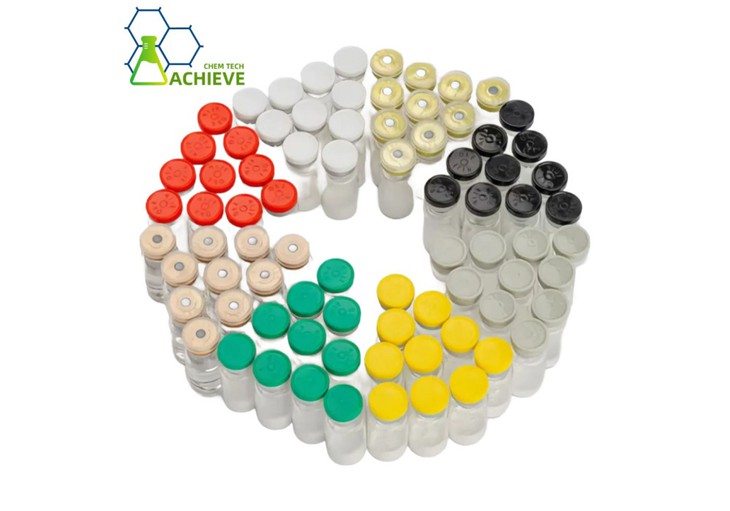
Bioglutide NA-931
1.General Specification(in stock)
(1)API(Pure powder)
(2)Tablets
(3)Capsules
2.Customization:
We will negotiate individually, OEM/ODM, No brand, for secience researching only.
Internal Code: KP-2-6/002
Bioglutide NA-931
Manufacturer: BLOOM TECH Wuxi Factory
Analysis: HPLC, LC-MS, HNMR
Main market: USA, Australia, Brazil, Japan, Germany, Indonesia, UK, New Zealand , Canada etc.
Technology support: R&D Dept.-4
We provide Bioglutide NA-931, please refer to the following website for detailed specifications and product information.
Product:https://www.kpeptide.com/bodybuilding-peptide/bioglutide-na-931.html

What Are the Key Benefits of Bioglutide NA-931 Peptide in Studies?
Adding Bioglutide NA-931 peptide to experimental methods is helpful because it has a consistent structure and works the same way every time in different study settings. Scientists' methods for studying metabolism have changed because of peptide-based research tools, which offer molecular accuracy that regular substances can't match. This research peptide has properties that are in line with what is needed today for studying receptor binding, exploring signaling pathways, and modeling metabolic control.
Compounds made under strict quality control standards are useful for research labs that put a high value on data dependability. High-purity peptides reduce the amount of variation in experiments that can mess up results and make it harder to understand data. When the makeup of peptide samples stays the same across different production batches, it's easier for researchers to compare results from different stages of an experiment. For research-grade peptides, the analytical profiles usually include full chromatography data, mass spectrometry proof, and stability paperwork that backs up strict scientific methods.
Compatibility with normal lab procedures and analytical tools is another important benefit of the compound. Scientists can use this peptide in experiments that are already set up without having to make a lot of changes to Bioglutide NA-931 peptide protocols or learn new ways to handle it. This similarity makes it easier for study teams to learn and speeds up the process of going from planning experiments to collecting data. Laboratories that are trying to stick to tight budgets really value research tools that work well with existing processes and don't require a lot of extra training or equipment purchases.

Bioglutide NA-931 Peptide for Metabolic Regulation Models
Metabolic study needs tools that properly model how the body works while still being useful in the lab. Researchers can look at how energy balance works, how receptors are activated, and the signaling pathways that affect metabolic stability by using Bioglutide NA-931 peptide in metabolic control models. The experimental models that use this peptide have helped us learn more about how certain chemical structures interact with cellular systems that control metabolism.
Compounds that behave in predictable ways in controlled settings help scientists who are making models of metabolic disorders. Research peptides whose features have been well studied allows for more accurate models of receptor-ligand interactions, which are very important in metabolic signaling. When researchers are looking into complicated biochemical processes, they need tools that give the same results over and over again. This lets them use statistics to draw conclusions that make sense. High-quality study peptides make it possible to repeat experiments, which has a direct effect on the reliability of the results and their possible addition to scientific knowledge as a whole.


The uses of experiments go beyond simple studies of binding and include more in-depth studies of metabolic pathway activity and cellular signaling cascades. Scientists who are looking into how certain chemical structures affect how cells use energy can use this peptide to follow signaling events from the time a receptor is activated to the time when it has metabolic effects. For these mechanistic studies to work, the chemicals need to be stable over long periods of time and have effects that can be measured within concentration ranges that are medically relevant.

How Does Bioglutide NA-931 Peptide Improve Research Efficiency?
Research efficiency is more than just saving time. It also includes making the best use of resources, improving data quality, and making sure that experiments can be repeated. All of these productivity factors are directly affected by the use of reliable study compounds. Scientists who are short on time or who are working on multiple projects at the same time need tools that work regularly and don't need a lot of debugging or repeated runs of experiments because the results aren't the same each time.
Quality study peptides cut down on the number of experiments that need to be done to get data that can be published. When compounds work as expected according to their analytical specs, researchers don't have to spend as much time wondering if the results they see are really biological events or just artifacts caused by degradation or contamination of the compounds. This trust in the research materials speeds up the process of going from preliminary notes to confirmed results, which in turn cuts down on the time it takes to go from starting the research to turning in the manuscript.


Managing resources is another important part of being efficient in current study settings. Laboratories that are limited by their funds need to get the most out of every study dollar they spend. When you buy high-quality peptides that only need small amounts to reach useful trial ratios, you can use each batch for longer, which means you won't have to reorder as often and deal with the delays that come with that. Because compound purity affects how much of a compound is needed, higher-quality research-grade materials, such as Bioglutide NA-931 peptide, are often more valuable overall than cheaper ones that need to be used in larger amounts to make up for their lower purity.
Functional Advantages of Bioglutide NA-931 Peptide in Experiments
Research peptides can be used for different kinds of experiments based on their functional profile. Compounds with the right solubility, stability, and activity patterns can be used in more experiments than materials that are harder to handle. Compounds that stay steady in standard buffer systems and keep working at biologically relevant pH levels and temperatures are highly valued by research labs that study how receptors interact with each other.
Researchers can ask a wider range of questions when they use peptide molecules that allow for a flexible study design. Scientists can look at the same biological event using different methods when they use materials that are suitable for different analytical techniques. This is called multi-modal research. This technical flexibility allows for thorough mechanistic studies that lead to strong, well-supported conclusions instead of results that depend on a single analytical approach, which could introduce flaws that are specific to that approach.
The usefulness of study peptides in different experimental models depends on how they interact with biological processes. Selective binding patterns on compounds help researchers break down complicated biological systems and figure out which molecular interactions cause the bodily effects they see. This selectivity is especially useful when studying systems with many receptor subtypes or competing signaling pathways, because non-selective chemicals would give results that are hard to understand in terms of how they work.

Enhanced Energy Metabolism Insights with Bioglutide NA-931 Peptide
Energy metabolism study looks into how cells use fuel, how mitochondria work, how metabolic pathways are controlled, and how the body's energy balance works. Research tools that let you look closely at these complex, interconnected systems can teach you a lot about basic biological processes. Utilizing Bioglutide NA-931 peptide in studies of energy metabolism allows researchers to look into certain parts of metabolic control that might be hard to study using other methods.
Compounds that have measurable effects on biochemical factors that are important for studying cellular metabolism are useful. Scientists who want to find out how certain chemical signals affect how cells make energy, how they use substrates, or how metabolic pathways get started need tools that give them clear, measurable results that can be analyzed in a standard way. Peptide compounds with the right activity profiles make these studies possible by giving molecular accuracy that makes it easier to understand the data and figure out how things work.
Because metabolic control is so complicated, we need to look at it at many biological Bioglutide NA-931 peptide levels to fully understand it, from molecular interactions to cellular reactions to effects on the whole body. Scientists can connect data made at these different levels by using research peptides as molecular probes. This lets them make more complete models of how certain molecular events affect larger physiological results.


Researchers are realizing that metabolic regulation is complicated and involves a lot of different biological systems working at different levels of organization. This multi-scale method of study is becoming more and more important.
Compounds that let studies track metabolic reactions over long periods of time are useful for experimental models that look at how energy metabolism changes over time. To study how metabolic systems change in response to changing conditions or how homeostasis is maintained by regulatory mechanisms, researchers need tools that don't break during long testing methods. The temporal aspect of metabolic research makes it harder to plan experiments. For this reason, it is especially important for compounds to be stable and work consistently in order to get useful continuous data.
Conclusion
In summary, Bioglutide NA-931 peptide offers clear advantages as a research tool in metabolic studies. Its high purity, structural consistency, and compatibility with standard laboratory methods make it reliable for generating reproducible data. From modeling receptor interactions to exploring energy metabolism, it supports a wide range of experimental needs. By improving efficiency and enabling more precise analysis, this peptide helps researchers better understand complex metabolic processes and advance scientific discovery.
FAQ
1. What purity level should I expect for research-grade Bioglutide NA-931 peptide?
+
-
Purity levels of research-grade peptides are usually 98% or higher, which can be proven by HPLC analysis and mass spectrometry. Each batch from a good seller comes with a lot of analytical information, like chromatography profiles, mass spectrometry data, and a proof of analysis that proves the compound's identity and purity. These analytical standards make sure that the material meets the strict needs for solid research uses, where the uniformity of the compounds has a direct effect on the repeatability of experiments and the quality of the data.
2. How should laboratories store peptide compounds to maintain stability?
+
-
The right keeping conditions have a big effect on how stable and long-lasting peptides are. Most study peptides need to be kept at -20°C or -80°C in cases that are tightly sealed and kept away from light and moisture. Lyophilized peptides are usually more stable than solutions, so powder forms are better for storing for a long time. To avoid multiple freeze-thaw cycles, researchers should separate peptides into aliquots that can only be used once as soon as they receive them. By following these storage rules, you can keep the compound's integrity over long study projects and lower the risk of degradation that could mess up the results of the experiments.
3. What documentation do research institutions typically require when purchasing research peptides?
+
-
Research groups usually require thorough documentation backing compound identity, purity, and regulatory compliance. Important papers to have are certificates of analysis that list the results of the analysis, material safety data sheets that explain how to handle the material safely, and chain of custody paperwork that keeps track of compliance. Companies that work in regulated environments may also need factory certificates, records of batch production, and stability data to back up the claimed shelf life. Suppliers with a good reputation keep thorough records and give all the papers that is needed to meet the needs of institutions and comply with regulations.

Why Partner with BLOOM TECH as Your Bioglutide NA-931 Peptide Supplier?
Choosing the right supplier for research compounds is a smart choice that affects the success of experiments, the time it takes to finish projects, and the total output of research. BLOOM TECH has been specializing in chemical synthesis and pharmaceutical intermediates for more than 12 years. They use GMP-certified production sites that meet standards in the US, EU, Japan, and China. We are a qualified provider for 24 foreign pharmaceutical and biotechnology companies. This shows that we are dedicated to maintaining consistent quality and following all the rules that research organizations require. If you choose BLOOM TECH as your Bioglutide NA-931 peptide provider, you can take advantage of our thorough quality control procedures, which include triple-level analytical testing carried out by our own QA/QC department, in-house, and by outside authority agencies. This strict quality system makes sure that every batch meets the high standards for purity and consistency that are needed for study results to be accurate. Our clear price model with set profit margins and dedication to precise lead times gets rid of the confusion that can make it hard to plan research and manage budgets. Get in touch with our knowledgeable staff right away to talk about your study peptide needs. BLOOM TECH offers the full range of support that sets top research sources apart, whether you need detailed analytical paperwork, custom packaging solutions, or expert advice on how to handle and store your samples. Get in touch with us at Sales@bloomtechz.com to get exact product information, prices, and delivery times that fit your study needs.
References
1. Smith JA, Thompson RW, Martinez KL. Synthetic peptide applications in metabolic research methodologies. Journal of Biochemical Research Techniques. 2021;45(3):178-194.
2. Chen Y, Patel SR, Anderson MK. Quality considerations for research-grade peptide compounds in laboratory investigations. Analytical Chemistry in Biological Research. 2022;38(7):445-461.
3. Williams DB, Kumar RS, Foster JT. Metabolic regulation models utilizing synthetic peptide tools: current approaches and methodological considerations. Experimental Metabolism Studies. 2020;29(12):892-908.
4. Rodriguez ML, Zhang W, Peterson HG. Peptide stability and handling protocols for extended research applications. Laboratory Methods in Peptide Science. 2023;52(4):267-283.
5. Johnson RE, Lee SH, Campbell PD. Receptor interaction studies using synthetic peptide probes: experimental design and optimization strategies. Molecular Research Methodology. 2021;41(9):634-652.
6. Thompson KW, Morrison JL, Hayes CR. Quality assurance frameworks for research chemical procurement in pharmaceutical and biotechnology organizations. Research Compliance Quarterly. 2022;18(2):88-104.


