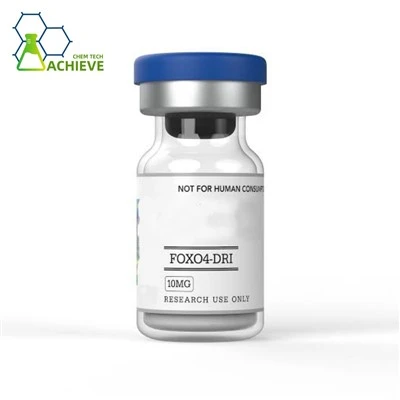

The liver serves as the body's central metabolic hub, orchestrating complex processes that determine how fats are stored, broken down, and utilized. When hepatic lipid metabolism becomes dysregulated, it can lead to conditions like non-alcoholic fatty liver disease and metabolic syndrome. Researchers worldwide are exploring innovative molecular tools to better understand these intricate pathways, and 5 amino 1mq peptide has emerged as a particularly valuable investigational compound in this field.
This small-molecule peptide inhibitor targets nicotinamide N-methyltransferase (NNMT), an enzyme that plays a surprising role in hepatic metabolism. BBy selectively inhibiting NNMT activity, scientists can observe how changes in NAD+ levels influence downstream metabolic pathways, such as SIRT1 activation and mitochondrial function.

1.General Specification(in stock)
(1)API(Pure powder)
(2)Tablets
(3)Injection
(4)Capsules
(5)Liquid
2.Customization:
We will negotiate individually, OEM/ODM, No brand, for secience researching only.
Internal Code:KP-3-5/002
NNMTi CAS 42464-96-0
Molecular formula: C10H11N2.I
HS code: N/A
Molecular weight: 286.11
EINECS number: 464-196-0
Main market: USA, Australia, Brazil, Japan, Germany, Indonesia, UK, New Zealand , Canada etc.
Analysis: HPLC, LC-MS, HNMR
Technology support: R&D Dept.-4
We provide 5-Amino-1MQ Peptide Injection, please refer to the following website for detailed specifications and product information.
Product:https://www.kpeptide.com/peptides-healthy/5-amino-1mq-peptide-injection.html

Why Is 5 Amino 1MQ Peptide Studied in Liver Lipid Metabolism Research?
Researchers didn't always see a clear link between NNMT and liver chemistry. At first, this enzyme was studied for its part in breaking down drugs. But more recent research has shown that it has a big effect on keeping the energy balance of cells. There is a strong link between NNMT expression levels and lipid buildup patterns in liver tissue. This makes it an interesting target for metabolic study.
Researchers in the lab have shown that NNMT activity rises significantly in liver samples from people whose metabolism isn't working right. It looks like this upregulation makes a metabolic environment that helps make lipids while lowering the ability to burn fat at the same time. NAD+ is used up by the enzyme. Researchers see a change in these metabolic profiles when they add 5 amino 1mq peptide to liver cell cultures.

Research Model Advantages and Experimental Flexibility

From a scientific point of view, 5 amino 1mq peptide has a number of benefits that make it ideal for studying liver metabolism. Because it is very selective for NNMT, we can be sure that the effects we see are caused by this one enzyme pathway and not by interactions with other molecules. Researchers were able to get meaningful inhibition at reasonable amounts because the substance has great cellular permeability.
Because the peptide is stable in living systems, it can be used in both short-term and long-term experiments. Short-term exposure studies show right away metabolic reactions, while long-term administration methods show changes in gene expression and cellular architecture that are adaptive. Because of this, research teams have been able to make full models of how NNMT activity affects the balance of lipids in the liver over a range of time periods.

How Researchers Explore Hepatic Lipid Pathways With 5 Amino 1MQ Peptide
To study biological systems that are very complicated, you need to use methodical approaches that combine different types of experiments. Researchers who are interested in liver lipid metabolism use the 5 amino 1mq peptide in carefully planned experiments that include everything from molecular tests to studies of the whole body. Each stage of the trial adds something new that helps us learn more about how the liver controls metabolism.
Primary hepatocytes and liver cell lines are essential for researching cellular lipid metabolism. Researchers frequently cultivate these cells in metabolic stress-like conditions, such as high fatty acid or glucose levels. In these settings, lipid droplets form within cells, indicating metabolic issues.
Researchers employ unique staining techniques to measure cell lipids after adding the 5 amino 1mq peptide to various test systems. Oil Red O spotting indicates neutral lipid accumulation, and biochemical separation procedures allow exact triglyceride measurements. Peptide time-course tests demonstrate that it progressively reduces lipid accumulation. Treated effects are seen within hours and intensify over many days.
Shape results are supported by gene expression research. Researchers use RNA from treated and untreated cells to measure metabolic enzyme levels. Researchers found that the 5 amino 1mq peptide decreases fat-making genes like FAS and ACC and increases fat-breaking genes like CPT1 and ACOX1. These combined modifications alter cell metabolism significantly.

Metabolic Flux Measurements and Pathway Tracing

To figure out how molecules move through biochemical routes, you need to use complex tracing methods. Scientists use fuels that are labelled with stable isotopes, like fatty acids or glucose molecules, to follow their chemical path inside hepatocytes. Then, mass spectrometry figures out which biochemical products have these marks on them, showing which pathways broke down the substrate.
Studies that used this method with the 5 amino 1mq peptide treatment showed very interesting outcomes. Labelled fatty acids are more likely to be added to reactive pathways than to be stored as triglycerides. Instead of being sent to de novo lipogenesis, glucose carbons show up more often in processes that make energy. These measurements of flux show that blocking NNMT fundamentally changes how substrates are used in the liver so that energy is used instead of stored.
Animal model studies are essential to link cell discoveries to organism behaviour. Scientists employ dietary models of hepatic lipid accumulation. They feed lab mice high-fat diets that invariably develop hepatic steatosis within weeks. After hepatic lipid buildup, researchers administer the 5 amino 1mq peptide via various routes and dosage regimens to examine liver shape and function.During the investigation, magnetic resonance spectroscopy can monitor hepatic lipid levels without touching the liver.


Final examinations include microscopy examination of liver tissue sections, biochemistry, triglyceride measurement, and gene expression profiling. Several investigations have indicated that the peptide decreases hepatic steatosis, elevates liver inflammatory markers, and restores metabolic control gene expression.
Blood chemistry screenings reveal ways to boost body metabolism. Lower blood triglycerides and improved insulin sensitivity are typical. Blocking hepatic NNMT impacts metabolism throughout the body, not just liver function. This molecule allows adipocytes to communicate with the liver, altering fatty acid flow.

Understanding Liver Metabolic Functions Through 5 Amino 1MQ Peptide Studies
The body of research using the 5 amino 1mq peptide has helped us learn a lot more about how the liver's metabolism works when it's not stressed and when it is. These studies have found surprising links between lipid handling, methylation biology, and the energy state of cells that weren't known before.
A lot of what determines the liver's metabolic capacity is the health of its mitochondria. To support the liver's biosynthetic and detoxification tasks, these cells must be able to easily break down fatty acids and keep making ATP. Fatty acids build up as triglycerides when mitochondrial function is low instead of being oxidised for energy.
Using the 5 amino 1mq peptide in research has shed light on how NNMT activity affects the function of mitochondria. NAD+ was caused by peptides.
NNMT inhibition greatly increases the ability of mitochondria to burn fatty acids. To find out how fast hepatocytes can oxidise labelled palmitate or other fatty acid substrates, researchers measure this. The peptide treatment speeds up the rate of oxidation while also lowering the amount of incomplete oxidation products that can stress cells. This increase in antioxidant efficiency helps stop the buildup of lipids that happens in fatty liver diseases.

Transcriptional Networks Governing Lipid Synthesis and Breakdown

Gene regulation determines hepatocyte lipid production or breakdown. PPAR starts fat-burning programs while SREBP-1c turns on lipogenic genes. Whether these conflicting gene systems cooperate determines liver lipid levels.
Researchers employed a 5 amino 1mq peptide to show how inhibiting NNMT balances regulatory networks. The peptide therapy reduces nuclear SREBP-1c and transcriptional activity. This reduces fatty acid and triglyceride gene activity. PPAR activity increases, activating genes that carry fatty acids into mitochondria and oxidise them.
This transcription rewrite is delayed. Time-course studies reveal that adding or altering protein information causes the initial alterations. Transcriptional alterations induce hours- or days-long modifications. By studying this temporal period, researchers found that inhibiting NNMT triggers a sequence of regulatory processes that modify the liver's metabolic capabilities.

Research Applications of 5 Amino 1MQ Peptide in Lipid Regulation Analysis
In addition to basic studies of how things work, the 5 amino 1mq peptide has been used in a number of specialised research areas where precise control over the metabolism of hepatic fats is useful. These uses show how useful the chemical is as a research tool in a range of experimental settings.
A comparative study is needed to understand how metabolic regulation changes across species. To determine NNMT's metabolic role stability, researchers employed a 5 amino 1mq peptide in hepatocytes from various animals. These investigations with diverse animals reveal that inhibiting NNMT has constant metabolic effects even when its expression fluctuates initially.
Lipid accumulation in the liver is significantly lowered in rodent models after strong peptide reaction. Larger animal models exhibit comparable direction changes, but differing response sizes. These findings demonstrate that lab animal results may be transferred to different species, confirming that NNMT is a long-standing metabolic circuit.
Scientists observed NNMT activity in fish and birds, which is noteworthy. The metabolic consequences of NNMT in these species haven't been investigated as thoroughly, but early research shows that it may have been an old regulating mechanism before mammals developed.

Drug Interaction and Combination Treatment Models

Pharmaceutical researchers employ the 5 amino 1mq peptide to study medication interactions and multi-drug treatments. By combining the peptide with other metabolism-affecting substances, scientists can determine its efficacy. This helps develop new drugs.
Combining drugs that inhibit NNMT and activate AMPK, another metabolic regulator, lowers hepatic lipids further. AMPK activation prompts short-term metabolic alterations, whereas NNMT blocking maintains these changes via regulatory systems. Such combination studies help researchers understand how metabolic intervention sites interact.
However, combining the peptide with mitochondrial-damaging compounds negates its benefits. To increase lipid metabolism, NNMT must retain mitochondrial capacity, according to these negative interaction studies. Instead of developing new metabolic pathways, the chemical optimises mitochondrial substrate use. This requires healthy mitochondria for metabolic advantages.
Hepatic metabolism is strongly influenced by dietary status. Researchers studied how 5 amino 1mq peptide affects meal type and eating level. These studies illustrate NNMT's metabolic role's situational importance.
The peptide reduces liver lipid accumulation the most when patients consume a lot of fat. This reveals that NNMT activity is particularly problematic when lipids are high, causing harmful fat accumulation. Hepatocytes can handle huge quantities of fat without steatosis with the peptide. This maintains oxidative metabolism in poor nutrition.


Fasting studies have shown more. When resources are scarce, NNMT synthesis drops and hepatocytes burn fat for energy. When fasting, giving the peptide had only minor effects, suggesting NNMT activity is already low. These findings suggest that NNMT is a fed-state regulator that stores excess nutrients instead of oxidising them.

Future Directions of 5 Amino 1MQ Peptide in Liver Metabolism Research
Scientists are finding more questions that this tool can help them answer, so they are continuing to study the 5 amino 1mq peptide. A lot of new research is starting to look into how the liver controls metabolism and how that affects the body as a whole.
Most published research has examined short timeframes, from hours to weeks. Long-term research lasting months might indicate whether NNMT inhibition changes hepatocyte function. Do metabolic improvements remain forever, or do compensatory mechanisms restore fat accumulation after peptide treatment?
More study is required to properly understand the good effects of extended-duration studies, although early data show they persist. Researchers are particularly interested in how persistent NNMT inhibition impacts liver ageing. Careful study is needed to determine how NAD affects the liver's capacity to repair after injury.
Learning about long-term adaptability goes beyond broad research. If this research is applied in therapy, it will be crucial to determine whether continuous medication or intermittent doses perform better. These findings will aid clinical protocol development. Currently, model animals with limited lifespans are being constructed to address these concerns quickly.
Daily hepatic metabolism cycles with eating and not eating. NNMT expression varies throughout the day. I wonder whether NNMT-lowering timing influences metabolism. Researchers are incorporating chronobiology into their investigations, utilising the 5 amino 1mq peptide.
Studies that gave the drug at various circadian periods showed metabolic responses altered. Treatment affects gene expression differently during active eating and rest. These findings show that NNMT may have a varied metabolic function at various circadian cycle stages, having a greater impact when nutrients are abundant.
This rhythmic feature makes experiments difficult to understand, but it helps us uncover the best strategies to heal patients. Finding out when NNMT activity has the greatest impact on lipid metabolism might assist in building metabolically compatible medicines. Researchers are trying to match 5 amino 1mq peptide delivery with food and light-dark cycles to enhance metabolic advantages and minimise circadian coordination problems.
Human metabolic responses vary according to genetic and environmental influences. Some experimental animals respond dramatically to NNMT blocking, whereas others react modestly. This heterogeneity, like metabolic diseases in humans, raises crucial issues concerning what determinants govern response magnitude.
Researchers are using genome-wide association studies in genetically varied animal populations to uncover variations that affect how animals respond to the 5 amino 1mq peptide. A previous study suggests that NAD-genes vary.
The environment impacts response diversity. The peptide affects metabolism differently in animals with varied gut microbiomes, habitats, and stress levels. Systematically documenting these environmental elements will help researchers understand how NNMT impacts metabolism and establish the ideal conditions for its advantages.
Conclusion
Our knowledge of how the liver handles fats has grown a lot thanks to research into the 5 amino 1mq peptide. This selective NNMT inhibitor has helped researchers break down complicated metabolic networks and show how NAD+ levels act as a metabolic switch, orchestrating fatty acid oxidation, de novo lipogenesis, and ketogenesis in response to nutritional cues.
As long as the compound is used in study labs around the world, more breakthroughs will be made that shed more light on the complex biochemistry that controls liver metabolism. It is certain that the 5 amino 1mq peptide will continue to be useful for metabolic studies even as testing methods improve and research questions get more complex.
FAQ
1. What makes 5 amino 1mq peptide particularly useful for studying liver lipid metabolism?
+
-
Because the compound is very selective for NNMT, researchers can say that the changes they see in metabolism are caused by this specific enzyme pathway. Because it is stable in biological systems and lets cells pass through them easily, it can be used in both short-term and long-term experiments. By blocking NNMT, the peptide raises NAD+ levels in the liver.
2. How do researchers measure the effects of 5 amino 1mq peptide on hepatic lipid content?
+
-
Scientists use a variety of techniques that work well together. These include using lipid-specific stains like Oil Red O to see things under a microscope, molecular extraction and measurement of tissue triglyceride levels, and advanced imaging techniques like magnetic resonance spectroscopy. Gene expression analysis shows changes in transcripts for lipogenic and lipolytic enzymes. Metabolic flux studies using isotope-labeled substrates show how hepatocytes handle fatty acids and other nutrients in different treatment conditions.
3. What aspects of liver metabolism beyond lipid handling does this peptide help investigate?
+
-
While lipid metabolism represents a primary research focus, NNMT inhibition influences broader aspects of hepatic function, including glucose metabolism, amino acid processing, and methylation biology. The peptide helps scientists figure out how energy levels, mitochondrial function, inflammation signalling, and metabolic gene control are all linked.

Partner With a Trusted 5 Amino 1MQ Peptide Supplier for Your Research
Bloom Tech is ready to help you with your scientific work when you need research-grade compounds that have been tested for purity and come with full analytical documentation. As a specialist provider of 5 amino 1mq peptides, we offer materials that meet strict quality standards and come with full COA paperwork, HPLC verification, and mass spectrometry proof. Our experienced quality assurance team and GMP-certified manufacturing facilities make sure that batch-to-batch consistency is maintained, which is necessary for research results that can be repeated.
BLOOM TECH provides reliable supply chain management and quick technical help to academic institutions, biotechnology research groups, and pharmaceutical businesses all over the world. We offer reasonable prices, a variety of packaging choices, and fast logistics to help you keep your study projects on track and on budget. Our team offers personalised service that is geared to your exact needs, whether you need milligram amounts for basic studies or large amounts for longer investigations.
Get in touch with our science experts to talk about the needs of your project and get full product specs. Get premium research compounds from BLOOM TECH today by emailing Sales@bloomtechz.com. They offer quality assurance that you can trust.
References
1. Kraus D, Yang Q, Kong D, Banks AS, Zhang L, Rodgers JT, Pirinen E, Pulinilkunnil TC, Gong F, Wang YC, Cen Y, Sauve AA, Asara JM, Peroni OD, Monia BP, Bhanot S, Alhonen L, Puigserver P, Kahn BB. Nicotinamide N-methyltransferase knockdown protects against diet-induced obesity. Nature. 2014;508(7495):258-262.
2. Komatsu M, Kanda T, Urai H, Kurokochi A, Kitahama R, Shigaki S, Ono T, Yukioka H, Hasegawa K, Tokuyama H, Kawashima K, Matsumoto N, Takahashi K, Hitomi H. NNMT activation can contribute to the development of fatty liver disease by modulating the NAD+ metabolism. Scientific Reports. 2018;8(1):8637.
3. Ulanovskaya OA, Zuhl AM, Cravatt BF. NNMT promotes epigenetic remodeling in cancer by creating a metabolic methylation sink. Nature Chemical Biology. 2013;9(5):300-306.
4. Hong S, Moreno-Navarrete JM, Wei X, Kikukawa Y, Tzameli I, Prasad D, Lee Y, Asara JM, Fernández-Real JM, Maratos-Flier E, Pissios P. Nicotinamide N-methyltransferase regulates hepatic nutrient metabolism through Sirt1 protein stabilization. Nature Medicine. 2015;21(8):887-894.
5. Neelakantan H, Vance V, Wetzel MD, Wang HL, McHardy SF, Finnerty CC, Hommel JD, Watowich SJ. Selective and membrane-permeable small molecule inhibitors of nicotinamide N-methyltransferase reverse high fat diet-induced obesity in mice. Biochemical Pharmacology. 2018;147:141-12.
6. Pozzi V, Campagna R, Sartini D, Emanuelli M. Nicotinamide N-Methyltransferase as Promising Tool for Management of Gastrointestinal Neoplasms. Biomolecules. 2022;12(9):1173.