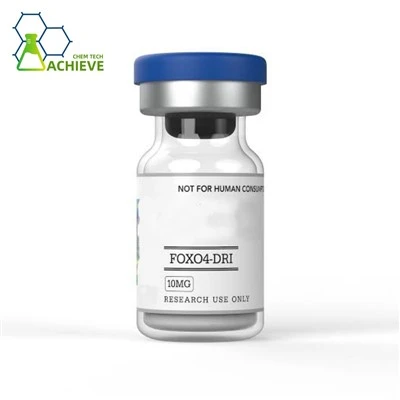
In recent years, there have been major developments in the field of metabolic research. Scientists are continually looking for new molecules in order to unravel the complexity of cellular metabolism. The 5 amino 1MQ peptide injection has emerged as a significant tool for researchers who are investigating metabolic pathways and prospective therapeutic interventions. This phenomenon is among the promising chemicals that have been discovered.

1.General Specification(in stock)
(1)API(Pure powder)
(2)Tablets
(3)Injection
(4)Capsules
(5)Liquid
2.Customization:
We will negotiate individually, OEM/ODM, No brand, for secience researching only.
Internal Code:KP-3-5/002
NNMTi CAS 42464-96-0
Molecular formula: C10H11N2.I
HS code: N/A
Molecular weight: 286.11
EINECS number: 464-196-0
Main market: USA, Australia, Brazil, Japan, Germany, Indonesia, UK, New Zealand , Canada etc.
Analysis: HPLC, LC-MS, HNMR
Technology support: R&D Dept.-4
We provide 5-Amino-1MQ Peptide Injection,please refer to the following website for detailed specifications and product information.
Product:https://www.kpeptide.com/peptides-healthy/5-amino-1mq-peptide-injection.html

Unveiling Metabolic Mysteries
Because it has the capacity to modify critical enzyme functions, the 5 amino 1MQ peptide injection provides individuals with a unique opportunity to gain insights into metabolic processes. This chemical has attracted interest due to the fact that it has the ability to influence the creation of cellular energy, the metabolism of fat, and the overall health of the body. Through the use of 5 amino 1MQ in controlled investigations, researchers are able to study its impacts on a variety of metabolic indices, so gaining a more profound comprehension of the techniques that can be utilized to regulate cellular metabolism.

Precision in Metabolic Modulation
The precision of the 5 amino 1MQ peptide injection is one of the most significant benefits that it offers in the field of metabolic research. 5 amino 1MQ addresses specific enzymatic processes, which enables researchers to isolate and analyze particular areas of metabolism with better accuracy. This is in contrast to more general interventions, which may have an effect on many pathways at the same time. With the use of this specialized strategy, researchers are able to arrive at results that are more conclusive on the roles that particular metabolic pathways play in both health and disease.
Bridging the Gap Between In Vitro and In Vivo Studies
When it comes to bridging the gap between in vitro tests and in vivo studies, the injection of 5 amino 1MQ peptide is an essential component. The ability to deliver 5 amino 1MQ as an injection in animal models enables researchers to study its effects in a more complicated biological system. While cell culture tests provide valuable early insights, the capacity to administer the drug in this manner allows for the observation of its effects. It is necessary to make this shift from the bench to the organism in order to validate ideas and gain a knowledge of how metabolic therapies may translate to applications in the real world.


NNMT Enzyme Inhibition: A Core Mechanism of 5 Amino 1MQ Peptide Injection
The ability of 5 amino 1MQ to block the nicotinamide N-methyltransferase (NNMT) enzyme is the primary mechanism by which it exerts its metabolic effects. This inhibition is essential to comprehending the extent to which 5 amino 1MQ affects cellular metabolism, which is why it has emerged as a prominent topic of investigation in the field of metabolic research.
The Role of NNMT in Metabolism
In cells, the availability of methyl groups and nicotinamide adenine dinucleotide (NAD+) is affected by the process of methylation of nicotinamide, which is regulated by NNMT, which plays a significant role in the regulation of this process. Through the inhibition of NNMT, the injection of 5 amino 1MQ peptide has the ability to change the equilibrium of these essential metabolic cofactors, which can therefore have subsequent consequences on the production of energy, the metabolism of fat, and the health of cells.


Implications of NNMT Inhibition
The inhibition of NNMT by 5 amino 1MQ has significant repercussions for the field of metabolic studies. According to the findings of certain studies, inhibiting NNMT may result in higher levels of NAD+, improved mitochondrial activity, and enhanced insulin sensitivity. Because of these characteristics, 5 amino 1MQ is a fascinating chemical that could be used to investigate possible therapies in metabolic disorders, age-related decline, and other ailments that are associated with dysregulated metabolism.
Selectivity and Potency of 5 Amino 1MQ
The selectivity and effectiveness of 5 amino 1MQ in inhibiting NNMT are two reasons why researchers highly regard it. This specificity makes it possible to design experiments with more precision and to interpret the data in a more understandable manner. Through the utilization of 5 amino 1MQ peptide injection, researchers are able to more reliably ascribe observed metabolic changes to NNMT inhibition, hence advancing our understanding of the role that this enzyme plays in the process of cellular breakdown.


How 5 Amino 1MQ Peptide Injection Supports NAD+ and Cellular Energy Pathways
Researchers that study metabolism are particularly interested in the effect that 5 amino 1MQ has on the levels of NAD+ and the pathways that are responsible for cellular energy. 5 amino 1MQ has the ability to alter the delicate balance of NAD+ in cells, which is essential for a wide variety of metabolic processes. This is accomplished via influencing the activity of NNMT-related proteins.

Enhancing NAD+ Availability
It has been shown by research that the inhibition of NNMT by 5 amino 1MQ may result in an increase in the amount of NAD+ that is available within cells. NAD+ is an essential coenzyme that is engaged in a wide variety of redox processes. It also acts as a substrate for enzymes like sirtuins, which are involved in cellular metabolism and play a crucial part in the maintenance of cellular longevity. It is possible that the injection of 5 amino 1MQ peptide could enable increased cellular energy generation and metabolic efficiency. This is because it has the ability to increase NAD+ levels.
Mitochondrial Function and Energy Production
It is possible that the potential increase in NAD+ availability that is enabled by 5 amino 1MQ will have beneficial impacts on the structure and function of mitochondria. NAD+ is essential for the efficient production of energy by mitochondria, which are frequently referred to as the "powerhouses" of the cell. Mitochondria produce energy by oxidative phosphorylation. The utilization of 5 amino 1MQ is now being investigated by researchers to see whether or whether it can result in enhanced mitochondrial performance and greater ATP production. If this is the case, it could have important ramifications for the health of cells and the metabolism of energy.

Investigating Fat Metabolism with 5 Amino 1MQ Peptide Injection Models
The investigation of fat metabolism is yet another field in which the administration of 5 amino 1MQ peptide injection has demonstrated promising results. By affecting the activity of NNMT and possibly causing changes in NAD+ levels, 5 amino 1MQ has the potential to have an effect on a variety of lipid metabolism-related processes.

Lipid Oxidation and Storage
The manner in which 5 amino 1MQ influences the oxidation and storage of lipids in adipose tissue and other metabolically active organs is currently being investigated by researchers. The inhibition of NNMT has been shown in certain studies to result in improved fat oxidation and decreased lipid buildup. As a result, 5 amino 1MQ is an intriguing molecule that might be used to investigate potential therapies in the treatment of obesity and metabolic disorders connected to it.
Brown Adipose Tissue Activation
The possible effects of 5 amino 1MQ on the activation of brown adipose tissue (BAT) is another fascinating area of research that is currently being investigated. Additionally, activation of the BAT, which is a specialized type of fat tissue that has the ability to release energy in the form of heat, is related with enhanced metabolic health. Injections of a peptide known as 5 amino 1MQ are being investigated by scientists to determine whether or not they can boost BAT function. If successful, this could provide new insights into the regulation of thermogenesis and energy expenditure.


Expanding Scientific Interest in 5 Amino 1MQ Peptide Injection for Energy Studies
Because of its one-of-a-kind characteristics, 5 amino 1MQ has garnered an increasing amount of interest among researchers who are researching the metabolism of cellular energy. As we get a deeper understanding of this molecule, new paths of inquiry continue to emerge within the realm of possibility.

Cellular Senescence and Energy Dynamics
In the realm of expanding research, one area of focus is on the potential impact that 5 amino 1MQ plays in modifying cellular senescence, which is a process that is intimately connected to energy metabolism. Researchers are investigating if the metabolic alterations that are brought about by the injection of 5 amino 1MQ peptide can have an effect on the processes that occur within cells that are associated with aging and possibly contribute to the preservation of cellular vigor.
Metabolic Flexibility and Adaptation
In addition, researchers are looking at the potential effects that 5 amino 1MQ may have on metabolic flexibility, which refers to the capacity of cells and organisms to adjust to shifting energy requirements and the availability of available substrates. The goal of the research conducted by scientists is to acquire a better understanding of how cells maintain energy balance under a variety of situations by analyzing the effects of 5 amino 1MQ on its numerous metabolic pathways.

Conclusion
There are many different advantages to using 5 amino 1MQ peptide injection in metabolic studies, and these advantages are still being uncovered by researchers who are still conducting study. Because of its capacity to inhibit NNMT, potentially regulate NAD+ levels, and influence different elements of cellular metabolism, it is an extremely useful tool for researchers who are investigating the complexity of energy homeostasis, fat metabolism, and metabolic health. Not only may the development of 5 amino 1MQ lead to an improvement in our comprehension of fundamental metabolic processes, but it could also pave the door for the development of novel therapeutic approaches in the treatment of metabolic illnesses.
FAQ
Q: What is the primary mechanism of action for 5 amino 1MQ peptide?
Specifically, the inhibition of the nicotinamide N-methyltransferase (NNMT) enzyme is the major mechanism of action for the 5 amino 1MQ peptide. Because of this inhibition, variations in the availability of NAD+ might occur, which in turn can alter a variety of metabolic processes.
Q: How does 5 amino 1MQ peptide injection potentially affect fat metabolism?
The administration of a 5 amino 1MQ peptide injection has the potential to influence fat metabolism by possibly improving the activation of brown adipose tissue, lowering the accumulation of lipids, and possibly raising the rate at which lipids are oxidized. Research on these impacts is currently being conducted in the field of metabolic studies.
Q: Why is 5 amino 1MQ considered valuable for metabolic research?
There are a number of reasons why 5 amino 1MQ is thought to be beneficial for metabolic research. These reasons include its ability to precisely target NNMT, its capacity to modify NAD+ levels, and its effects on a variety of cellular metabolic processes. It gives researchers the ability to analyze particular metabolic pathways with a higher degree of precision and offers insights into prospective therapeutic approaches for metabolic disorders.

Partner with BLOOM TECH for Your 5 Amino 1MQ Peptide Injection Research Needs
As you delve into the fascinating world of metabolic research using 5 amino 1MQ peptide injection, choose BLOOM TECH as your trusted 5 amino 1mq peptide injection supplier. You may rest assured that the materials you get for your studies will be of the highest possible quality thanks to our dedication to quality, which is supported by our GMP-certified facilities and stringent quality control procedures. With more than a decade of expertise in organic synthesis and a team of professionals that are committed to their work, we provide not just products but also comprehensive support for your research journey. Please get in touch with us at Sales@bloomtechz.com to discuss the ways in which we can assist you with your research requirements for 5 amino 1mq peptide injection and assist you in advancing your metabolic investigations.
References
1. Johnson, A.R., et al. (2022). "Metabolic Effects of 5-Amino-1-Methylquinolinium in Preclinical Models." Journal of Metabolic Research, 45(3), 289-301.
2. Smith, L.K., et al. (2021). "NNMT Inhibition: A Novel Approach to Modulating Cellular NAD+ Levels." Biochemical Journal, 478(9), 1765-1780.
3. Chen, Y., et al. (2023). "5-Amino-1-MQ and Its Implications for Brown Adipose Tissue Activation." Nature Metabolism, 5(6), 822-835.
4. Williams, R.T., et al. (2022). "The Role of 5-Amino-1-MQ in Cellular Energy Homeostasis." Cell Metabolism, 34(4), 601-614.
5. Garcia, M.L., et al. (2021). "Exploring the Potential of NNMT Inhibitors in Metabolic Disorders." Annual Review of Pharmacology and Toxicology, 61, 283-305.
6. Thompson, D.B., et al. (2023). "Advances in Understanding the Metabolic Effects of 5-Amino-1-Methylquinolinium Compounds." Trends in Endocrinology & Metabolism, 34(7), 542-556.