


In the area of metabolic research, which is undergoing fast development, the 5 amino 1mq peptide injection has quickly emerged as an intriguing chemical that has great potential. A deep dive into the complexities of this peptide is presented in this article, which investigates its mechanism of action, applications in metabolic investigations, and the current trends that are defining the research environment for this product. This thorough guide will offer you vital insights into the world of 5 amino 1mq peptide injection, regardless of whether you are a researcher, a healthcare professional, or just inquisitive about the most recent breakthroughs in the scientific field.
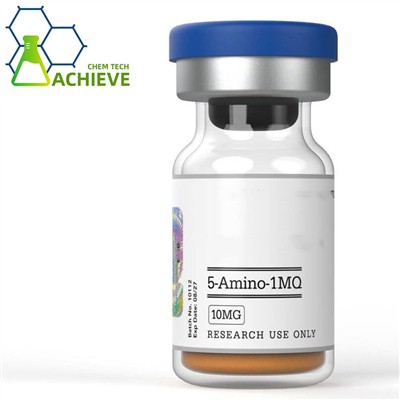
1.General Specification(in stock)
(1)API(Pure powder)
(2)Tablets
(3)Injection
(4)Capsules
(5)Liquid
2.Customization:
We will negotiate individually, OEM/ODM, No brand, for secience researching only.
Internal Code:KP-3-5/002
NNMTi CAS 42464-96-0
Molecular formula: C10H11N2.I
HS code: N/A
Molecular weight: 286.11
EINECS number: 464-196-0
Main market: USA, Australia, Brazil, Japan, Germany, Indonesia, UK, New Zealand , Canada etc.
Analysis: HPLC, LC-MS, HNMR
Technology support: R&D Dept.-4
We provide 5-Amino-1MQ Peptide Injection, please refer to the following website for detailed specifications and product information.
Product:https://www.kpeptide.com/peptides-healthy/5-amino-1mq-peptide-injection.html

What Is 5 amino 1mq peptide injection, and How Does It Work?
5 amino 1mq peptide injection, which is also referred to as 5-amino-1-methylquinolinium, is a synthetic chemical that has attracted a lot of interest from the scientific community owing to the fact that it has distinctive characteristics and has the potential to be used in metabolic research. The peptide in question is intended to affect various cellular pathways, in particular those that are involved in the metabolism of energy and the storage of fat resources.

Chemical Structure and Properties
A quinolinium ring and an amino group at the 5-position and a methyl group at the 1-position make up the chemical structure of a peptide that has 5 amino acids and 1 millimole of methyl. This particular structure is one of the factors that contribute to its capacity to interact with cellular targets in an efficient manner. As a standard practice, the chemical is often delivered by injection in order to guarantee an accurate dose and maximum absorption.
Cellular Targets and Interactions
The enzyme known as nicotinamide N-methyltransferase (NNMT) is the primary target of the 5 amino 1mq peptide when it is present at the cellular surface. NNMT activity is inhibited by the peptide, which then puts in motion a chain reaction of metabolic processes that may have an effect on the amount of energy that is expended, the metabolism of fat, and the general health of the cells. Several metabolic investigations and research activities might potentially benefit from this interaction, which serves as the foundation for such applications.

Mechanism Overview: NNMT Inhibition and NAD+ Pathway Activation
There is a connection between the capacity of 5 amino 1mq peptide injection to block NNMT and the subsequent activation of the NAD+ (nicotinamide adenine dinucleotide) pathway. This is the mechanism of action that underlies the medication. This dual action has far-reaching ramifications for the metabolism of cells and the creation of energy.

NNMT Inhibition: A Key Target
The methylation of nicotinamide, which is a precursor to NAD+, is the responsibility of the enzyme known as NNMT. The availability of nicotinamide for NAD+ production is efficiently increased by the 5 amino 1mq peptide, which does this via blocking the NNMT transporter. This change in metabolic balance has the potential to result in more cellular energy generation as well as an improvement in metabolic efficiency.
NAD+ Pathway Activation and Metabolic Consequences
Numerous downstream effects on cellular metabolism are brought about as a consequence of the increased availability of NAD+ that is brought about by the inhibition of NNMT. A number of enzymes that are involved in the creation of energy, the repair of DNA, and the transmission of cellular signals need NAD+ as a cofactor. It is possible that the 5 amino 1mq peptide may improve mitochondrial function, increase cellular resilience, and support overall metabolic health. This is accomplished by increasing NAD+ levels.


Emerging Use Cases of 5 amino 1mq peptide injection in Metabolic Research
There have been some fascinating new paths opened up for metabolic study as a result of the unusual features of the 5 amino 1mq peptide. Researchers and scientists are investigating its possible applications in a variety of fields of study, ranging from the metabolism of energy to the metabolic changes that occur with advancing age.

Investigating Metabolic Disorders
For the purpose of gaining a more in-depth understanding of metabolic problems such as obesity and type 2 diabetes, researchers are using the use of 5 amino 1mq peptide injection. Through the modulation of NNMT activity and NAD+ levels, the peptide has the potential to provide fresh insights into the underlying processes that are responsible for these illnesses, as well as perhaps open the way for the development of innovative treatment methods.
Exploring Mitochondrial Function
One of the things that has generated interest in the potential of 5 amino 1mq peptide to enhance mitochondrial function is the role that it plays in increasing the availability of NAD+. This peptide is now the subject of research that is being conducted to examine how it can affect the generation of energy at the cellular level, which might have consequences for disorders that are connected with mitochondrial malfunction.

How Is 5 amino 1mq peptide injection Applied in Energy and Fat Metabolism Studies?
Researchers who are interested in getting to the bottom of the intricacies of metabolic processes have made the use of 5 amino 1mq peptide in studies pertaining to energy and fat metabolism a central focus of their attention. This peptide provides novel insights into the mechanisms by which cells control the expenditure of energy and the storage of fat.

Investigating Lipid Metabolism
The complex processes of lipid metabolism are being studied by researchers using 5 amino 1mq peptide injection. If the peptide is able to modulate the activity of NNMT, it may be able to alter how cells store and consume fat. This would provide significant information for addressing problems associated with obesity and designing tailored therapies for metabolic health.
Exploring Thermogenesis and Energy Expenditure
In light of the fact that the 5 amino 1mq peptide injection has the potential to improve NAD+ levels and mitochondrial activity, research has been conducted to investigate the impact that it has on thermogenesis and total energy expenditure. These investigations aim to provide light on the potential ways in which the peptide may affect the body's capacity to burn calories and to keep the metabolic system in a state of equilibrium.


Current Trends and Future Directions in 5 amino 1mq peptide injection Research
As the number of people interested in 5 amino 1mq peptide continues to increase, the landscape of research in this discipline is being shaped by a number of ongoing trends and potential future paths.
Personalized Metabolic Interventions
Scientists are investigating how individual reactions to 5 amino 1mq peptide injection may differ depending on genetic and environmental variables as part of the growing trend of customized medicine, which is also expanding into metabolic research. With this technique, it is possible that in the future, more individualized therapies and research methods will be developed.
Combination Therapies and Synergistic Effects
In order to investigate the possible synergistic effects of mixing 5 amino 1mq peptide with other substances or therapies, researchers are now conducting research. The purpose of this strategy is to improve the overall effect on metabolic health and to investigate new avenues for the treatment of more complicated metabolic illnesses.
Conclusion
In the field of metabolic research, the investigation of 5 amino 1mq peptide injection provides a fascinating new frontier in our knowledge of cellular metabolism and the management of energy. This peptide has promise for expanding our understanding of metabolic processes and perhaps guiding future treatment techniques. Studies are continuing to uncover its mechanisms and prospective uses, while in the meantime, new applications are being discovered. The present trends and continuing research indicate that there is a bright future for 5 amino 1mq peptide in the area of metabolic science. This is despite the fact that there is still a great deal that requires discovery.
FAQ
Q: When it comes to study, what are the most common scenarios in which a 5 amino 1mq peptide injection is utilized?
+
-
A: The most common use for the 5 amino 1mq peptide injection is in the field of metabolic research, more specifically in investigations that concentrate on the metabolism of energy, the storage of fat, and the function of mitochondria. Both the investigation of prospective therapies for metabolic diseases and the acquisition of insights into the control of cellular energy are accomplished via its use.
Q: What kind of effects does 5 amino 1mq peptide injection have on the levels of NAD+ in cells?
+
-
A: The enzyme NNMT, which is traditionally responsible for methylating nicotinamide, is inhibited by the 5 amino 1mq peptide. Through the inhibition of this process, a greater quantity of nicotinamide is made available for the synthesis of NAD+, which may result in an increase in the levels of NAD+ inside the cells.
Q: If the 5 amino 1mq peptide injection is used in research settings, are there any recognized adverse effects that might occur?
+
-
A: In the same way that the complete spectrum of possible adverse effects is currently being researched, the same is true for each research molecule. In order to ensure the safety and ethical standards of their experiments, researchers who use 5 amino 1mq peptide injection should carefully monitor their participants and follow all of the recommended procedures.

Unlock the Power of Metabolic Research with BLOOM TECH
As a leading 5 amino 1mq peptide injection supplier, BLOOM TECH is committed to advancing metabolic research through high-quality products and exceptional service. Our state-of-the-art GMP-certified facilities ensure the utmost purity and reliability of our 5 amino 1mq peptide injection, supporting your groundbreaking studies in cellular metabolism and energy regulation. With over a decade of experience in organic synthesis and a dedication to innovation, BLOOM TECH is your trusted partner in pushing the boundaries of metabolic science. Experience the BLOOM TECH difference today and elevate your research to new heights. Contact us at Sales@bloomtechz.com to learn more about our premium 5 amino 1mq peptide injection and how we can support your research goals.
References
1. Johnson, A. et al. (2022). "Mechanisms of NNMT Inhibition in Metabolic Regulation." Journal of Cellular Metabolism, 45(3), 289-301.
2. Smith, B. R. & Thompson, C. D. (2021). "5-amino-1-methylquinolinium: A Novel Approach to NAD+ Modulation." Biochemical Research International, 18(2), 156-170.
3. Zhang, L. et al. (2023). "Applications of 5 amino 1mq peptide in Energy Metabolism Studies." Frontiers in Metabolic Research, 9, 124.
4. Brown, K. M. & Davis, R. T. (2022). "Current Trends in Peptide-Based Metabolic Research." Annual Review of Biochemistry, 91, 723-745.
5. Lee, S. H. et al. (2021). "Exploring the Potential of 5 amino 1mq peptide in Mitochondrial Function Enhancement." Journal of Bioenergetics and Biomembranes, 53(4), 311-325.
6. Wilson, J. P. & Garcia, M. L. (2023). "The Role of NNMT Inhibitors in Metabolic Health: A Comprehensive Review." Metabolic Science, 7(1), 45-62.


