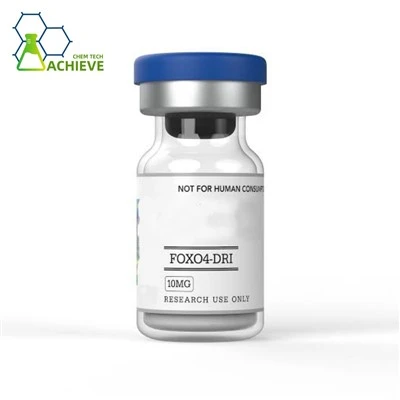
Metabolism research is fascinating as scientists discover molecular switches that control cell energy production and usage. Nicotinamide N-methyltransferase (NNMT) is a key enzyme in metabolic health, cellular ageing, and energy management. Researchers studying NNMT pathways use 5 amino 1mq peptide injection to precisely study how this enzyme influences cellular metabolism. This small molecule chemical is ideal for metabolic syndrome, adipose tissue function, and age-related metabolic decline research due to its unique features.
To understand NNMT's significance in human health, instruments must specifically modify its activity without affecting other cellular processes. The 5 amino 1mq peptide injection allows researchers to separate NNMT-related effects from numerous other biochemical responses in living systems. As metabolic problems continue to plague healthcare systems globally, NNMT research may provide new ways to treat obesity, insulin resistance, and metabolic ageing.

1.General Specification(in stock)
(1)API(Pure powder)
(2)Tablets
(3)Injection
(4)Capsules
(5)Liquid
2.Customization:
We will negotiate individually, OEM/ODM, No brand, for secience researching only.
Internal Code:KP-3-5/002
NNMTi CAS 42464-96-0
Molecular formula: C10H11N2.I
HS code: N/A
Molecular weight: 286.11
EINECS number: 464-196-0
Main market: USA, Australia, Brazil, Japan, Germany, Indonesia, UK, New Zealand , Canada etc.
Analysis: HPLC, LC-MS, HNMR
Technology support: R&D Dept.-4
We provide 5-Amino-1MQ Peptide Injection, please refer to the following website for detailed specifications and product information.
Product:https://www.kpeptide.com/peptides-healthy/5-amino-1mq-peptide-injection.html

Why Do Scientists Use 5 Amino 1MQ Peptide Injection in NNMT Studies?
The main reason researchers choose 5 amino 1mq for NNMT studies is that it is very selective. This substance only affects NNMT function, while broad-spectrum metabolic modulators change many enzymatic pathways. 5 amino 1mq can bind to the NNMT enzyme and stop it from methylating nicotinamide because of the way its molecules are structured. This level of accuracy gets rid of variables that can make it hard to understand the data when using less specific compounds.
This selectivity is useful for research labs because it lets them make clean experimental designs. When scientists give 5 amino 1mq peptide injections to cell cultures or animal models, they can be sure that the metabolic changes they see are caused by blocking NNMT and not by effects that are not intended. The clarity makes it easier to understand what role NNMT plays in the body and helps create cause-and-effect links between enzyme activity and metabolic results.
NNMT expression varies greatly across tissues. The highest amounts are in the liver and adipose tissue. Traditional research methodologies struggled to determine how NNMT influences metabolic regulation since it is distributed in several organs. Before the 5 amino 1mq peptide injection, scientists lacked a critical methodological tool. It let them reduce NNMT activity in a study and observe what occurred.
Studies with this chemical have indicated that NNMT has surprising effects on cell NAD+ homeostasis, influencing energy metabolism pathways previously considered to be independent. Scientists observed that inhibiting NNMT affects mitochondrial function, adipogenesis, and insulin sensitivity. Without a specific inhibitor to temporarily suppress NNMT activity in controlled experiments, these data would have been buried.
Progress in science depends on data that can be repeated and checked by different labs on their own. The 5 amino 1mq peptide injection has become a standard method for studying NNMT, which lets researchers from all over the world directly compare their results. Its pharmacological qualities have been well studied, so data from tests done in different places with similar conditions can be compared. This standardisation has sped up the process of learning more about the subject, as experts can build on each other's work with trust that the methods will always be the same.

Experimental Applications of 5 Amino 1MQ Peptide Injection as an NNMT Research Tool
In lab studies, 5 amino 1mq peptide injection in cell culture systems is often used to look at how NNMT affects the energy dynamics of cells. When this is done to adipocyte cultures, researchers see changes that can be measured in the patterns of lipid accumulation, the rates of mitochondrial respiration, and the gene expression profiles that are connected to fat metabolism. Before going on to more complicated animal models, these studies on cells give us a good understanding of how NNMT works at the molecular level.


In cell culture studies with this substance, different concentrations of 5 amino 1mq are usually added to differentiated adipocytes or hepatocytes, and then metabolic markers further down the line are measured. Scientists keep an eye on NAD+ levels, check the activity of genes like CPT1A and ACOX1 that help burn fat, and count the number of copies of mitochondrial DNA to find out how healthy the metabolism is. Hypotheses about NNMT's roles in whole-organism metabolism are based on the evidence from these controlled studies.
Another important area where 5 amino 1mq peptide injection is very useful is in preclinical animal studies. Scientists using diet-induced obesity models in mice give the substance on a regular basis to see how it changes body weight, fat distribution, and metabolic factors. Body composition, glucose tolerance, and tissue-specific NNMT activity are measured regularly over the course of several weeks as part of these studies. This gives complete metabolic profiles.


Scientists use ageing models with this compound to see if blocking NNMT can change the metabolic decline that comes with getting older. Researchers have looked at things like muscle mass maintenance, physical endurance, and markers of tissue inflammation after treatment in older mice. The injection method lets you precisely control the amount, which helps you find the best experimental concentrations for different study questions and establish dose-response relationships.
To fully understand how NNMT affects metabolism, we need to do in-depth mechanistic studies that follow biochemical pathways from enzyme inhibition to physiological outcomes. As a therapeutic tool, 5 amino 1mq peptide injection is used by researchers to map these routes. Combining NNMT suppression with different types of analysis, like metabolomics, transcriptomics, and proteomics, helps scientists figure out the complicated web of processes that this enzyme affects.


These molecular studies have shown that blocking NNMT increases the amount of NAD+ available in cells, which then turns on sirtuin proteins, especially SIRT1. This activation sets off effects that change metabolic gene expression, mitochondrial biogenesis, and the amount of energy that the body uses. Scientists have been able to establish these mechanistic links with great accuracy thanks to the ability to start this cascade experimentally through 5 amino 1mq peptide injection.

How Researchers Evaluate NNMT Pathway Changes With 5 Amino 1MQ Peptide Injection
Biomarker Analysis Methods
+
-
To figure out how changes in the NNMT pathway work, you have to measure certain biomarkers that show enzyme activity and the metabolic effects that happen later. Researchers use a variety of scientific methods to figure out how many of these markers are in samples from people who were treated. Measurements of NAD+ and its modified form can directly show changes in NNMT activity. Combining high-performance liquid chromatography with mass spectrometry makes it possible to precisely measure how much of these metabolites are present in biological fluids and tissue samples.
Gene expression profiling adds another level of analysis that shows how blocking NNMT changes metabolic transcriptional processes. Researchers take RNA from fat tissue, liver, or muscle samples that have been treated with a 5 amino 1mq peptide injection. They then use quantitative PCR or RNA sequencing to find out how the expression of metabolic genes has changed. Multiple studies that look at the same patterns of gene expression changes help to prove that NNMT controls certain metabolic pathways.
Functional Metabolic Assessments
+
-
Researchers look at more than just molecular markers to see how NNMT inhibition affects metabolic function. Glucose tolerance tests check how medicine changes the body's ability to handle glucose and respond to insulin. Using metabolic cages to measure energy usage keeps track of changes in how much oxygen is used and how much carbon dioxide is produced, which shows changes in metabolic rate. Imaging or tissue biopsy are two ways to figure out how much fat and lean tissue have changed in the body.
Molecular results are put into a physiological context by these functional tests, which show that biochemical changes lead to real metabolic improvements. When mice given a 5 amino 1mq peptide injection have better glucose tolerance and higher NAD+ levels in adipose tissue, researchers can link molecular processes to functional outcomes. This method of evaluating on multiple levels makes the conclusions about NNMT's metabolic importance stronger.
Temporal Response Profiling
+
-
Systematic temporal profiling is needed to figure out the order of metabolic changes after NNMT inhibition. Researchers set up tests with multiple time points, taking samples from people between hours and weeks after giving them a 5 amino 1mq peptide injection. Early time points record direct molecular reactions, such as changes in enzyme activity and metabolite levels. Later time points show how these responses build up over time and affect tissue remodelling and metabolic phenotypes.
Temporal profiling has shown that some effects of NNMT inhibition happen quickly and others develop more slowly. NAD+ levels usually rise within hours of treatment, but changes in mitochondrial content and the ability to burn fats take days to weeks of long-term NNMT blocking. Researchers can use these time patterns to figure out which effects are direct results of blocking NNMT and which are secondary adaptations to changes in cellular metabolism.

The Importance of 5 Amino 1MQ Peptide Injection in Metabolic Mechanism Research
One of the most important new findings in metabolism studies is the link between NNMT and cellular NAD+ homeostasis. By methylating nicotinamide, NNMT uses up NAD+ intermediates, which could lead to a lack of this important cofactor when the enzyme is working hard. The experimental proof of this link has been greatly helped by studies using 5 amino 1mq peptide injection. Studies show that blocking NNMT boosts the amount of NAD+ available in cells. This turns on NAD+-dependent enzymes like sirtuins that control metabolism and cell health.
This line of research is important for many areas, not just basic metabolism. It has effects on ageing biology, mitochondrial medicine, and ways to treat metabolic diseases. The tools that made these findings possible, especially specific NNMT inhibitors like 5 amino 1mq peptide injection, have made it possible for researchers to go in new directions that weren't possible before. Scientists can now change NAD+ levels in the lab by modulating NNMT, which is an alternative to direct NAD+ supplementation strategies.

Illuminating Adipose Tissue Biology

Adipose tissue does a lot more than just store extra energy; it's also an active hormonal system that affects metabolism all over the body. The fact that NNMT is highly expressed in fat tissue suggests that it plays important roles in how adipose tissue works. However, to confirm these roles, scientists needed to find ways to specifically lower enzyme activity. Researchers using a 5 amino 1mq peptide injection found that blocking NNMT in adipose tissue leads to better fat storage, lowers inflammation signalling, and improves metabolic communication between fat and other tissues.
Scientists now have a better idea of how fat tissue affects metabolic health and disease because of these results. Researchers used to think that obesity was just a buildup of extra fat, but now they know that the quality of the fat cells and metabolic activity play a huge role. It looks like NNMT affects these qualitative aspects of adipose function, which makes it an interesting target for metabolic research. Most of the scientific proof for this point of view comes from studies that used selective inhibitors as research tools.

Connecting Metabolism and Aging

Ageing and metabolic dysfunction seem to be closely linked, with metabolic efficiency decreasing, leading to health problems that come with getting older. NNMT levels rise with age in several tissues, which suggests that too much enzyme activity may play a part in metabolic ageing. Using 5 amino 1mq peptide injections on ageing animal models to test this idea showed that lowering NNMT activity can partially reverse the metabolic decline that comes with getting older, improve mitochondrial function, and lower inflammatory markers that come with getting older.
These studies have shown that NNMT is a link between metabolism and ageing biology, two areas that are becoming increasingly aware of how important it is for them to work together. Being able to change NNMT activity in older people in an experiment is important proof that this enzyme does more than just reflect ageing processes; it also actively adds to changes in metabolism that come with getting older. This new understanding of how things work makes it possible to target biological ageing by changing the NNMT route.


Future Directions for NNMT Studies Using 5 Amino 1MQ Peptide Injection

A new study has shown that NNMT is important in fat tissue and the liver, but there are still a lot of questions about what it does in other tissues. Even though NNMT is found in brain tissue, its neurometabolic roles are still not well known. This enzyme is found in muscle tissue, which is important for metabolic health. Its biochemical meaning is not clear. In the future, researchers will probably use 5 amino 1mq peptide injection to look into how NNMT works in different organs and see if the lessons learned from studying adipose tissue can be applied to other situations.
Tissue-specific delivery devices and other advanced study methods may make it possible to do more targeted NNMT inhibition studies. Researchers could use a combination of 5 amino 1mq peptide injection and localised administration methods to focus on effects in certain organs. The results of these methods would help find out if NNMT's effect on metabolism comes mostly from certain cells or from enzymes working together in different organ systems.
Metabolism is made up of a huge number of pathways that all work together and affect each other through complicated regulatory networks. NNMT is located where NAD+ metabolism, methylation reactions, and energy control all meet, which means it could connect with many other metabolic systems. In the future, scientists will look into how blocking NNMT affects pathways other than the ones that have already been studied. This could lead to the discovery of new connections that change how we understand metabolism.
Combining 5 amino 1mq peptide injection with metabolic pathway modulators may show interactions that work together or against each other. Understanding how blocking NNMT works with changes in food, exercise, or other metabolic treatments would help researchers improve the way they do metabolic studies. These association studies will need complex experimental plans, but they should give us a full picture of where NNMT fits in larger metabolic networks.

Translational Research Applications

NNMT study is still mostly in the developmental stages, using cell and animal models. The information gathered from these studies using tools like 5 amino 1mq peptide injection paves the way for possible translational uses. Scientists are starting to look into whether what they learn from studying NNMT in the lab could help them find solutions to problems with metabolic health in people. This direction for translation needs a lot more study to make sure that any possible uses meet strict standards for safety and effectiveness.
To figure out what role NNMT plays in human metabolism, we need to connect what we know about model systems to human biology. Clinical researchers may look at NNMT expression patterns in tissue samples from people with different metabolic conditions as part of observational studies. By comparing these human data with results from animal studies using 5 amino 1mq peptide injection, we can confirm that the enzyme is useful across species and decide if targeting this pathway in humans is something that needs more research.
Conclusion
With selective inhibitors now available for research use, the study of NNMT and its metabolic functions has moved along much faster. The 5 amino 1mq peptide injection has been very helpful in studying how this enzyme affects the metabolism of energy in cells, the function of adipose tissue, and metabolic changes that happen with age. Scientists have learned about NNMT's roles in NAD+ homeostasis, mitochondrial function, and metabolic regulation in many tissues by carefully planning studies that use this compound.
NNMT research gives us more than just interesting information for school. It helps us learn more about what factors affect metabolic health and where we might be able to help. The tools that made these discoveries possible, especially molecules like 5 amino 1mq, will continue to be very important for finding answers to unanswered questions about how metabolism works. Scientists are learning more about NNMT, which shows that targeted study tools can shed light on complicated biological systems and find connections in metabolism's complicated networks that were previously buried.
FAQ
1. What about the 5 amino 1mq peptide injection makes it a good tool for NNMT research?
+
-
The compound is very good at blocking the NNMT enzyme, which lets researchers focus on effects that are only happening in this metabolic pathway without affecting other processes too much. Its psychoactive qualities have been well studied, which makes it possible to repeat experiments in different labs. The injection method allows for exact doses, which are needed to find dose-response relationships in metabolic tests.
2. How do researchers verify NNMT inhibition after administering the 5 amino 1mq peptide injection?
+
-
Scientists check a number of biomarkers to confirm that the NNMT pathway has been changed. Biochemical tests are used to measure the amount of NNMT enzyme activity in tissue samples for direct testing. Indirect verification involves measuring higher levels of NAD+ and lower levels of methylnicotinamide, which show that NNMT activity has decreased. Gene expression analysis of metabolic genes that are sensitive to NNMT gives more proof that the system is working.
3. What concentration ranges do researchers typically use for NNMT studies with this compound?
+
-
The experimental concentrations change based on the research goals and the model system. For in vitro studies, amounts ranging from 5 to 50 micromolar are often used in cell culture studies. Doses of 25 to 50 milligrams per kilogram of body weight are usually used in animal studies. These doses can be given every day or every other day, depending on the length of the experiment. To find the best dose levels for their experiments, researchers first do preliminary dose-finding studies to set exact concentrations.

Partner With BLOOM TECH for Your NNMT Research Material Needs
BLOOM TECH is a reliable source for 5 amino 1mq peptide injections. They provide research-grade chemicals that meet the strict requirements of metabolic research labs all over the world. Our GMP-certified facilities are regularly checked by foreign regulatory bodies such as the US FDA, PMDA, and CFDA. This makes sure that the standard of your investigations is pharmaceutical-grade. We offer full analytical documentation that supports your research protocols. This includes data from HPLC and mass spectrometry, checks for batch consistency, and detailed certificates of analysis.
BLOOM TECH knows how hard it is to do metabolic research, so we offer a variety of packaging choices, competitive prices with clear margins, and technical help from our team of experts. Our well-established supply chain makes sure that you can always get high-purity chemicals when your study needs them. Our quality-assured materials give you the tools you need to get results that can be repeated and are good enough for publication, whether you're studying cellular metabolism, animal models, or mechanistic pathways. Get in touch with our research support team at Sales@bloomtechz.com to talk about your unique research needs and find out how BLOOM TECH's experience with organic synthesis and pharmaceutical intermediates can help you reach your NNMT research goals.
References
1. Kraus D, Yang Q, Kong D, et al. Nicotinamide N-methyltransferase knockdown protects against diet-induced obesity. Nature. 2014;508(7495):258-262.
2. llmark T, Montano G, Jarvstrat L, et al. Anti-apoptotic quinolone inhibitors of nicotinamide N-methyltransferase sensitize hematological cancer cells to chemotherapy. Biochemical Pharmacology. 2017;128:41-53.
3. Hong S, Moreno-Navarrete JM, Wei X, et al. Nicotinamide N-methyltransferase regulates hepatic nutrient metabolism through Sirt1 protein stabilization. Nature Medicine. 2015;21(8):887-894.
4. Komatsu M, Kanda T, Urai H, et al. NNMT activation can contribute to the development of fatty liver disease by modulating the NAD+ metabolism. Scientific Reports. 2018;8(1):8637.
5. Aksoy S, Szumlanski CL, Weinshilboum RM. Human liver nicotinamide N-methyltransferase: cDNA cloning, expression, and biochemical characterization. Journal of Biological Chemistry. 1994;269(20):14835-14840.
6. Campagna R, Salvolini E, Pompei V, et al. Nicotinamide N-methyltransferase in endothelium protects against oxidant stress-induced endothelial injury. Biochimica et Biophysica Acta Molecular Cell Research. 2021;1868(3):118986.