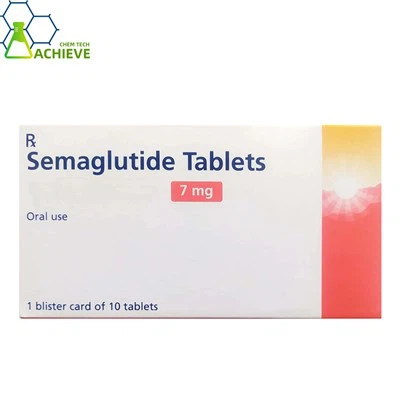



Semaglutide Capsule is not merely a simple conversion of the injectable form to an oral form; it represents a sophisticated revolution in drug delivery. The core challenge lies in enabling this peptide-based drug to survive and be effectively absorbed in the highly acidic environment of the digestive tract. Scientists have thus designed a unique absorption enhancer system, encapsulating the drug molecules within special pH-responsive coatings, allowing them to "intelligently" traverse the stomach and precisely release and promote absorption at specific sites in the intestine. This technological breakthrough means that patients can achieve stable blood sugar control and weight management benefits without having to deal with needles, significantly enhancing the accessibility and freedom of life of the treatment. It has reshaped the traditional perception of drug administration and proved the feasibility of oral administration for large molecule drugs, opening up a new direction for future similar therapies.
Our products form


Semaglutide COA


Semaglutide Capsule (a new oral formulation of GLP-1 receptor agonist) achieves precise regulation of blood glucose through multi-target synergy. Its core mechanisms include delaying gastric emptying, promoting insulin secretion, inhibiting glucagon release, and regulating central appetite, forming a closed-loop regulatory network of "absorption reduction - secretion enhancement - inhibition of glucose rise - intake reduction", providing a round-the-clock solution for stabilizing blood glucose levels in patients with type 2 diabetes.
Delayed Gastric Emptying: The "Buffer" for Blood Glucose Fluctuations
Semedaglutide activates the GLP-1 receptors in the gastrointestinal tract, significantly slowing down the gastric emptying rate. This mechanism has a dual effect on stabilizing blood glucose levels:

Post-meal blood sugar control
When food stays in the stomach for a longer time, the glucose absorption curve flattens out, preventing a sudden spike in blood sugar after a meal. Clinical trials have shown that for patients with type 2 diabetes, after taking the medication, the average blood sugar level 2 hours after the meal decreased by 3.0 - 4.5 mmol/L, and the fluctuation range of blood sugar decreased by 30%. For example, after a patient ate a high-carbohydrate meal, the peak blood sugar level dropped from 12.5 mmol/L to 8.2 mmol/L, and remained stable for more than 4 hours.
Extended satiety and reduced calorie intake
Delayed gastric emptying transmits signals through nerve fibers to the hypothalamic feeding center, enhancing satiety and prolonging the duration of satiety. After a single dose of medication, the satiety lasts for 6 - 8 hours, and the average daily food intake decreases by 20% - 30%. This "passive dose reduction" effect is particularly important for obese diabetic patients, allowing for simultaneous control of blood sugar and weight management.

Insulin and glucagon regulation: The "bidirectional regulating valve" of blood sugar
Semaglutide regulates blood sugar levels precisely through a dual-hormone regulatory mechanism:
Glucose-dependent insulin secretion enhancement
When blood sugar levels rise, the drug stimulates pancreatic β cells to release insulin, promoting glucose utilization. Its unique advantage lies in "smart response" - it activates secretion only when blood sugar levels exceed the normal range, avoiding the risk of hypoglycemia. For example, when a patient's fasting blood sugar is 5.8 mmol/L, there is no significant change in insulin secretion; but when blood sugar levels rise to 9.5 mmol/L after a meal, insulin secretion increases by 2.5 times.
Inhibition of glucagon secretion
The drug inhibits the secretion of glucagon by pancreatic α cells, reducing hepatic gluconeogenesis and glycogenolysis. This mechanism is particularly important in the fasting state, as it can lower the basal blood sugar level. In clinical trials, the average fasting blood sugar of patients decreased by 1.5-2.0 mmol/L, and the reduction in glycated hemoglobin (HbA1c) reached 1.0%-1.5%, with the rate of achieving the target (HbA1c < 7%) increasing to 75%-80%.
Central appetite regulation: The "long-term stabilizer" of blood sugar management
Semaglutide penetrates the blood-brain barrier and acts on the neurons in the arcuate nucleus of the hypothalamus to regulate the release of appetite-related hormones (such as neuropeptide Y, leptin), resulting in a long-term effect of stable blood sugar levels:
Appetite suppression and improvement of dietary behavior
After medication, patients' desire for high-calorie foods decreased, and the proportion of choosing low-fat and low-sugar diets increased. For example, the daily snack intake of patients decreased from 420 kcal to 180 kcal, and their preference for sweet foods decreased by 60%.
Comprehensive improvement of metabolic indicators
In addition to blood sugar, the drug can also reduce triglycerides (by 12%-21%), low-density lipoprotein cholesterol (LDL-C), and blood pressure (systolic blood pressure decreased by 5-7 mmHg), forming a cardiovascular protection effect. In the SELECT trial, semaglutide reduced the risk of major cardiovascular adverse events in diabetic patients by 20%, including non-fatal myocardial infarction, stroke, and cardiovascular death.
Dose optimization and individualized adjustment in clinical application

Stepwise dose regimen
Starting dose: 3 mg/day, continued for 4 weeks to alleviate gastrointestinal reactions (such as nausea, diarrhea).
Increment principle: If blood sugar control is poor (such as HbA1c not reaching the standard), increase to 7 mg/day after 4 weeks; further those needing to control sugar or lose weight can increase to 14 mg/day.
Notes: Do not adjust the dose on your own; it needs to be evaluated by the doctor based on blood sugar monitoring results; elderly or patients with renal insufficiency (eGFR < 30) need to be cautious in adjusting.
Special population medication
Older patients: The starting dose can be extended to 6-8 weeks for avoidance of hypoglycemia; the focus of monitoring is changes in cognitive function (hypoglycemia is easily misdiagnosed as dementia).
Patients with liver and kidney dysfunction: No adjustment is needed for mild to moderate impairment; use with caution for severe cases; patients with renal dysfunction (eGFR < 30) are prohibited.


Combination therapy strategy
Combined with metformin: Enhance insulin sensitivity, reduce gastrointestinal irritation, suitable for obese diabetic patients.
Combined with SGLT-2 inhibitors: Collaborate to improve heart and kidney outcomes, but monitor blood pressure and blood volume.
Combined with basal insulin: For patients with severely impaired pancreatic function (such as fasting blood glucose > 10 mmol/L), reduce insulin dosage by 10%-30%, and prevent hypoglycemia.
Safety and risk prevention
Common adverse reactions
Gastrointestinal reactions: nausea (20%-30%), vomiting (5%-10%), diarrhea (8%-15%), mostly seen in the early stage of treatment, gradually alleviating over time.
Injection site reactions: rash, erythema (1%-2%), can be prevented by rotating injection sites.

Monitoring of severe adverse reactions
Pancreatitis: sudden upper abdominal pain, nausea, vomiting require immediate discontinuation of the drug and medical consultation.
Thyroid risk: prohibited for those with a family history of medullary thyroid carcinoma, regular monitoring of thyroid function during medication.
Hypoglycemia: increased risk when combined with sulfonylureas or insulin, need to strengthen blood sugar monitoring.

Future outlook: Extension from diabetes to metabolic syndrome
With the deepening of research on the GLP-1 pathway, the application boundaries of semaglutide are continuously expanding. Its exploratory studies in non-alcoholic fatty liver disease (NASH), atherosclerotic cardiovascular disease (ASCVD), and neurodegenerative diseases (such as Alzheimer's disease) have shown positive signals initially. For example, the SELECT trial showed that semaglutide could reduce the risk of major cardiovascular adverse events in patients with type 2 diabetes by 20%, and it is expected to become a core drug for comprehensive management of metabolic syndrome in the future.
Conclusion
Semaglutide achieves precise and stable blood sugar control through the synergistic effects of delaying gastric emptying, hormone regulation, and central appetite suppression. Its oral formulation's convenience, the safety of the stepwise dosage plan, and the comprehensiveness of multi-target regulation make it an important tool for the treatment of type 2 diabetes. In the future, as the indications expand and long-term safety data accumulate, semaglutide is expected to extend from blood sugar management to a broader range of metabolic diseases, providing innovative solutions to global health challenges.
The demand for major food crops
Semaglutide capsule itself does not directly act on "the crops of high-calorie processed foods". Its core function is to control appetite and reduce calorie intake by regulating the human physiological mechanism, thereby indirectly influencing the consumption patterns of high-calorie processed foods. The following analysis is conducted from three aspects: the drug's effect, changes in food consumption, and industry impact:
Drug mechanism of action: Inhibits appetite and reduces calorie intake
Semaglutide is a GLP-1 receptor agonist. By mimicking the effect of the intestinal hormone GLP-1, it activates the appetite center in the brain, significantly reducing hunger and prolonging satiety. At the same time, it can also weaken the desire for high-fat and high-sugar foods, making users actively reduce the intake of high-calorie foods. Clinical trials have shown that patients using semaglutide can reduce their daily calorie intake by 700-1000 calories, and their preference for high-fat, high-sugar and processed foods has significantly decreased. This physiological mechanism change directly leads to a decrease in users' demand for high-calorie processed foods.
Changes in food consumption: Sales of high-calorie snacks have declined, while demand for healthy foods has risen
Since the widespread availability of medications such as semaglutide, the sales of high-calorie snacks, sugary beverages, fast food, and frozen foods in the US market have continued to decline. For instance, retailers like Walmart have observed that the proportion of customers purchasing snacks and candies has decreased when using these medications. At the same time, the demand for healthy foods such as light salads, low-calorie protein bars, and sugar-free beverages has significantly increased. This shift in consumption patterns reflects the actual effect of semaglutide in regulating dietary preferences. Users are no longer attracted by the "dopamine trap" of high-calorie processed foods, but are more inclined to choose nutritionally balanced and low-calorie healthy foods.
Industry Impact: Food Producers Face Transformation Pressure
The widespread use of semaglutide has had a profound impact on the food industry. The demand for traditional high-calorie products has declined, forcing manufacturers to rethink their product strategies. On one hand, they need to adapt to smaller portions to cope with changes in dietary trends; on the other hand, they must adopt sustainable packaging materials to meet consumer and regulatory expectations. Moreover, ensuring the accuracy of labels to reflect nutritional transparency and strengthening traceability processes to meet stricter regulatory reviews have also become new challenges for the industry. Some manufacturers have begun to address this transformation by acquiring healthy food brands or developing GLP-1 compatible products. For example, Mars Inc. acquired Kevin's Natural Foods, a high-protein, low-carbohydrate dietary producer, for $800 million, marking its strategic shift towards the healthy food sector.
Long-term trend: Healthy eating becomes the mainstream
Semaglutide not only changes users' short-term dietary behaviors, but may also lead to a long-term shift in consumption habits. Even after discontinuation of the medication, users tend to maintain smaller and simpler dietary habits, emotional eating decreases, and reliance on high-calorie processed foods reduces. This shift towards "quality rather than quantity" means that food producers must redefine their value proposition, moving from "getting more with less cost" to "offering you better choices".
FAQ
Q1: Will the "absorption enhancer" in the Semaglutide capsules affect my normal absorption of nutrients?
Yes, there is a potential possibility. The core component SNAC can temporarily alter the internal environment of the stomach to facilitate drug penetration. This non-specific effect may theoretically briefly perturb the absorption boundaries of other nutrients. Although it has local and instantaneous characteristics in design, the long-term effects still require more independent research attention.
Q2: Will it reinforce the societal belief that "weight issues can be solved with just one pill"?
It is very likely. It will simplify the complex issue of weight management into a technical intervention, which might undermine society's emphasis on the multiple dimensions of health (psychological, physical, dietary culture), and shift the responsibility for structural health issues (such as the food industry, urban environment) onto individual medicalized consumption.
Q3: If millions of people take it for a long time, will it have a ripple effect on the global food system?
This is an overlooked macroscopic assumption. If widespread and continuous global usage leads to a collective decrease in appetite, it may gradually affect the structure of agricultural demand, the development direction of the food industry, and the cultural traditions related to food, becoming a subtle "social metabolic engineering".
Hot Tags: semaglutide capsule, China semaglutide capsule manufacturers, suppliers, Tirzepatide Oral Drops, hgh fragment 176 191 peptide, Semaglutide Gummies, AOD 9604 Powder, AOD 9604 Injection, ghrp 6 tablets