





Nonapeptide-1 (also known as Jiushengpeptide) is a small molecule active peptide containing nine amino acids. CAS 158563-45-2, Molecular formula C61H87N15O9S. Its mechanism of action is very simple, which is to weaken the activity of melanocytes in the muscle base by inhibiting the activity of tyrosinase. Simply put, it achieves whitening and spot fading effects by inhibiting the production of melanin. As a biostructural mimetic peptide specific to alpha MSH, it is homologous to alpha MSH and has excellent compatibility with MC1-R (melanocortin receptor-1) on melanocytes. It can competitively prevent the binding of alpha MSH to MC1-R receptors, inhibit the expression of MITF transcription factors, and block the activation of melanin synthesis pathways and tyrosinase in melanocytes from the source, thereby blocking melanin synthesis and achieving the effect of whitening and lightening spots.


Palmitoyl Tripeptide-1 COA
 |
||
| Certificate of Analysis | ||
| Compound name | Palmitoyl Tripeptide-1 | |
| Grade | Pharmaceutical grade | |
| CAS No. | 623172-56-5 | |
| Quantity | 80g | |
| Packaging standard | PE bag+Al foil bag | |
| Manufacturer | Shaanxi BLOOM TECH Co., Ltd | |
| Lot No. | 202601090067 | |
| MFG | Jan 9th 2026 | |
| EXP | Jan 8th 2029 | |
| structure |
|
|
| Item | Enterprise standard | Analysis result |
| Appearance | White or almost white powder | Conformed |
| Water content | ≤5.0% | 0.58% |
| Loss on drying | ≤1.0% | 0.49% |
| Heavy Metals | Pb≤0.5ppm | N.D. |
| As≤0.5ppm | N.D. | |
| Hg≤0.5ppm | N.D. | |
| Cd≤0.5ppm | N.D. | |
| Purity (HPLC) | ≥99.0% | 99.98% |
| Single impurity | <0.8% | 0.68% |
| Total microbial count | ≤750cfu/g | 140 |
| E. Coli | ≤2MPN/g | N.D. |
| Salmonella | N.D. | N.D. |
| Ethanol (by GC) | ≤5000ppm | 400ppm |
| Storage | Store in a sealed, dark, and dry place below 2-8°C | |
|
|
||


| Chemical Formula: | C61H87N15O9S |
| Exact Mass: | 1206 |
| Molecular Weight: | 1207 |
| m/z: | 1206 (100.0%), 1207 (66.0%), 1208 (21.4%), 1207 (5.2%), 1209 (4.6%), 1208 (4.5%), 1208 (3.7%), 1209 (3.0%), 1208 (1.8%), 1209 (1.2%), 1209 (1.2%), 1207 (1.0%) |
| Elemental Analysis: | C, 60.73; H, 7.27; N, 17.41; O, 11.93; S, 2.66 |
Nonapeptide Uses

Whitening and brightening - reducing melanin production from the source
This is the most mature and widely used application scenario.
1. Inhibit basal melanin synthesis
Nonapeptide-1 (20 μ M, 3 days) can inhibit basal melanin synthesis in human epidermal melanocytes (HEM cells) and HaCaT cells, and reverse UVA induced melanin increase. This means that it can not only prevent the production of new melanin, but also repair existing photodamage pigmentation.
In vitro test data shows that targeting MC1 receptor technology can reduce melanin synthesis signal transmission by 63%, and compared to traditional whitening ingredients, reduce melanin production by 41.6%.
2. Clinically visible skin brightening
Clinical research data clearly shows that after using skincare products containing it for 14 days, improvement in skin tone uniformity can be observed.
And after 28 days (a complete skin metabolic cycle), skin tone significantly brightens. Another clinical test showed a 28.7% improvement in skin tone uniformity after 28 days.
The whitening logic is not superficial covering, but rather a reduction in production within melanocytes - reducing the synthesis and activation of tyrosinase, lowering the total amount of melanin produced, and then reducing its transport to the stratum corneum by inhibiting the diffusion of melanosomes, ultimately achieving "translucent whitening".
3. Targeted advantages for Asian skin types
Asians have a higher proportion of true melanin in their skin tone, and their precise inhibition of the tyrosinase pathway makes them particularly outstanding in improving jaundice and brightening skin tone. Multiple studies have consistently shown that it has a significant whitening effect on Asian skin types.
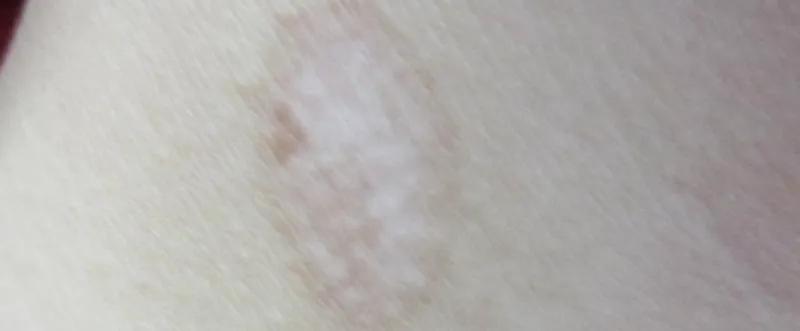

Spot lightening and spot removal - multi scene coverage of targeted pigmentation
The application in the field of pigmentation covers almost all types of pigmentation problems.
1. Sunburn and Freckles
Ultraviolet radiation is the primary driver of pigmentation. By inhibiting the increase of melanin induced by ultraviolet radiation, it can directly affect the formation mechanism of sunspots and freckles. It is explicitly added to products such as spot removal creams (sunspots, freckles). By inhibiting MSH (melanocyte stimulating hormone), reducing melanin production, and preventing excessive melanin production.
2. Melasma
The formation of melasma is closely related to the overactivation of the MC1R signaling pathway. By competitively inhibiting the α - MSH binding site and downregulating the expression of TYR and TRP-1 genes, multidimensional blockade from the signal source can be achieved.
Its "triple mechanism of action" - competitive inhibition of alpha MSH binding sites, downregulation of tyrosinase activity, and inhibition of melanosome diffusion - gives it targeted effects on stubborn pigmentation.
3. Dark acne scars (post inflammatory pigmentation, PIH)
Skin inflammation is the culprit of "post inflammatory pigmentation". Nonapeptide can regulate inflammation related signaling pathways and alleviate excessive melanin production triggered by inflammation. This is particularly critical for issues such as acne scars, sensitive skin discoloration, and postoperative discoloration. It can prevent the occurrence of post inflammatory pigmentation and dilute existing inflammatory pigmentation.
4. Uneven skin tone and local dullness
Nonapeptide improves uneven skin tone by reducing excessive deposition of melanin in specific areas of the skin. It does not uniformly 'bleach' the entire face, but rather restores normal levels to areas that excessively produce melanin, thereby achieving a natural and even skin tone.

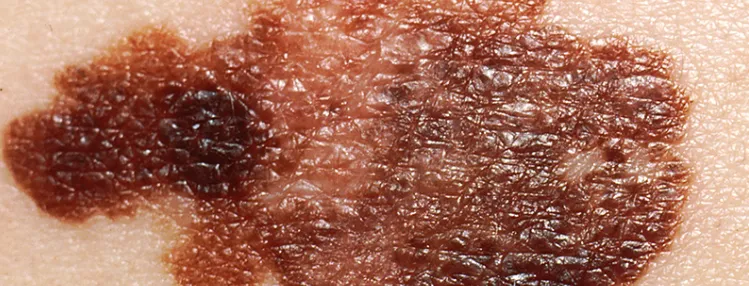
Anti UV pigmentation - the whitening partner of sunscreen products
1. Inhibit UVA induced melanin increase
UVA is the main ultraviolet band that causes deep pigmentation and photoaging. Nonapeptide (20 μ M, 3 days) can reverse the increase in melanin in human epidermal melanocytes induced by UVA. This makes it an ideal "whitening synergistic ingredient" in sunscreen products - sunscreen blocks ultraviolet rays and blocks melanin synthesis signals triggered by residual ultraviolet rays at the cellular level.
2. Color control in post sun repair
Adding Nonapeptide-1 to post sun repair products can effectively reduce post sun darkening and skin redness, and accelerate skin tone recovery.
Its dual effects of anti-inflammatory properties and inhibition of melanin synthesis make post sun repair no longer limited to soothing, but simultaneously solve the two major problems of "sunburn" and "tanning".
3. Synergistic synergy with sunscreen formulations
Can be compounded with sunscreen to prevent UV induced pigmentation. Research has shown that it can synchronously activate the NRF2 antioxidant pathway, reduce the release of inflammatory factors caused by ultraviolet radiation, and reduce the redness index of sensitive muscles by 19.3%, achieving a synergistic effect of whitening and repair.


Anti inflammatory mediated melanin inhibition - underestimated second battlefield
This is a often overlooked but extremely important application dimension for inhibiting melanin.
1. Positive feedback loop between inflammation and melanin
Skin inflammation releases a large amount of inflammatory factors, which can directly stimulate the proliferation of melanocytes and melanin synthesis, forming a vicious cycle of "inflammation → pigmentation → more inflammation". It can inhibit skin inflammation and cut off this positive feedback from the source.
2. Reduce UV induced skin redness
UV irradiation not only stimulates melanin, but also triggers inflammatory reactions.
The anti-inflammatory properties give it a dual value in post sun care products: it inhibits melanin and soothes redness. By regulating inflammation related signals, we can alleviate the excessive production of melanin triggered by inflammation.
3. Safe pathways for whitening sensitive skin
Traditional whitening ingredients such as niacin and arbutin can easily cause sensitive skin to turn red and sting. Nonapeptide provides a non irritating whitening pathway for sensitive skin by first blocking the MC1R signal and then repairing inflammation. Multiple toxicological studies have shown that it is non irritating and non allergenic to the skin, and has passed the international ECARF sensitive skin safety certification.


Compound Efficiency Enhancement - Multi target Synergistic Inhibition of Melanin
Rarely fought alone, its true power lies in the synergy with other whitening ingredients to construct a "multi-target, multi-channel" melanin inhibition matrix. Synergistic mechanism of compound ingredients, melanin inhibition effect, and addition
Niacinamide inhibits melanin synthesis and blocks melanin transport to keratinocytes, significantly improving whitening efficiency
3-O-ethyl ascorbic acid (VC derivative) VC inhibits tyrosinase and suppresses both upstream and downstream interception of MC1R signal
Chuanming acid inhibits the plasmin pathway, reduces UV induced pigmentation, and has dual effects of anti-inflammatory and whitening.
Arbutin directly inhibits tyrosinase activity and dual inhibition of signaling pathway.
Salicylic acid accelerates keratinocyte metabolism, assists in the shedding metabolism of generated melanin, and inhibits both
Centella asiatica glycoside has anti-inflammatory and repairing effects, reducing color darkening and soothing after inflammation, and synergistically whitening
This strategy of "blocking the entire chain from signal to enzyme, transport to metabolism" is the core formula logic of current international mainstream whitening products, and it is an indispensable "signal blocker" among them.


Scientific research tool - a powerful tool for analyzing the mechanism of melanin
In the laboratory, it is a core tool for studying the mechanism of skin pigmentation.
1. Research on Skin Pigmentation
As a highly selective antagonist of MC1R (Ki: 40 nM), it is widely used to investigate the specific role of the α - MSH/MC1R/cAMP signaling pathway in melanin synthesis. Researchers use it to "shut down" this pathway and observe changes in downstream MITF, tyrosinase, and TRP1/TRP2 to elucidate the molecular mechanism of pigmentation.
2. Research on the regulation of adrenal steroidogenesis
MC1R is not only present on melanocytes, but also in adrenal cortex cells. Nonapeptide-1 provides an important pharmacological tool for research in this field.
3. Skin cancer research
Due to the shielding effect of melanin on ultraviolet radiation, inhibiting melanin synthesis theoretically increases the sensitivity of the skin to UV radiation. But conversely, by inhibiting the melanin synthesis pathway, it may help reveal the relationship between abnormal proliferation of melanocytes and skin cancer, providing a new perspective for anti skin cancer research.

References
[1] Sohu Nonapeptide-1; H-Met-Pro-D-Phe-Arg-D-Trp-Phe-Lys-Pro-Val-NH₂; Containing D-Phe and D-Trp-action_of_melanin 2026-03-03.
[3] Sohu Nonapeptide-1; H-Met-Pro-D-Phe-Arg-D-Trp-Phe-Lys-Pro-Var-NH2_Skin Repaired Structural Formula 2026-03-02.
[6] Sohu The application range of nonapeptide-1 in cosmetics 2025-03-10.
[9] Peptide Biology 【 New Breakthrough in Targeted Whitening 】 Peptide-1: Through MC1 receptor blockade technology, it inhibits the melanin production signaling pathway at the source 2025-05-05.
FAQ
Is palmitoyl tripeptide 1 safe for skin?
Palmitoyl tripeptide-1 is a synthetic fatty acid-linked peptide that can help repair visible skin damage and strengthen skin's underlying supportive elements.
What is nonapeptide 1 used for?
What is NONAPEPTIDE-1 used for? Nonapeptide-1 is quite useful in cosmetics for inhibiting melanin production by reducing the activity of the enzyme tyrosinase, effectively helping to lighten hyperpigmentation, dark spots, and uneven skin tone.
Hot Tags: nonapeptide-1, China nonapeptide-1 manufacturers, suppliers, Best Ghk Cu Peptide Injection, Ghk cu Peptide Capsule, Ghk cu Tablet, Glutathione Liposomal Capsules, Nad Sublingual Drops, TB 500 Spray


