




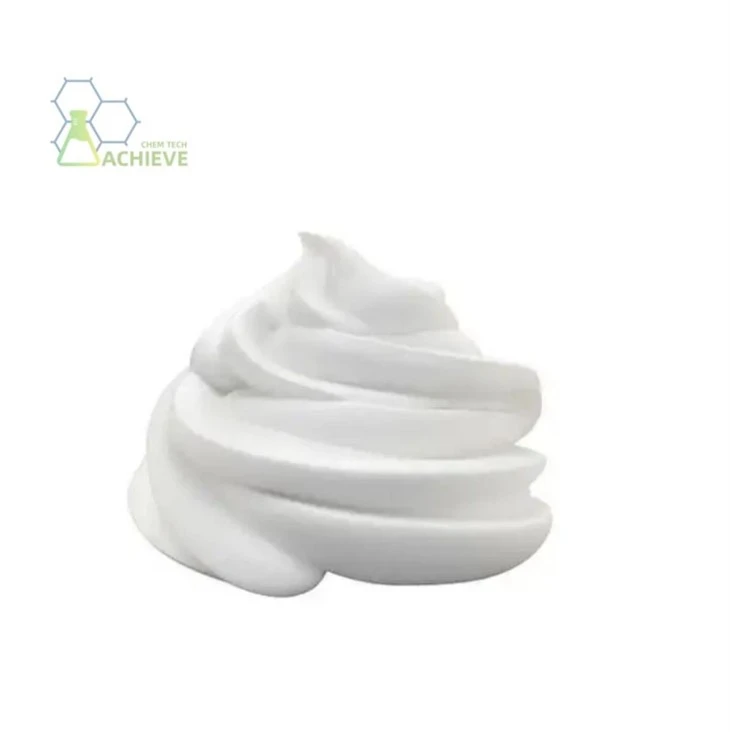
Acetyl hexapeptide-3 cream is a functional ointment formulated with biomimetic acetyl hexapeptide-3 as the core active ingredient. Unlike ordinary aqueous peptide solutions, its exclusive cream base delivers excellent skin-locking and sustained-release permeation properties. It forms a breathable protective film on the skin surface to extend the action time of active components, featuring dual benefits of mild skin repair and targeted age-defying. For scientific research, this cream formulation is suitable for topical administration in animal experiments. It enables precise control of dosing concentration and boasts far better stability than liquid reagents, so it is widely adopted in establishing models for neuromuscular disorders and exploring mechanisms of skin ageing. In civilian skincare, products are mainly formulated with low-concentration ingredients for safe use.
Our Products Form



Acetyl hexapeptide-3 COA

Applications in Pharmaceutical R&D

With its precise neuromuscular regulation, favorable biological safety and controllable effective concentration, acetyl hexapeptide-3 cream and its raw material monomer have become core experimental materials for basic biomedical research and mechanism verification. Currently, they are extensively applied in two major research fields: the construction of neuromuscular disease models and in-depth studies on skin ageing mechanisms. A standardized concentration application system has been established across the industry, ensuring the reproducibility and standardization of relevant scientific experiments. This peptide is a commonly used reagent for biomedical age-defying research and neuromuscular pharmacology studies.In research on neuromuscular disease models, the product is primarily used to develop in vitro cell models and in vivo animal models, facilitating research on pathogenesis and intervention strategies for disorders related to abnormal neuromuscular transmission.
It works in a similar way to botulinum toxin but features milder potency and higher reversibility, without causing irreversible neuromuscular damage, making it ideal for long-term dynamic experimental observation. For in vitro cell assays, the generally accepted effective concentration ranges from 10 to 50 μM. At this concentration, it steadily inhibits the release of synaptic acetylcholine and accurately simulates neuromuscular transmission blockage, supporting cellular mechanism research on muscular atrophy, neurogenic myorelaxation disorders, facial muscle spasm and other conditions. By applying intervention with concentration gradients, researchers can observe the peptide's effects on myocyte activity, synaptic signal transmission efficiency and muscle contraction rhythm, and clarify the molecular pathways underlying neuromuscular lesions.


In in vivo animal experiments, the product is administered via injection at a standard dosage of 0.1–0.5 mg/kg. This dosage balances safety and experimental efficacy, and does not induce toxic reactions or muscle necrosis in laboratory animals, allowing the accurate establishment of in vivo neuromuscular regulation models. Through continuous drug intervention, researchers can dynamically monitor changes in animal muscle tension, pathological morphology of cutis and muscle tissues, and neurotransmitter expression levels, providing experimental data for drug development and treatment optimization for neuromuscular diseases. Compared with traditional modeling reagents, the product offers reversible effects, extremely low toxicity and minimal experimental errors.
It can precisely simulate mild and chronic abnormal neuromuscular transmission, which aligns with the characteristics of chronic human lesions and greatly improves the reference value of relevant research.
In the field of cutis ageing mechanism research, the product serves as a key material for analyzing the ageing mechanism of expression lines. Skin ageing is divided into intrinsic structural ageing and dynamic ageing caused by facial expressions. Previous studies mainly focused on static ageing mechanisms such as collagen loss and oxidative damage, while research on skin crinkles resulting from repeated muscle contraction was limited.


Given its specific inhibitory effect on muscle contraction, the product enables researchers to conduct controlled experiments to compare differences in dermal fibroblast activity, collagen metabolism and epidermal texture between restricted and normal muscle contraction states, so as to accurately analyze the formation and deterioration mechanisms of dynamic crinkles. Additionally, this raw material is applied to efficacy verification of age-defying drug candidates and medical aesthetic repair preparations. By examining cutis ageing indicators after peptide intervention, researchers can evaluate the synergistic age-defying effects of various active ingredients and provide experimental evidence for the development of new age-defying pharmaceutical formulations.
Applications in Functional Personal Care Products
Thanks to its mild age-defying efficacy and superior skin safety, acetyl hexapeptide-3 cream is widely used in high-end functional personal care products. Different from high-concentration medical aesthetic formulations with potent effects, it is applied at low dosages for auxiliary age-defying in daily care. It mainly alleviates superficial fine lines, photoaging and natural ageing on the body and hands, perfectly fitting daily home age-defying routines, and acts as one of the core active ingredients for the differentiated upgrading of high-end personal care products. After years of formula optimization, the industry has formed unified addition standards, with the common dosage kept below 0.02%. This proportion controls production costs while ensuring safety and stable auxiliary age-defying effects, and avoids skin numbness and barrier irritation caused by excessive concentrations.


In high-end age-defying facial cleansers, trace amounts of the product deliver both cleansing and mild age-defying effects. While ordinary facial cleansers only remove dirt, cleansers fortified with this peptide gently act on the facial skin during cleansing and relieve facial muscle tension. Long-term use reduces superficial dry lines and fine lines accumulated from daily facial expressions. Its mild physicochemical properties will not damage the skin barrier, making it suitable for all cutis types, including sensitive and delicate cutis. Since facial cleansers stay on the skin for a short time, a low concentration is sufficient for the application scenario, which matches its positioning as an auxiliary age-defying ingredient.
The product demonstrates more prominent application value in body lotions and hand creams. Hand skin is constantly exposed to the external environment and subjected to frequent gripping and flexing movements. Repeated stretching of muscles and cutis easily leads to dry lines, fine lines and crinkles. Besides, hands have few sebaceous glands and age faster. Body cutis is prone to sagging and fine lines due to dryness and photoaging. Hand creams and body lotions containing less than 0.02% acetyl hexapeptide-3 provide moisturization while mildly inhibiting frequent contraction of superficial skin muscles. They gradually fade static and movement-related fine lines on hands, and improve sagging, roughness and ageing of body cutis. Persistent use effectively delays cutis ageing on hands and body and leaves the skin texture finer and smoother.

Discovery History
Acetyl hexapeptide-3 is a synthetic biomimetic hexapeptide and the world's first neuromodulatory peptide designed for non-invasive age-defying. It was developed in the late 1990s by Lipotec, a renowned Spanish biotechnology company under Lubrizol Group, as one of its core active ingredients for cosmetics and biomedicine.
Before the emergence of it, injectable botulinum toxin dominated the medical aesthetic anti-crinkle field. Despite remarkable crinkle-reducing effects, botulinum toxin has multiple drawbacks including invasiveness, recovery period, allergy risks and high operational requirements. Meanwhile, most topical age-defying ingredients only focus on moisturizing and antioxidation, failing to target dynamic expression lines, leaving a notable technical gap in the industry.
To address such market and research challenges, Lipotec collaborated with the research team from Miguel Hernández University of Elche, Spain, to explore the correlation between neuromuscular signal regulation and skin age-defying.
Adopting combinatorial chemistry and solid-phase peptide synthesis technologies, the research team targeted the SNARE protein complex at human neuromuscular junctions and simulated the N-terminal sequence of the synaptic protein SNAP-25, successfully synthesizing it. Its core mechanism is to competitively inhibit acetylcholine release and moderately weaken facial muscle contraction, thereby improving dynamic crinkles in a non-invasive way and eliminating the safety risks associated with botulinum toxin.
Laboratory synthesis and mechanism verification of this peptide were completed in 1999, followed by preliminary stability and safety tests in 2000. It was officially launched as a commercial raw material in 2001, quickly becoming a benchmark topical age-defying alternative to injectable botulinum toxin.
Over the subsequent two decades, researchers worldwide have conducted in-depth studies on this peptide, expanding its applications from cosmetics to pharmaceutical R&D. It has evolved from a single skincare raw material into an important experimental reagent for research on neuromuscular disorders and cutis ageing mechanisms, with its application scenarios fully diversified.
Potential Adverse Reactions (Isolated Cases)
Transient skin redness and slight stinging may occur in a small number of people when high-concentration solutions (>3%) are applied directly to the skin.
These are normal tolerance reactions to active substances and can be relieved by reducing the concentration or building up skin tolerance gradually. No cases of permanent skin damage have been reported.
References
- Peptide Journal. Argireline (Acetyl Hexapeptide-3): Anti-Wrinkle Guide[EB/OL]. 2025.
- Cenexa Labs. Acetyl Hexapeptide-3 Peptide Research – Complete Guide[EB/OL]. 2026.
- Yves Yeboue, Nadia Rguioueg, Gilles Subra, Jean Martinez, Frédéric Lamaty, Thomas‐Xavier Métro. Gram‐Scale Synthesis of a Hexapeptide by Fragment Coupling in a Ball Mill. European Journal of Organic Chemistry 2022, 2022 (21). (https://doi.org/10.1002/ejoc.202100839)
- Full Solution-Phase Synthesis of Acetyl Hexapeptide-3 by Fragments Coupling Strategy. (https://pubs.acs.org/doi/10.1021/acs.iecr.7b03299)
FAQ
What are the downsides of Argireline?
+
-
Argireline is generally safe, but its primary drawbacks include underwhelming results compared to cosmetic procedures, potential skin irritation or dryness, and the need for continuous use to maintain its subtle, anti-aging effects.
Hot Tags: acetyl hexapeptide-3 cream, China acetyl hexapeptide-3 cream manufacturers, suppliers, Botulinum Toxin Injection 100iu, BPC 157 Peptide Cream, BPC 157 Peptide Injection, Ghk cu Tablet, Nad Skin Cream, TB 500 Peptide Injection


