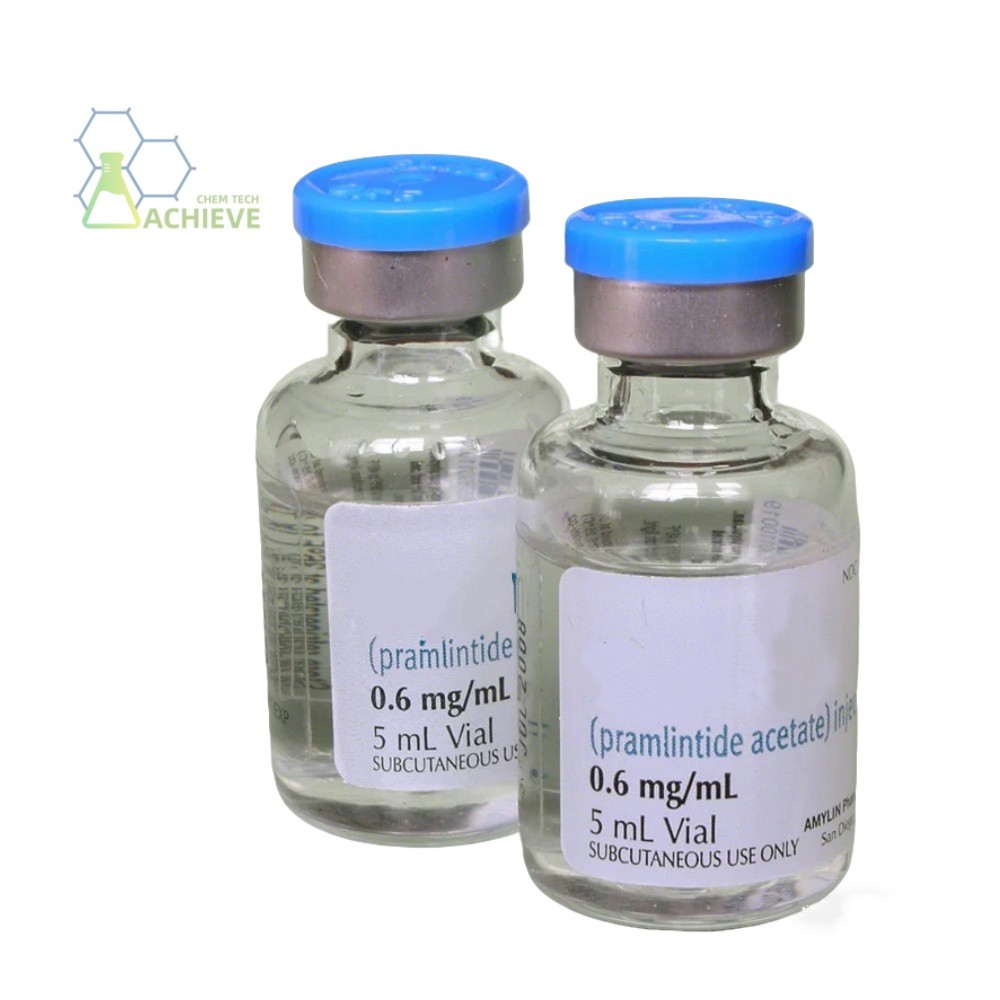
Pramlintide acetate injection is an artificially synthesized analog of amylin, consisting of 37 amino acids, with similar biological functions to endogenous pancreatic amyloid peptide (amylin). It is the second drug approved for the treatment of type 1 diabetes after insulin, and is also used as an adjuvant treatment for type 2 diabetes.
Regulating blood sugar levels through various mechanisms. It can slow down the gastric emptying rate, slow down the absorption of food in the small intestine, and thus avoid a sharp increase in postprandial BG. At the same time, it can also inhibit the secretion of glucagon, reduce the production and release of liver glucose, and further BG. In addition, it can also act on the central nervous system, increase satiety, reduce food intake, and help control weight.
Products Description




Pramlintide COA


Pramlintide acetate injection is a synthetic analogue of pancreatic amyloid peptide (also known as amylin), which plays a crucial role in BG regulation by mimicking the physiological functions of natural amylin. Its mechanism of action mainly revolves around the following four aspects, all based on direct intervention in BG metabolism rather than lipid regulation.
Delay gastric emptying and slow down glucose absorption

Physiological basis:
Natural amylin is secreted by pancreatic beta cells in conjunction with insulin and is one of the core hormones for postprandial BG regulation. In healthy individuals, amygdalin inhibits gastric emptying and slows down glucose absorption in the small intestine, avoiding a sharp increase in postprandial BG. In patients with diabetes, the function of β cells is damaged and the secretion of amylin is insufficient, which leads to rapid gastric emptying and increased BG fluctuation. Restore this physiological process by replacing or supplementing damaged pancreatic amyloid function.
Action path:
Vagus nerve signal inhibition: It binds to the vagus nerve endings in the stomach fundus and body, activates G protein coupled receptors (GPCRs) to inhibit adenylate cyclase activity, reduces intracellular cyclic adenosine monophosphate (cAMP) levels, and thus reduces gastric peristalsis and emptying rate.
Delayed glucose absorption: Slowing gastric emptying prolongs the residence time of carbohydrates in the small intestine, reduces the rate of breakdown into glucose, and ensures a more uniform absorption of glucose into the bloodstream, avoiding rapid postprandial blood sugar rise.
Clinical evidence:


In a study of healthy volunteers, acetate pramlintide injection (60 μ g) prolonged gastric emptying time by 30% -50%, reduced postprandial BG peak by about 40%, and reduced BG fluctuations by more than 50%.
After use (30-60 μ g, pre meal injection) in patients with type 1 diabetes, the postprandial BG curve is smoother, the fluctuation range of BG is significantly reduced, and the incidence of hypoglycemic events is not increased.
Source support:
According to the "Pharmacology Textbook of National Higher Education Institutions, 4th Edition" and the website of Baiji Xinte Pharmacy, slowing down gastric excretion and lowering postprandial BG is one of its main mechanisms of action. In addition, multiple randomized controlled trials (RCTs) have confirmed its effectiveness in improving BG fluctuations.
Inhibit glucagon secretion and reduce hepatic glucose output
Physiological basis:
Glucagon is a key hormone that raises blood sugar levels. It is secreted by pancreatic alpha cells and maintains blood sugar homeostasis by promoting hepatic glycogen breakdown and gluconeogenesis. The abnormal secretion of glucagon often exists in diabetes patients, which is manifested by inappropriate increase of glucagon level after meals, further aggravating hyperglycemia. By inhibiting glucagon secretion and reducing liver glucose production, fasting and postprandial BG levels can be lowered.
Action path:
Receptor activation and signal transduction: It binds to the pancreatic amyloid receptor on the surface of pancreatic alpha cells, activates Gi protein, inhibits adenylate cyclase activity, and reduces intracellular cAMP levels.


Gene expression inhibition: Decreased cAMP levels reduce protein kinase A (PKA) activation, inhibiting glucagon gene transcription and secretion.
Reduced hepatic glucose output: Inhibition of glucagon secretion directly reduces hepatic glycogen breakdown and gluconeogenesis, lowering BG levels.
Clinical evidence:
In clinical trials, pramlintide acetate injection (60 μ g) can reduce postprandial glucagon levels by 30% -50% and hepatic glucose output by 20% -30%.
When used in combination with insulin, it can further enhance BG control, reduce insulin dosage by about 50%, and lower the risk of hypoglycemia.
Source support:
JD Health and 39 Health Network both pointed out that reducing liver glucose output by inhibiting glucagon secretion is one of the core mechanisms for lowering blood sugar. The FDA approved drug instructions also explicitly mention this effect.
Enhance satiety and reduce food intake
Physiological basis:
Amylin regulates appetite through the central nervous system. The lack of natural amylin may lead to hyperappetite and weight gain in diabetes patients. Through the blood-brain barrier, it binds to receptors in the hypothalamic appetite regulation center, inhibits hunger signals, and promotes satiety.
Action path:
Receptor binding and neuronal activation: It binds to the amylin receptors in the hypothalamic arcuate nucleus and ventromedial nucleus, activating pro melanocortinogen (POMC) neurons and promoting the release of alpha melanocyte stimulating hormone (α - MSH).


Neuropeptide Y (NPY) inhibition: α - MSH inhibits NPY neuronal activity and reduces hunger signal transmission by activating melanocortin 4 receptor (MC4R).
Enhanced satiety: Decreased NPY activity and activation of POMC neurons jointly promote satiety and reduce food intake.
Clinical evidence:
Patients who use it for a long time (120 μ g, twice a day) experience a reduction in daily calorie intake of approximately 200-300 kcal and an average weight loss of 2-3kg.
Weight loss is positively related to the improvement of BG control, especially for obese type 2 diabetes patients. A 52 week study showed that the pramlintide treatment group lost 1.4kg in weight, while the placebo group gained 0.5kg in weight.
Source support:
Sohu and ChemicalBook explicitly mention that regulating appetite through the central nervous system is an important mechanism for assisting in lowering blood sugar. In addition, neuroimaging studies have confirmed that it can alter the activity pattern of the hypothalamus.
Improve peripheral tissue insulin sensitivity
Physiological basis:
Insulin resistance is the core pathological mechanism of type 2 diabetes. The sensitivity of peripheral tissues (such as muscle and fat) to insulin is reduced, leading to glucose utilization disorder. Indirectly enhancing insulin sensitivity by improving insulin signaling transduction and inhibiting lipolysis.
Action path:
GLUT4 translocation promotion: activates the amylin receptors on muscle and adipocyte membranes, promotes the translocation of glucose transporter 4 (GLUT4) to the cell membrane through the PI3K/Akt pathway, and enhances glucose uptake.
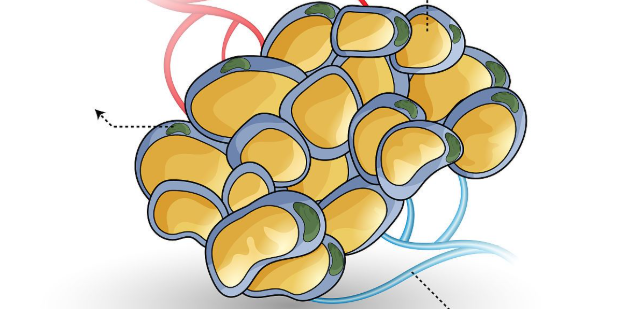
Lipolysis inhibition: Inhibits the activity of hormone sensitive lipase (HSL) in adipose tissue and reduces the release of free fatty acids (FFA). Reduced FFA levels can reduce hepatic gluconeogenesis and muscle insulin resistance.

Clinical evidence:
Animal experiments have shown that it can increase glucose uptake in muscle tissue by 15% -20% and reduce FFA release in adipose tissue by 30%.
After use, the insulin sensitivity index (HOMA-IR) of diabetes patients significantly improved, and the fasting insulin level decreased.
Source support:
Experts from Wenzhou People's Hospital and Xiamen University Affiliated Zhongshan Hospital pointed out that improving peripheral tissue insulin sensitivity can assist in reducing blood sugar. Basic research has also confirmed that it can regulate the expression of key molecules in the insulin signaling pathway.
Summary of the mechanism of action and clarification of blood lipid regulation
Through the above four pathways, a "multi-target" hypoglycemic effect is formed:
Direct effect: Delaying gastric emptying, inhibiting glucagon secretion, and rapidly reducing postprandial blood sugar.
Indirect effects: Enhance satiety, improve insulin sensitivity, maintain long-term BG homeostasis, and reduce weight.
Clarification on blood lipid regulation:
Although some studies have mentioned the possibility of indirectly reducing triglyceride levels through weight loss, its core mechanism of action always revolves around BG regulation. There is currently no clear evidence to suggest that pramlintide acetate injection directly acts on lipid metabolism related targets, such as LDL receptors and HMG CoA reductase. Therefore, if its tablet form is used to lower blood lipids, it lacks biological basis and clinical support.

Summary of Information Sources
National Higher Education Textbook Pharmacology 4th Edition: Clarify that Pramlintide is an amygdalin analogue that lowers blood sugar by delaying gastric emptying and inhibiting glucagon secretion.
JD Health: Describing how Pramlintide regulates BG fluctuations and reduces hepatic glucose output by simulating the function of amygdalin.
Baiji Xinte Pharmacy Network: It is pointed out that Pramlintide can improve overall BG control, especially for patients with poor insulin treatment.
39 Health Network: Emphasize that pramlintide regulates appetite through the central nervous system, assists in lowering blood sugar, and reduces weight.
Sohu. com: It is mentioned that Pranin is the second drug approved to treat type 1 diabetes after insulin, and its mechanism of action is the same as amylin.
ChemicalBook: It explains that pramlintide exerts hypoglycemic effects and regulates appetite through pancreatic amyloid receptors.
Expert opinions from Wenzhou People's Hospital and Xiamen University Affiliated Zhongshan Hospital: Support the mechanism of pramlintide improving insulin sensitivity and propose its clinical application value.
The multi-target effect of prallin peptide makes it a unique adjuvant in the treatment of diabetes, but its scope of action is strictly limited to the field of BG regulation, and has no direct relationship with blood lipid regulation.
Hot Tags: pramlintide acetate injection, China pramlintide acetate injection manufacturers, suppliers, salcatonin injection, intranasal desmopressin acetate, best glp 1 peptide, miacalcic 100 iu injection, glp1 shot, etelcalcetide structure