




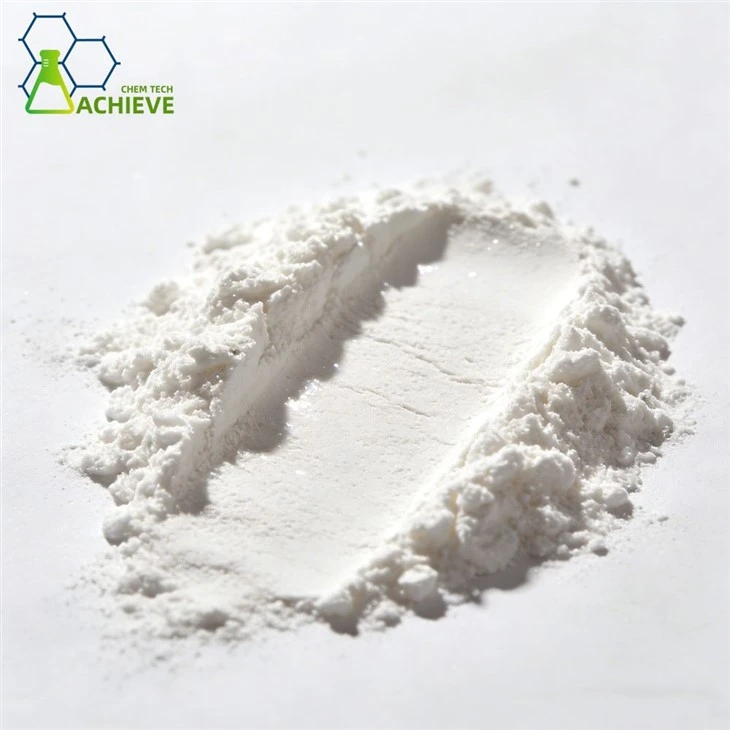


Pepstatin A is a natural peptide compound produced by actinomycetes, with a unique chemical structure that contains two uncommon Statine residues (3S, 4S) -4-amino-3-hydroxy-6-methylheptanoic acid). This structural feature enables it to efficiently inhibit members of the aspartic protease family. Pepstatin is a white to off white powder at room temperature, with a certain melting and boiling point. Its melting point is about 233 ℃ (decomposition), and its boiling point is as high as 997.6 ℃. The density of Pepstatin is approximately 1.117g/cm ³, indicating its relatively compact molecular structure. In terms of solubility, Pepstatin is soluble in methanol solutions containing acetic acid, but its solubility in water is poor. Therefore, in experimental operations, organic solvents such as DMSO are often used to dissolve Pepstatin. Its main mechanism of action is to exert its effect by inhibiting the activity of aspartic protease. Aspartate protease is a type of protease that is active in acidic environments and participates in various physiological processes in organisms, such as protein degradation and cell apoptosis. Pepstatin can specifically bind to the active center of aspartic protease, forming a stable complex that blocks enzyme substrate binding and inhibits enzyme catalytic activity.
Our product Form



Pepstatin COA
 |
||
| Certificate of Analysis | ||
| Compound name | Pepstatin | |
| Grade | Pharmaceutical grade | |
| CAS No. | 26305-03-3 | |
| Quantity | 15g | |
| Packaging standard | PE bag+Al foil bag | |
| Manufacturer | Shaanxi BLOOM TECH Co., Ltd | |
| Lot No. | 202501090053 | |
| MFG | Jan 9th 2025 | |
| EXP | Jan 8th 2028 | |
| Structure |
|
|
| Item | Enterprise standard | Analysis result |
| Appearance | White or almost white powder | Conformed |
| Water content | ≤5.0% | 0.45% |
| Loss on drying | ≤1.0% | 0.53% |
| Heavy Metals | Pb≤0.5ppm | N.D. |
| As≤0.5ppm | N.D. | |
| Hg≤0.5ppm | N.D. | |
| Cd≤0.5ppm | N.D. | |
| Purity (HPLC) | ≥99.0% | 99.90% |
| Single impurity | <0.8% | 0.25% |
| Total microbial count | ≤750cfu/g | 80 |
| E. Coli | ≤2MPN/g | N.D. |
| Salmonella | N.D. | N.D. |
| Ethanol (by GC) | ≤5000ppm | 400ppm |
| Storage | Store in a sealed, dark, and dry place below 2-8°C | |
|
|
||
|
|
||


| Chemical Formula: | C34H63N5O9 |
| Exact Mass: | 685.46 |
| Molecular Weight: | 685.90 |
| m/z: | 685.46(100.0%),686.47(36.8%),687.47(3.9%),687.47(2.7%),687.47(1.8%),686.46(1.1%) |
| Elemental Analysis: | C,59.54; H,9.26; N,10.21; O,20.99 |
Pepstatin A is a natural peptide compound produced by actinomycetes, which has shown significant value in various fields such as biochemistry, molecular biology, medical research, and drug development due to its unique chemical structure and efficient biological activity.
Core Tools in Biochemistry and Molecular Biology Research

Functional analysis of aspartic protease
Pepstatin becomes an ideal tool for studying the relationship between enzyme structure and function by competitively inhibiting aspartic proteases such as pepsin and protease D/E. For example, in the study of gastric protease catalytic mechanism, the inhibitory effect of Pepstatin can clarify the role of active center residues; In the study of protein degradation pathways involving protease D, its inhibitory effect helps reveal the enzyme's intracellular localization and substrate specificity.

Determination of enzyme kinetic parameters
By utilizing the dose-dependent inhibitory properties of Pepstatin, the Michaelis constant (Km) and maximum reaction rate (Vmax) of aspartic protease can be accurately determined. By constructing an inhibition curve and combining it with the double reciprocal plot method, the inhibition constant (Ki) can be calculated, providing key data for the construction of enzyme kinetics models.

Protein extraction and purification protection
During protein separation, endogenous aspartic proteases may lead to the degradation of target proteins. Pepstatin can be used in combination with other protease inhibitors such as E64-d and Leupeptin to construct a broad-spectrum inhibition system, effectively protecting protein integrity. For example, in the preparation of brain tissue homogenate, the addition of Pepstatin can significantly reduce the degradation of β - amyloid protein and improve experimental reproducibility.
Treatment of digestive system diseases

Treatment of gastric ulcer: Inhibit gastric protease and protect gastric mucosa
The core pathological mechanism of gastric ulcer is the damage of gastric mucosal defense barrier and the imbalance of gastric acid/pepsin digestion. Pepsin is secreted by the main cells of the stomach and activated as pepsin in the environment of gastric acid (pH<4). The latter can degrade proteins in food, but excessive activation can also digest the gastric mucosa itself, leading to ulcer formation. Research has shown that the activity of gastric protease is positively correlated with the severity of ulcers, and inhibiting its activity is one of the key strategies for treating gastric ulcers. It has extremely strong inhibitory activity against gastric protease, with an IC50 value of only 4.5 nM. Rat experiments have shown that oral administration of Pepstatin (0.5-50 mg/kg) can significantly reduce the incidence of pyloric ligation ulcers, and its mechanism is related to direct inhibition of gastric protease activity and reduction of gastric acid damage to gastric mucosa.
Further research has confirmed that Pepstatin can maintain the barrier function of gastric mucosal epithelial cells by inhibiting the degradation of tight junction proteins (such as occludin and claudin) mediated by gastric protease, thereby reducing mucosal damage caused by gastric acid reflux. Although Pepstatin has shown good anti ulcer effects in animal models, its clinical application still faces challenges. On the one hand, the oral bioavailability of natural Pepstatin is relatively low, and its stability and absorption rate need to be improved through structural modification or nano formulation technology; On the other hand, long-term use may inhibit digestive function, and the efficacy and safety need to be balanced. Currently, Pepstatin is more commonly used as a research tool to explore the mechanisms of gastric ulcers, rather than directly as a clinical drug.


Treatment of Gastroesophageal Reflux Disease (GERD): Blocking the Damage of Reflux Substances to Esophageal Mucosa
GERD is a chronic disease caused by the reflux of gastric contents into the esophagus, leading to symptoms such as heartburn and acid reflux. Gastric acid (pH<2) is the main damaging factor for reflux, but when activated in an acidic environment, gastric protease can break down the mucosal barrier by degrading tight junction proteins and glycoproteins in the esophageal mucosa, leading to deep tissue damage. Research has shown that gastric protease activity is closely related to the severity of GERD and the risk of complications such as Barrett's esophagus. The study in Gastroenterology utilized acetylgastrin (Pepstatin analog) to specifically inhibit gastric protease activity, confirming that gastric protease reflux to the esophageal mucosa can break down the mucosal barrier by degrading occludin and claudin.
Pepstatin A can reduce the damage of reflux to esophageal mucosa and promote mucosal repair by inhibiting gastric protease. In addition, Pepstatin can also inhibit reflux induced apoptosis of esophageal epithelial cells, further protecting mucosal integrity. At present, the standard treatment for GERD is proton pump inhibitors (PPIs), but some patients have poor response to PPIs or develop resistance. The combination of Pepstatin A and PPI may enhance therapeutic efficacy through a dual mechanism of inhibiting gastric acid secretion and blocking gastric protease activity, especially for patients with refractory GERD. In addition, local administration of Pepstatin (such as esophageal gel) can reduce systemic side effects and improve treatment compliance.


Inflammatory bowel disease (IBD) treatment: regulating tissue protease D and inflammatory response
The pathological features of IBD (including Crohn's disease and ulcerative colitis) are abnormal activation of intestinal mucosal immunity and chronic inflammation. Cathepsin D is an aspartic protease that is upregulated in the intestinal mucosa of IBD patients. It exacerbates intestinal inflammation and tissue damage by promoting the release of pro-inflammatory cytokines (such as IL-6, TNF - α) and apoptosis of intestinal epithelial cells. Pepstatin can specifically inhibit the activity of protease D, thereby blocking its pro-inflammatory effect. Animal experiments have shown that Pepstatin treatment can alleviate intestinal inflammation in DSS induced colitis model mice, manifested by reduced colon length, decreased histological damage scores, and decreased levels of pro-inflammatory cytokines. The mechanism may be related to the inhibition of NF - κ B signaling pathway activation and the reduction of intestinal epithelial cell apoptosis.
Treatment of digestive tract tumors: inhibition of tumor invasion and metastasis
Cathepsin D is overexpressed in various digestive tract tumors, such as gastric cancer and colorectal cancer. It promotes tumor cell invasion and metastasis by degrading extracellular matrix proteins, such as collagen and laminin. In addition, protease D can activate pro angiogenic factors (such as VEGF) to promote tumor angiogenesis. Pepstatin can block the invasion and metastasis of tumor cells by inhibiting the activity of protease D. For example, in the breast cancer model, Pepstatin treatment can significantly reduce the number of lung metastases; In colorectal cancer models, it can inhibit tumor growth and angiogenesis. In addition, Pepstatin can exert anti-tumor effects by inducing tumor cell apoptosis (such as upregulating Bax/Bcl-2 ratio) and inhibiting autophagy (blocking lysosomal degradation pathway in combination with E-64d).


The combination of Pepstatin with chemotherapy drugs such as 5-FU and oxaliplatin may enhance anti-tumor efficacy through synergistic effects. But it is necessary to ensure that Pepstatin only inhibits tumor associated aspartic protease and does not affect normal cell function; Long term use may lead to tumor cells bypassing inhibition by upregulating other proteases, such as matrix metalloproteinases; Targeted delivery systems (such as nanoparticles and antibody conjugated drugs) need to be developed to increase drug concentration in tumor tissues.
Frequently Asked Questions
What does pepstatin do?
+
-
Pepstatin is a selective inhibitor of aspartyl proteases. It inhibits human pepsin, human gastricsin, renin, cathepsin D and E and bovine chymosin. Pepstatin does not inhibit thiol proteases, neutral proteases or serine proteases. It suppresses RANKL-induced osteoclast differentiation.
How do you prepare Pepstatin?
+
-
It has been dissolved at 10 mg/mL in ethanol with heat. The resulting solution is colorless, but may appear hazy. To remove haziness, add up to 50 µl of glacial acetic acid per mL of ethanol. At 25 mg/mL DMSO Pepstatin A forms a clear, faint yellow solution.
What is the difference between pepstatin and Pepstatin A?
+
-
While Pepstatin A is only sparingly soluble in water or PBS, the water soluble Pepstatin product is soluble in PBS at concentration of 60 mg/mL1. Both Pepstatin A and Water soluble Pepstatin are potent inhibitors of aspartyl proteases. Both of them contain the unusual amino acid statine.
What is the mechanism of pepstatin?
+
-
Pepstatin contains an unusual amino acid, 3-hydroxy-4-amino-6-methylheptanoic acid. The 3-OH group binds to the two catalytic aspartic acids to form a transition-state analog, which provides very tight binding. Because all aspartic proteases have the identical catalytic mechanism, pepstatin is an excellent inhibitor.
Hot Tags: pepstatin a, China pepstatin a manufacturers, suppliers, salcatonin injection, intranasal desmopressin acetate, best glp 1 peptide, prilocaine felypressin, glp1 shot, etelcalcetide structure


