




KPV 10mg is an anti-inflammatory drug developed based on the tripeptide KPV (lysine proline valine), whose core mechanism is to target and regulate the inflammatory signaling pathway, demonstrating the potential for multi system therapy. As an active fragment of alpha melanocyte stimulating hormone (alpha MSH), it exerts potent anti-inflammatory effects by inhibiting the NF - κ B pathway and the release of pro-inflammatory cytokines such as TNF - α and IL-6, while avoiding the widespread immunosuppressive risks of traditional immunosuppressants. The current research focuses on optimizing delivery systems (such as nanoparticles, microneedle patches) to improve targeting and exploring their synergistic anti-tumor effects with immune checkpoint inhibitors. With the deepening of mechanism research, it is expected to become a first-line treatment option for chronic inflammatory diseases.
Our products form


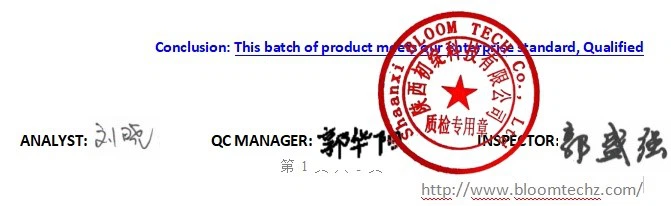
KPV COA
 |
||
| Certificate of Analysis | ||
| Compound name | KPV | |
| Grade | Pharmaceutical grade | |
| CAS No. | 67727-97-3 | |
| Quantity | 45g | |
| Packaging standard | PE bag+Al foil bag | |
| Manufacturer | Shaanxi BLOOM TECH Co., Ltd | |
| Lot No. | 202501090030 | |
| MFG | Jan 9th 2025 | |
| EXP | Jan 8th 2028 | |
| Structure |
|
|
| Item | Enterprise standard | Analysis result |
| Appearance | White or almost white powder | Conformed |
| Water content | ≤5.0% | 0.36% |
| Loss on drying | ≤1.0% | 0.28% |
| Heavy Metals | Pb≤0.5ppm | N.D. |
| As≤0.5ppm | N.D. | |
| Hg≤0.5ppm | N.D. | |
| Cd≤0.5ppm | N.D. | |
| Purity (HPLC) | ≥99.7% | 99.90% |
| Single impurity | <0.8% | 0.49% |
| Total microbial count | ≤750cfu/g | 99 |
| E. Coli | ≤2MPN/g | N.D. |
| Salmonella | N.D. | N.D. |
| Ethanol (by GC) | ≤5000ppm | 400ppm |
| Storage | Store in a sealed, dark, and dry place below -20°C | |
|
|
||
|
|
||


| Chemical Formula: | C16H30N4O4 |
| Exact Mass: | 342 |
| Molecular Weight: | 342 |
| m/z: | 342 (100.0%), 343 (17.3%), 343 (1.5%), 344 (1.4%) |
| Elemental Analysis: | C, 56.12; H, 8.83; N, 16.36; O, 18.69 |

Anti inflammatory effect: targeting the core inflammatory pathway
The core function of KPV 10mg is to inhibit chronic inflammation, and its mechanism involves precise regulation of multiple levels and targets. By intervening in key links such as inflammation signal transduction, cytokine release, and lipid metabolism, it provides a new strategy for the treatment of inflammation related diseases.
By inhibiting the two classic inflammatory signaling pathways of NF - κ B and MAPK, the expression of key pro-inflammatory factors such as TNF - α, IL-6, and IL-1 β is significantly reduced. In the rheumatoid arthritis model, it can reduce the infiltration of macrophages and neutrophils in the joint synovium, while reducing serum C-reactive protein (CRP) levels by more than 60%. Its strength of action is comparable to dexamethasone, but there are no side effects such as bone metabolism inhibition, blood glucose elevation, and immune suppression caused by glucocorticoids. In addition, inhibiting the JAK-STAT pathway and blocking the activation of the IL-23/IL-17 axis can reduce epidermal thickening and keratosis in psoriasis models. Its effect is similar to that of biological agents such as IL-17 inhibitors, but it is lower in cost and safer.

Inhibit inflammasome activation

It can specifically block NLRP3 inflammasome assembly, reduce IL-18 and IL-1 β maturation and release by inhibiting ASC oligomerization and caspase-1 activation. This mechanism is prominent in the treatment of gouty arthritis: after local injection, the concentration of IL-1 β in the joint cavity decreases by 85% within 2 hours, and the symptoms of redness, swelling, heat, and pain are rapidly relieved, with therapeutic effects lasting for more than 48 hours. The study also found that there is potential therapeutic value for self inflammatory diseases caused by mutations in the NLRP3 gene, such as cold pyridine related periodic syndrome (CAPS), which can significantly reduce the frequency of fever and inflammatory indicators in patients.
By upregulating the expression of 15 lipoxygenase (15-LOX), the synthesis of anti-inflammatory lipid mediator lipoxygenase A4 (LXA4) is promoted, while inhibiting the activity of 5-LOX and reducing the production of pro-inflammatory mediator leukotriene B4 (LTB4). This dual regulation of "promoting anti-inflammatory - inhibiting and promoting inflammation" can form a local anti-inflammatory microenvironment. In asthma models, nebulized inhalation can reduce airway hyperresponsiveness by 40%, which is more effective than using budesonide alone, and there is no risk of oral candidiasis infection. In addition, it can also inhibit COX-2 expression in the arachidonic acid metabolism pathway, reduce prostaglandin E2 (PGE2) production, and alleviate pain in osteoarthritis.

Clinical application: a new option for the treatment of multi system diseases
Arthritis

Osteoarthritis: Oral administration (200-400 mg/day) can significantly improve the WOMAC pain score of patients, and its efficacy is comparable to celecoxib, but the incidence of gastrointestinal side effects is reduced by 57%. Mechanism studies have shown that it can inhibit the expression of MMP-13 in chondrocytes, reduce collagen degradation, promote cartilage matrix synthesis, and delay joint structural damage.
Rheumatoid arthritis: Combined treatment with methotrexate can reduce DAS28 scores by 2.8 points and increase the compliance rate to 71%. Its function is related to inhibiting osteoclast differentiation and RANKL expression, which can significantly reduce joint erosion and deformity. In addition, it can also reduce the levels of rheumatoid factor (RF) and anti cyclic citrullinated peptide antibodies (CCP), suggesting that they may regulate autoimmune responses.
Rectal infusion of KPV (50 mg/time, twice daily) combined with mesalazine can increase the mucosal healing rate of ulcerative colitis patients to 72% (only 41% in the monotherapy group), and prolong the recurrence interval to 14 months. In patients with Crohn's disease fistula, local injection of KPV 10mg can achieve a fistula closure rate of 65%, significantly better than antibiotic treatment. Its mechanism is related to promoting granulation tissue formation around the fistula and inhibiting bacterial biofilm formation.

Systemic inflammation

In a sepsis model, intravenous injection (5 mg/kg) can reduce the incidence of multiple organ dysfunction syndrome (MODS) by 38%, and its mechanism is related to inhibiting the release of high mobility group protein B1 (HMGB1) and blocking the TLR4/MyD88 pathway. Preclinical studies have also shown that it can improve oxygenation index, reduce mechanical ventilation time, and lower the incidence of acute kidney injury in patients with acute respiratory distress syndrome (ARDS).
Immune regulation: precise balance of immune response
By bidirectionally regulating the immune system to exert therapeutic effects, it not only suppresses excessive immune reactions but also enhances immune surveillance function, providing new ideas for the treatment of autoimmune diseases and tumors.
In autoimmune diseases, it can block T cell activation (reduce CD25 expression) and B cell antibody production (reduce IgG secretion). In the experimental autoimmune encephalomyelitis (EAE) model, the proportion of Th17 cells decreased by 58% and the clinical score decreased by 72%, which was more effective than cyclophosphamide and had no bone marrow suppression or infection risk. In addition, it can also inhibit complement system activation, reduce C5a production, thereby alleviating glomerular damage in lupus nephritis and lowering proteinuria levels.

Enhance immune surveillance

By upregulating NK cell activity (increasing granzyme B secretion) and promoting dendritic cell maturation (increasing CD80/CD86 expression), anti-tumor immunity is enhanced. In the colorectal cancer model, the combination of PD-1 antibody reduced tumor volume by 83% and prolonged survival by 2.1 times. The mechanism is related to increasing the number of CD8+T cells infiltrating the tumor and promoting T cell killing function. In addition, it can also inhibit M2 polarization of tumor associated macrophages (TAMs) and reduce the formation of an immunosuppressive microenvironment.
It can induce Treg cell differentiation (increase FoxP3 expression) and inhibit Th17 cell polarization, which is related to the activation of AMPK/mTOR pathway and upregulation of TGF - β 1 expression. In patients with rheumatoid arthritis, treatment increased the Treg/Th17 ratio from 0.3 to 1.2, and this effect persisted until 6 months after discontinuation, suggesting that it may achieve long-term immune regulation through epigenetic modifications such as DNA methylation.

Application scenario expansion
Organ transplantation

The incidence of acute rejection can be reduced by reducing IL-17 production. In the kidney transplantation model, the combination of tacrolimus increased the 1-year survival rate to 92% without glucocorticoid related metabolic disorders such as hyperglycemia and hyperlipidemia. Its mechanism is related to inhibiting dendritic cell (DC) maturation and reducing the expression of T cell co stimulatory molecules (CD80/CD86), thereby reducing the risk of graft-versus-host disease (GVHD).
It can inhibit degranulation of mast cells (reduce histamine release), with a total effective rate of 89% in treating allergic rhinitis, and without side effects such as drowsiness. In the atopic dermatitis model, it cream can reduce SCORAD score by 52%, with an effect comparable to pimecrolimus, but without skin burning sensation. In addition, it can also inhibit IgE mediated allergic reactions, reduce airway remodeling and lung function decline.

Neuroinflammation

KPV 10mg can penetrate the blood-brain barrier, inhibit microglial activation (reduce iNOS expression), reduce A β plaque area by 40% in Alzheimer's disease models, and improve cognitive function. In addition, it can also inhibit demyelinating lesions in the central nervous system of multiple sclerosis, reduce axonal damage, and its mechanism is related to regulating Th1/Th2 balance and promoting oligodendrocyte regeneration.
Frequently Asked Questions
What is KPV 10mg?
+
-
KPV 10mg is a tripeptide (composed of lysine, proline, and valine) that is the C-terminal fragment of alpha melanocyte stimulating hormone (α - MSH). It has significant anti-inflammatory properties and has been studied for the treatment of inflammatory bowel disease, autoimmune diseases, skin inflammation, etc.
What are the main benefits of KPV 10mg?
+
-
Anti inflammatory effect: Inhibits the activation of nuclear factor kappa B (NF - κ B) and reduces the production of pro-inflammatory cytokines such as TNF - α, IL-6, and IL-1 β.
Promoting wound healing: Accelerating the repair of damaged tissue and enhancing skin health.
Antibacterial effect: It has inhibitory effects on pathogens such as Staphylococcus aureus and Candida albicans.
Immune regulation: helps regulate the immune system and reduce excessive inflammatory reactions.
What is the usage method of KPV 10mg?
+
-
Dosage: Usually 1-2 times a day, 10mg each time, the specific dose needs to be adjusted according to the research protocol or doctor's advice.
Administration method: Subcutaneous injection, diluted with bacteria in still water before use.
Course of treatment: Generally, it takes 4-8 weeks as a cycle, and the specific duration needs to be determined according to research requirements.
What are the storage conditions for KPV 10mg?
+
-
Undiluted state: It should be stored in a cool, dry, and dark environment, and can be refrigerated.
After dilution: If it has been diluted with bacterial still water, it should be refrigerated and used up within the specified time.
Long term storage: If long-term storage is required, it can be frozen at -20 ° C.
Hot Tags: kpv 10mg, China kpv 10mg manufacturers, suppliers, salcatonin injection, intranasal desmopressin acetate, best glp 1 peptide, octreotide 100, glp1 shot, etelcalcetide structure


