



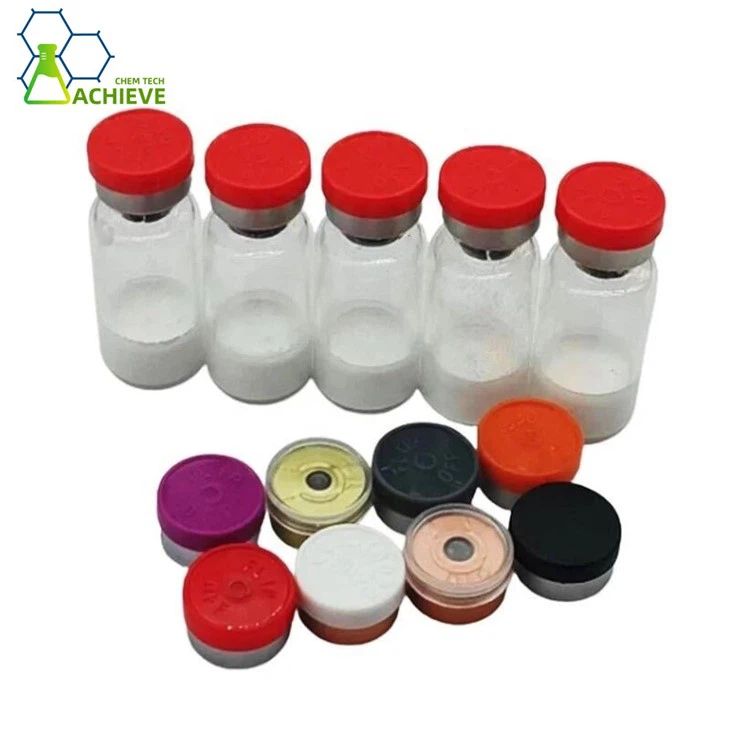

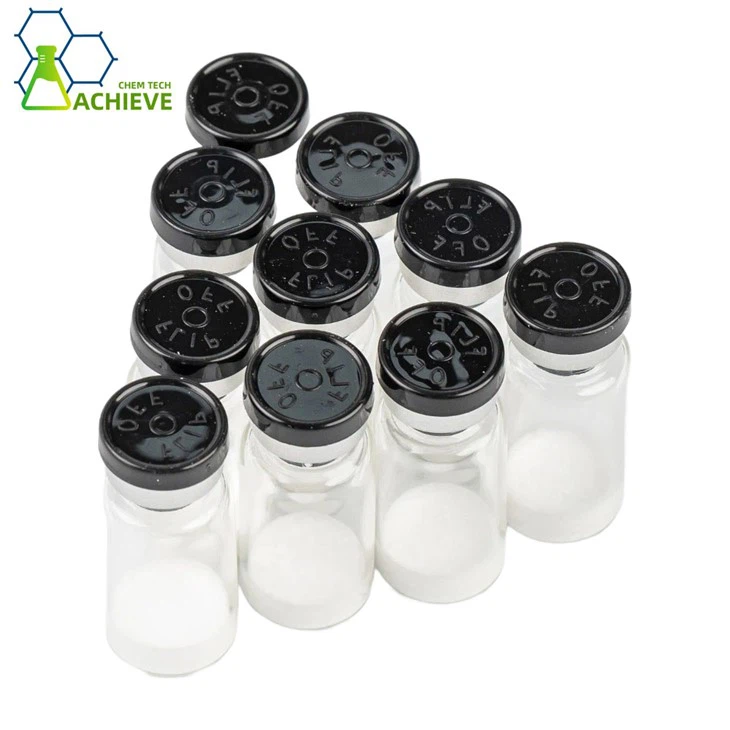


Ipamorelin Injection is a pre-prepared peptide injection preparation that promotes growth hormone secretion, with a chemical molecular formula of C38H49N9O5 and CAS number 170851-70-4. The preparation appears as a colorless and clear liquid, with a purity of no less than 98%, meeting the quality standards for pharmaceutical peptide preparations. Its core advantages lie in no need for reconstitution, immediate use, and precise and controllable dosage, which greatly reduces the use threshold. After subcutaneous injection, it is rapidly absorbed, with small fluctuations in blood drug concentration and high bioavailability. Suitable for scenarios such as middle-aged and elderly health maintenance, rapid post-exercise recovery and postoperative physical fitness recovery, it shows excellent safety and tolerability in clinical applications. The preparation needs to be refrigerated (2-8℃) and protected from light throughout the process, used within 48 hours after opening, and its use must follow professional medical guidance, with prominent compliance and reliability.
Our Products Form



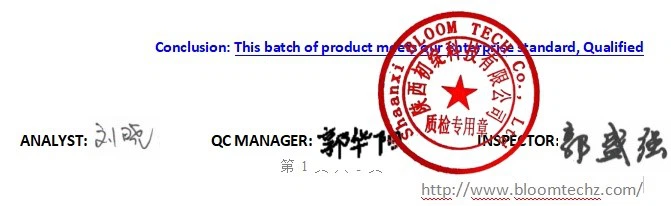
Ipamorelin COA
 |
||
| Certificate of Analysis | ||
| Compound name | Ipamorelin | |
| Grade | Pharmaceutical grade | |
| CAS No. | 170851-70-4 | |
| Quantity | 15g | |
| Packaging standard | PE bag+Al foil bag | |
| Manufacturer | Shaanxi BLOOM TECH Co., Ltd | |
| Lot No. | 202512090051 | |
| MFG | Dec 9th 2025 | |
| EXP | Dec 8th 2028 | |
| Structure |
|
|
| Item | Enterprise standard | Analysis result |
| Appearance | White or almost white powder | Conformed |
| Water content | ≤5.0% | 0.54% |
| Loss on drying | ≤1.0% | 0.42% |
| Heavy Metals | Pb≤0.5ppm | N.D. |
| As≤0.5ppm | N.D. | |
| Hg≤0.5ppm | N.D. | |
| Cd≤0.5ppm | N.D. | |
| Purity (HPLC) | ≥99.0% | 99.90% |
| Single impurity | <0.8% | 0.52% |
| Total microbial count | ≤750cfu/g | 95 |
| E. Coli | ≤2MPN/g | N.D. |
| Salmonella | N.D. | N.D. |
| Ethanol (by GC) | ≤5000ppm | 500ppm |
| Storage | Store in a sealed, dark, and dry place below -20°C | |
|
|
||
|
|
||


| Chemical Formula | C38H49N9O5 | |
| Exact Mass | 711.39 | |
| Molecular Weight | 711.87 | |
| m/z | 711.39(100.0%), 712.39(41.1%), 713.39(5.5%), 712.38(3.0%), 713.39(2.7%), 713.39(1.2%), 713.39(1.0%) | |
| Elemental Analysis | C,64.12; H,6.94; N,17.71; O,11.24 | |

Growth Hormone Deficiency (GHD) is an endocrine disorder caused by insufficient secretion of growth hormone (GH) from the anterior pituitary gland, which can lead to a series of physiological disorders such as growth retardation in children and physical function decline in adults. Recombinant human growth hormone (rhGH) is the mainstream drug for clinical treatment of GHD, but some patients have problems such as poor therapeutic response and poor tolerance.
As a highly specific growth hormone-releasing peptide (GHRP), it has become an important adjuvant therapy for GHD replacement therapy by stimulating pulsatile secretion of endogenous GH, and its clinical application value has been verified in multiple clinical studies.
The core advantages of ipamorelin injection in adjuvant treatment of GHD stem from its unique pharmacological properties, and it has significant differentiated value compared with rhGH and other GHRP drugs.


Low Endocrine Interference and Higher Safety
Unlike traditional GHRPs such as hexarelin, it can specifically bind to GHS-R1a receptors and has almost no effect on the secretion of other pituitary hormones such as luteinizing hormone (LH), follicle-stimulating hormone (FSH), and cortisol, avoiding adverse reactions such as menstrual disorders and hormone level disorders that may be caused by traditional drugs.
Clinical studies have shown that the incidence of abnormal endocrine indicators in the product treatment group is only 1/3 of that in the rhGH treatment group, which significantly improves the safety of long-term treatment.
Simulating Physiological Secretion Mode with More Durable Efficacy
rhGH is an exogenous supplement, which is difficult to simulate the physiological pulsatile secretion rhythm of human GH. However, it can stimulate the pituitary gland to produce pulsatile GH secretion, which is more in line with the normal endocrine regulation mechanism of the body.
This physiological stimulation mode can not only improve the bioavailability of GH, but also avoid the negative feedback inhibition caused by excessive exogenous GH. Long-term use is not easy to cause the degradation of pituitary secretion function, and the efficacy is more durable.


Convenient Administration and Good Tolerance
It is administered by subcutaneous injection, reaching the peak plasma concentration 15-30 minutes after injection, with a half-life of about 2 hours. Administration once or twice a day can meet the treatment needs. Most of its adverse reactions are mild and transient, mainly manifested as slight redness, swelling and transient nausea at the injection site, with an incidence rate of less than 5%, which is much lower than that of rhGH. Patients have better tolerance and higher treatment compliance.
Efficacy Evaluation Indicators
Clinically, it is necessary to regularly monitor the patient's GH level and insulin-like growth factor-1 (IGF-1) level (IGF-1 is the main mediator of GH action and can reflect the biological activity of GH). At the same time, combined with growth and development indicators (growth rate of height and weight in children), physical function indicators (muscle mass, body fat rate, bone mineral density in adults) and quality of life scores, the therapeutic effect is comprehensively evaluated.If the IGF-1 level still does not meet the standard after 3 months of treatment, the dosage can be appropriately adjusted under the guidance of a doctor.


Discovery Background and R&D Objectives

In the 1990s, research in the field of Growth Hormone-Releasing Peptides (GHRPs) entered a period of rapid development. Existing GHRP drugs at that time (such as Hexarelin) could stimulate Growth Hormone (GH) secretion but had limitations including strong endocrine interference and short half-life, restricting their clinical application.
Against this backdrop, pharmaceutical companies launched special R&D projects aiming to develop a new type of GHRP with high specificity and low side effects, thus initiating the discovery of it.Its core R&D goal was to break through the limitations of traditional drugs, achieve precise regulation of GH secretion, and reduce the impact on other pituitary hormones.
Core R&D Breakthroughs and Structure Confirmation
Screening and Optimization of Molecular Structure
The R&D team constructed multiple polypeptide molecular libraries using solid-phase synthesis and conducted high-throughput screening based on the binding characteristics of Growth Hormone Secretagogue Receptor 1a (GHS-R1a). Finally, it was identified as a pentapeptide structure (Aib-His-D-2-Nal-D-Phe-Lys-NH₂). The introduction of 2-aminoisobutyric acid (Aib) significantly improved molecular stability and prolonged the half-life, while D-2-naphthylalanine (D-2-Nal) enhanced the specific binding ability to GHS-R1a.
Early Pharmacological Activity Verification
Animal experiments confirmed that it could specifically stimulate GH secretion from the pituitary gland without significant interference with other hormones such as luteinizing hormone and cortisol. This characteristic made up for the core defect of traditional GHRPs. At the end of the 20th century, ipamorelin injection completed preliminary preclinical studies, and its safety and efficacy were initially verified, laying the foundation for subsequent clinical application exploration.


Basic Physical Characteristics
It is a synthetic pentapeptide compound, appearing as a white to off-white loose powder with no odor, no taste, and good fluidity, which is convenient for formulation processing. Its molecular weight is 647.75 Da, isoelectric point is about 8.2, and it has strong hydrophilicity. It is easily soluble in polar solvents such as water, normal saline, and 5% glucose injection, with a solubility of more than 10 mg/mL; slightly soluble in lower alcohols such as methanol and ethanol, and almost insoluble in non-polar organic solvents such as ether and chloroform. This solubility characteristic makes it more suitable for preparing aqueous injection formulations.
In terms of crystal structure, it typically forms orthorhombic crystals when crystallized from aqueous ethanol solutions, with a crystal density of approximately 1.32 g/cm³. The crystalline form contributes to its good stability during storage and processing, as amorphous forms are more prone to moisture absorption and degradation. Additionally, it exhibits weak optical activity due to the presence of D-configuration amino acid residues (D-2-Nal and D-Phe), with a specific optical rotation of +12.5° to +14.5° (c=1, water at 25℃), which is a key indicator for evaluating the purity and configuration consistency of the compound in quality control.
Chemical Stability and Degradation Characteristics
The compound is significantly pH-dependent, with the best stability in an acidic to weakly acidic environment of pH 4.0-6.0. In this range, the efficacy retention rate can reach more than 95% when placed at room temperature for 24 hours; under strong acidic conditions (pH<3.0) or alkaline conditions (pH>8.0), it is prone to peptide bond hydrolysis, generating inactive amino acid fragments and leading to rapid decline in efficacy. Meanwhile, it is sensitive to temperature and oxygen, easily oxidized and degraded at room temperature, and light will accelerate the degradation process. Therefore, it is necessary to strictly control the temperature, humidity and light conditions of the storage environment.


Notably, ipamorelin injection is also susceptible to degradation by peptidases in biological matrices, but its resistance to enzymatic hydrolysis is significantly higher than that of natural peptides due to the introduction of the non-natural amino acid Aib (2-aminoisobutyric acid) in its structure. This structural modification reduces the recognition and cleavage of the peptide chain by endogenous proteases, extending its in vivo half-life. In terms of impurity control, the main process impurities include truncated peptides (missing one or more amino acid residues) and oxidized products (oxidation of phenylalanine or naphthylalanine side chains), which are strictly limited to less than 0.5% each in pharmaceutical-grade products to ensure safety and efficacy.
FAQ
1.What does it do for the body?
It works by binding to IGF-1 receptors in the body and mimicking its effects on those receptors. This causes an increase in muscle mass and strength, as well as fat loss due to increased metabolism and lipolysis (the breakdown of fat).
2.How often should I inject It?
Inject once daily, ideally before bed, on an empty stomach.
No food 30 minutes after for best results.
One vial = exactly 45 days of consistency and benefit.
3.Where do you inject it?
Though dosages may vary based on variables like age and weight, a typical starting dose of CJC-1295 and it is 0.2mg per injection. The injection should go into an area of subcutaneous fat, such as your belly, a thigh, or an arm.
4.What are the risks of it?
What side effects can it cause? Some patients report temporary fatigue, headache, flushing, joint aches, or increased hunger; serious effects are uncommon when treatment is supervised and doses are tailored.
Hot Tags: ipamorelin injection, China ipamorelin injection manufacturers, suppliers, HCG Injection 5000iu, HCG Powder, Ipamorelin Injection, Ipamorelin Powder, Sermorelin Drops, Sermorelin Tablet


