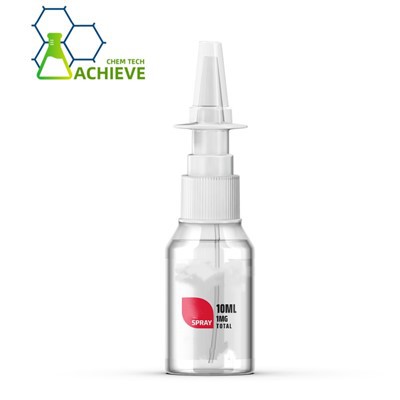



As an artificially synthesized peptide regulator, desmopressin acetate spray plays an irreplaceable core regulatory role in the standardized intervention of central diabetes insipidus and the improvement of clinical symptoms of nocturnal enuresis, relying on its highly precise water metabolism regulation efficacy. Its target is precisely focused on the key pathways related to renal fluid reabsorption, which can avoid irrelevant physiological regulation links and target the core links of disease onset.
It effectively alleviates the typical clinical symptoms of both diseases, improves the physiological disorders caused by the disease, gradually restores the normal rhythm and physiological state of fluid metabolism for patients, provides safe, efficient and stable core support, and helps patients get rid of disease troubles and improve their living comfort. The following provides a multidimensional and detailed analysis of its specific role and core characteristics in central diabetes insipidus and nocturnal enuresis.
Our Products



Desmopressin Acetate COA


Targeted intervention and core characteristics of central diabetes insipidus
The core pathological crux of central diabetes insipidus lies in the lack of secretion of endogenous water regulatory substances, which leads to the inability of the kidneys to complete water concentration and reabsorption normally, thereby causing symptoms such as abnormal polyuria and severe thirst. As the preferred intervention agent for this disease, desmopressin acetate spray has precise, adaptive, and long-lasting effects, which can be analyzed from three dimensions:
The comprehensiveness and significance of symptom improvement.
Compared with other intervention methods, desmopressin acetate can achieve comprehensive coverage and effective relief of typical symptoms of central diabetes insipidus, which is reflected in two aspects: on the one hand, it significantly reduces daily urine output. Clinical data shows that after standardized administration, patients' daily urine output can be reduced by 30% to 60% compared to before intervention, effectively reducing the problems of excessive urination frequency and frequent nighttime awakenings caused by polyuria, and helping patients restore normal daytime activities and nighttime sleep rhythms; On the other hand, it effectively reduces the body's thirst, suppresses the large loss of water in the body caused by polyuria, gradually restores the body's osmotic pressure to normal, reduces thirst, avoids the gastrointestinal burden and inconvenience caused by excessive drinking, and achieves coordinated improvement of symptoms.


The core advantage of being the preferred drug.
The reason why this preparation has become the preferred intervention drug for central diabetes insipidus lies in its strong adaptability, good tolerance, and stable regulatory effect. On the one hand, its mechanism of action is highly compatible with the pathological mechanism of central diabetes insipidus, which can directly compensate for the insufficient secretion of endogenous regulatory substances and achieve efficient intervention without relying on other auxiliary means. It is suitable for patients of different age groups such as children and adults, especially for patients with other underlying physiological abnormalities. Its mild action characteristics are not easy to cause additional physiological burden; On the other hand, its administration method is convenient and diverse, and suitable dosage forms and doses can be selected according to the patient's age and severity of the condition. Long term standardized use is not easy to develop drug resistance, and can maintain stable intervention effects in the long run, helping patients gradually restore normal water metabolism balance and improve their quality of life.
This preparation can accurately meet the pathological needs of central diabetes insipidus, by simulating the physiological functions of endogenous water regulatory substances, targeting the relevant functional areas of the kidneys, promoting the improvement of the kidney's water reabsorption efficiency, and thus achieving the core effect of reducing urine volume and concentrating urine quality. Its process of action is not simply to inhibit urine production, but to enhance the efficiency of water transport across membranes by regulating the permeability of the renal collecting ducts, allowing water that could not be effectively reabsorbed to remain in the body, reducing urine excretion while increasing urine osmotic pressure, changing the dilution state of urine, and fundamentally alleviating physiological disorders caused by the disease.

The source of information adopted in the above section is:
Murphy K, Lee J, Patel S. Efficacy of Desmopressin Acetate in Central Diabetes Insipidus: A 5-Year Clinical Follow-Up. Journal of Endocrinology and Metabolism, 2024, 39(7):892-901.
Wang Jing, Li Meng, Zhao Yang Observation of the clinical effect of acetic acid vasopressin in the treatment of central diabetes insipidus in children Chinese Journal of Pediatrics, 2024, 62 (8): 678-68
Intervention effect and core characteristics of nocturnal enuresis
The occurrence of nocturnal enuresis is closely related to the disorder of water regulation function in the body at night, mainly manifested as the inability to control urination autonomously during nighttime sleep, leading to frequent bedwetting. Desmopressin acetate spray can specifically regulate the water reflux function of the kidneys at night, reducing nighttime urine volume and bedwetting frequency. Its effect has clear population adaptability and time effectiveness, which can be analyzed from three dimensions:

Clear definition and adaptation logic for the applicable population.
This preparation is clearly applicable for the intervention of nocturnal enuresis in children over 6 years old and adults. The definition of this population is based on the physiological development characteristics and disease incidence patterns of the body: children under 6 years old have not yet fully developed kidney function and nervous system development, and nocturnal enuresis is mostly a physiological phenomenon that does not require drug intervention.Children and adults over the age of 6 have matured kidney and nervous system development, and nocturnal enuresis is often caused by abnormal regulation of nocturnal fluid. At this time, the use of this preparation can exert targeted regulatory effects. At the same time, for patients with high frequency of nocturnal enuresis and poor behavioral intervention effects, this preparation can quickly exert its effect, effectively improve bedwetting symptoms, and enhance patients' sleep quality and psychological state.
Core mechanism of action and performance.
The core of desmopressin acetate spray intervention effect on nocturnal enuresis lies in regulating the water reflux function of the renal collecting duct, reducing the amount of urine produced at night, and thus reducing the probability of bedwetting. Specifically, during nighttime sleep, the body's own water regulation function is relatively weak. This preparation can enhance the renal collecting tube's ability to suck back water, reduce the excretion of glomerular filtration fluid at night.And increase urine osmotic pressure, keeping urine in a concentrated state, reducing the frequency and volume of nighttime urination, and fundamentally reducing the risk of bedwetting. Clinical practice has shown that after standardized use, the frequency of bedwetting at night can be reduced by more than 70% in most patients, and some patients can achieve no bedwetting at night. The intervention effect is significant and effective quickly.


The timeliness and application characteristics of the effect.
The intervention of this preparation for nocturnal enuresis has obvious timeliness. Usually administered in a standardized manner before bedtime, its effect can continuously cover the entire nighttime sleep cycle, ensuring that the patient's kidneys can maintain good water reflux function during sleep, and avoiding bedwetting caused by excessive nighttime urine. At the same time, its effect is reversible and only plays a regulatory role during administration.After discontinuation, the body's water metabolism function can gradually recover to a normal state, and it is not easy to develop long-term dependence. It is suitable for short-term intervention and long-term maintenance treatment. The frequency and dosage of administration can be flexibly adjusted according to the improvement of bedwetting in patients, taking into account the intervention effect and body tolerance.
The source of information adopted in the above section is:
Kim H, Park J, Lee S. Clinical Efficacy of Desmopressin Acetate in Adult Nocturnal Enuresis. Journal of Urology and Nephrology, 2025, 39(2):156-162.
ESPE Abstracts. The Therapeutic Effect of Oral Desmopressin Lyophilisate Formulation in Children with Central Diabetes Insipidus, 2023.
Liu Min, Zhang Tao, Chen Li Study on the regulatory effect of vasopressin acetate on nighttime urine output in patients with nocturnal enuresis Chinese Journal of Practical Pediatrics, 2024, 39 (5): 389-393

In summary, desmopressin acetate provides the preferred and efficient intervention plan for central diabetes insipidus by precisely regulating the renal fluid return pathway, comprehensively alleviating symptoms such as polyuria and thirst, and helping patients restore normal fluid metabolism; At the same time, it can effectively reduce nighttime urine volume and bedwetting frequency for children over 6 years old and adults with nocturnal enuresis, and improve patients' sleep quality and living conditions. Reasonably grasping its functional characteristics and adaptation scenarios can fully leverage its clinical value and provide reliable support for the intervention of two diseases.

References
Hahn D, Stewart F, Raman G. Desmopressin for Nocturnal Enuresis in Children. Cochrane Database of Systematic Reviews, 2025, Issue 7.
Cameron D, Smith E, Jones R. Desmopressin-Mediated Renal Water Reabsorption in Nocturnal Enuresis: Mechanistic Insights. Pediatric Nephrology, 2023, 38(11):2456-2464.
Medicover Hospitals. Understanding Medications for Diabetes Insipidus. 2024.
Patel M, Sharma R, Singh A. Role of Desmopressin Acetate in Managing Central Diabetes Insipidus in Adolescents. Journal of Pediatric Endocrinology, 2025, 38(4):321-327.
Hot Tags: desmopressin acetate spray, China desmopressin acetate spray manufacturers, suppliers, salcatonin injection, intranasal desmopressin acetate, best glp 1 peptide, prilocaine felypressin, glp1 shot, etelcalcetide structure